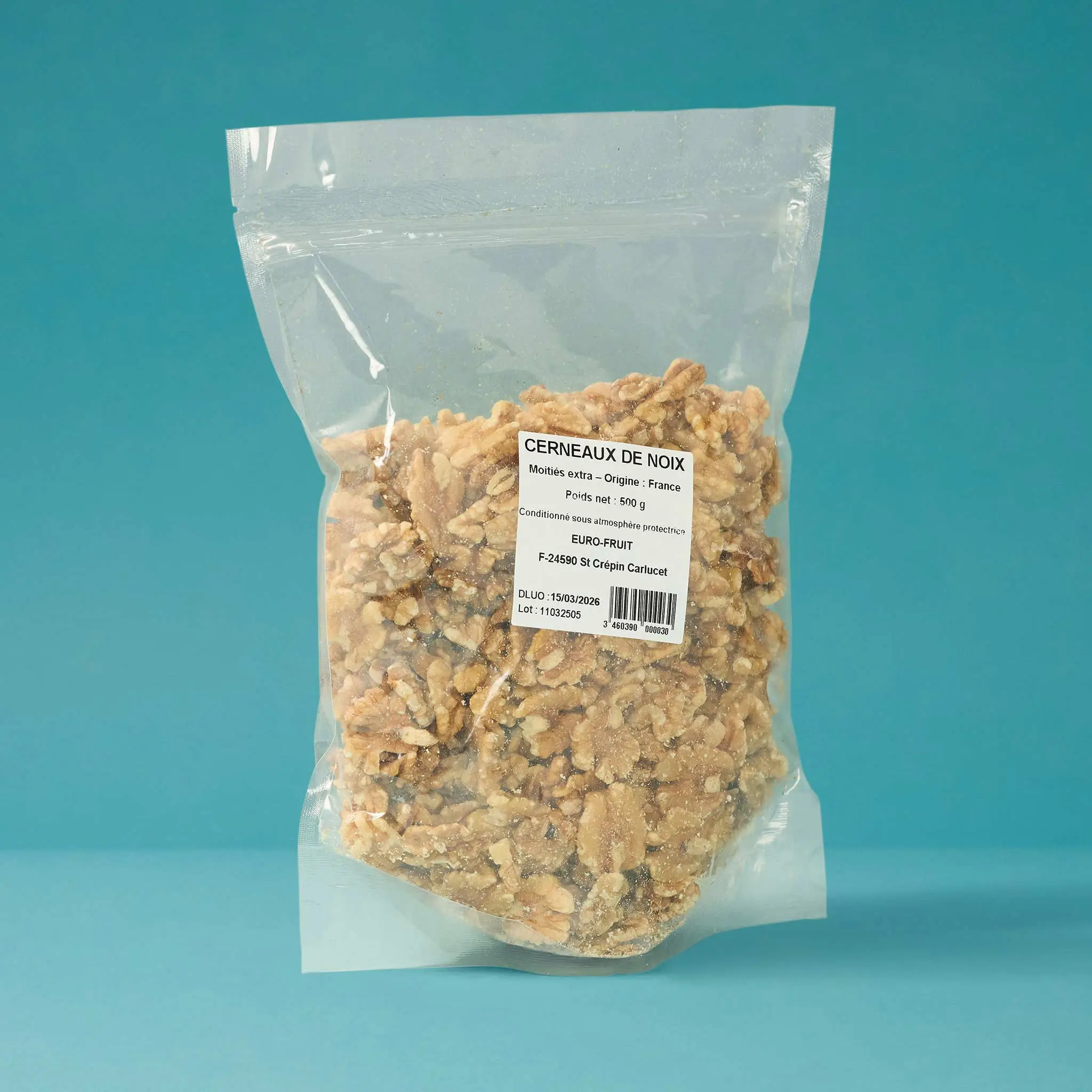



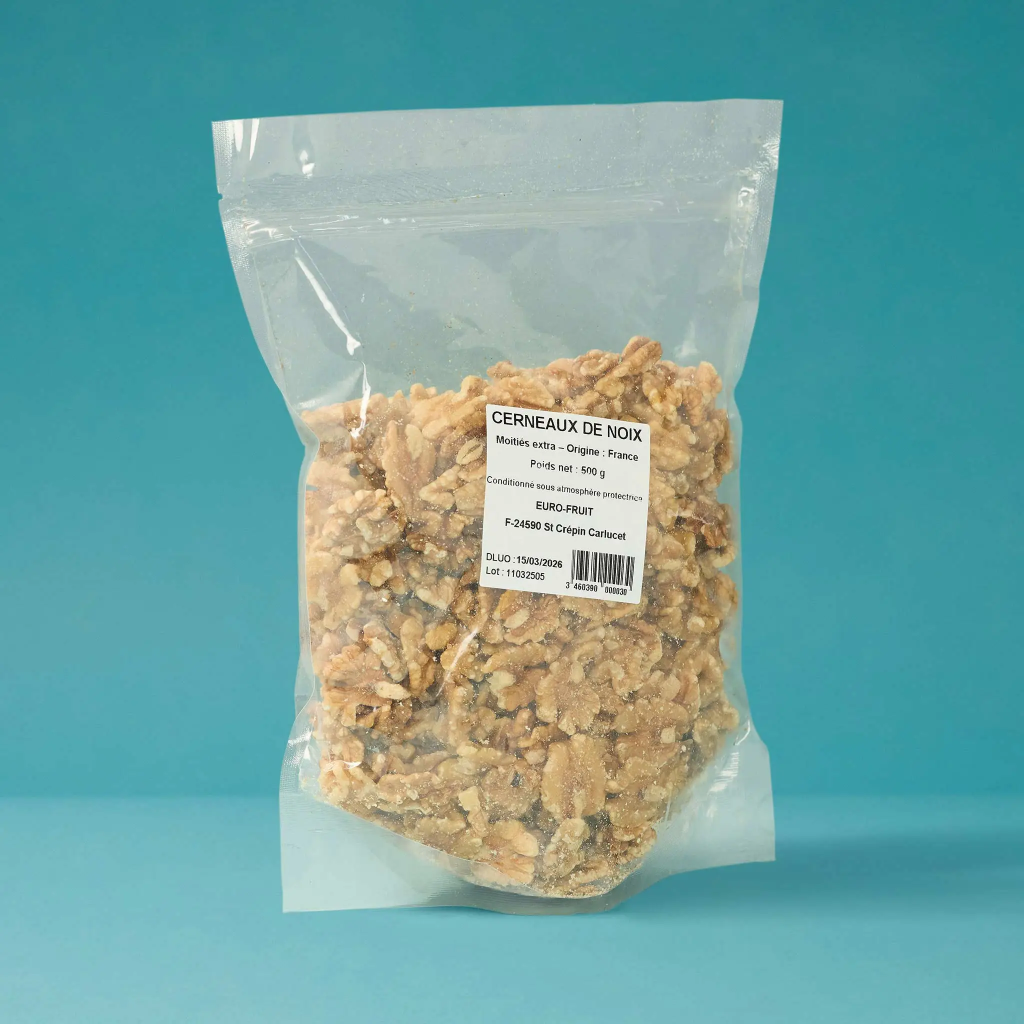
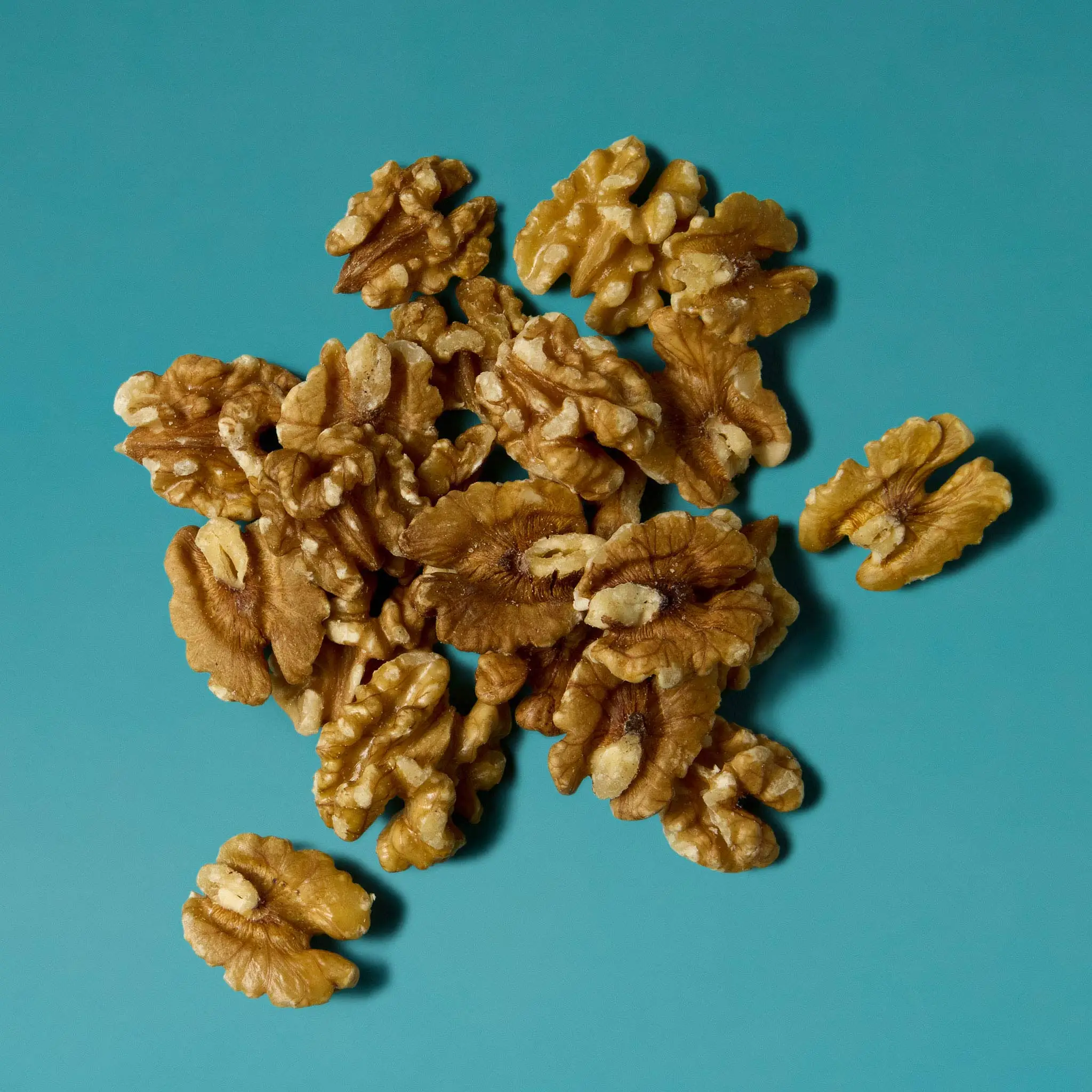

Extra half walnut kernels from France 500g
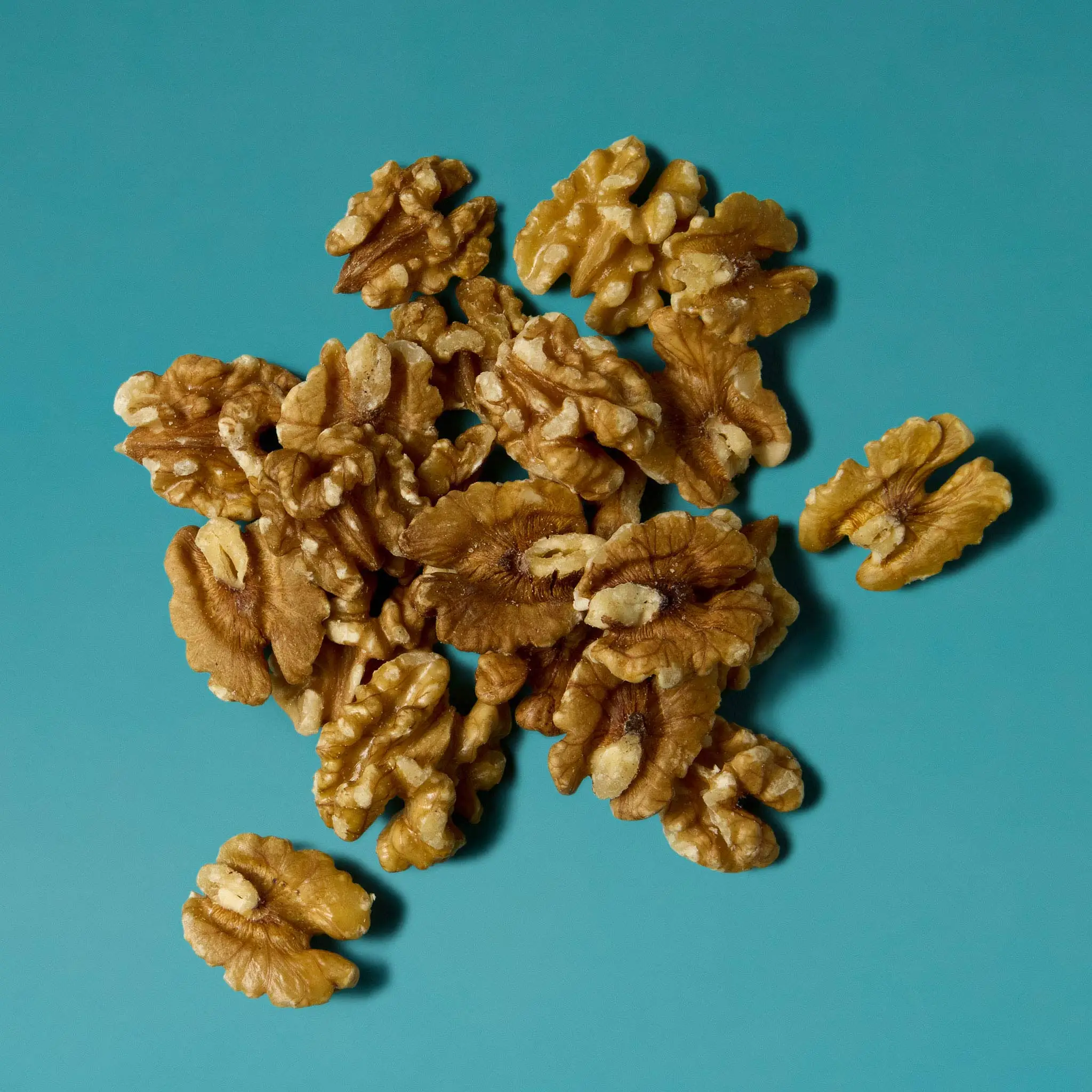
French extra walnut halves represent the top grade in French commercial walnut sorting. "Half" refers to the kernel split into two regular halves, as opposed to whole kernels (two halves still joined) or broken pieces (smaller, irregular fragments). "Extra" is the highest classification: the lightest-colored, most intact kernels, free from visible defects.
One hundred percent walnut kernels, nothing added. Origin: France — meaning primarily Périgord (Dordogne, Lot) or Isère (Grenoble), the two AOP-designated growing regions. The label on this packaging does not specify the region, so the indication remains generic.
\nWhat the "extra half" grade is worth
\nThe "extra half" grade sits between whole kernels (the most expensive, most visually striking) and broken pieces (economical, best used in incorporated applications). Regular halves offer a solid middle ground: a presentable format, reasonable price, and versatile use.
French walnuts are more tannic and more structured than pecans or cashews. Their slight bitterness is exactly what you want in a well-pronounced walnut cake or a walnut oil vinaigrette.
The commercial grading of French walnut kernels follows a precise nomenclature: extra (lightest, most intact kernels), first choice, and secondary grades. Sorting is done by hand or by optical sorting depending on the producer — a level of expertise that sets serious producers apart.
\nServing and usage ideas
\nFor a classic walnut cake, 200 g of roughly chopped kernels in a standard family-sized loaf delivers a deeply pronounced flavor. Baking for 45 minutes at 170 °C draws out the walnuts' toasty, roasted notes without any need to pre-toast them.
In an autumn salad, use whole or roughly chopped kernels with Belgian endive, blue cheese, and green apple. A walnut oil vinaigrette ties the flavors together. This is a timeless classic from northern France and Burgundy.
For decorating tarts or cakes, keep a few whole halves for the finishing touch — arranged in a ring on a brownie, or alternating with flaked almonds on a loaf cake.
For a French walnut brownie, fold 150 g of roughly chopped kernels into a classic brownie batter. Bake for 25 minutes at 180 °C — no longer, to keep the center fudgy. The tannins in French walnuts perfectly balance the richness of dark chocolate.
For fans of Russian or Eastern European baking, walnut kernels are the signature ingredient in Austrian strudel (walnut variation), Turkish baklava, and the Russian Napoleon cake. These traditions share a generous use of tannic French walnuts, which stand up beautifully to flaky pastry and sweet syrups.
The French walnut harvest takes place in late September through early October. Fresh kernels from the new crop arrive in stores in November and December, and remain available year-round at peak aromatic quality through the following spring. Come summer, the transition gradually begins toward the next expected harvest.
\nDelivery and G. Detou stores
\nAvailable in 500 g bags, for in-store pickup at our Paris location (58 rue Tiquetonne) or shipped anywhere in France. Store in a cool, dry place. Once opened, an airtight jar kept in the refrigerator is ideal — French walnuts go rancid more quickly than other nuts due to their high omega-3 content.
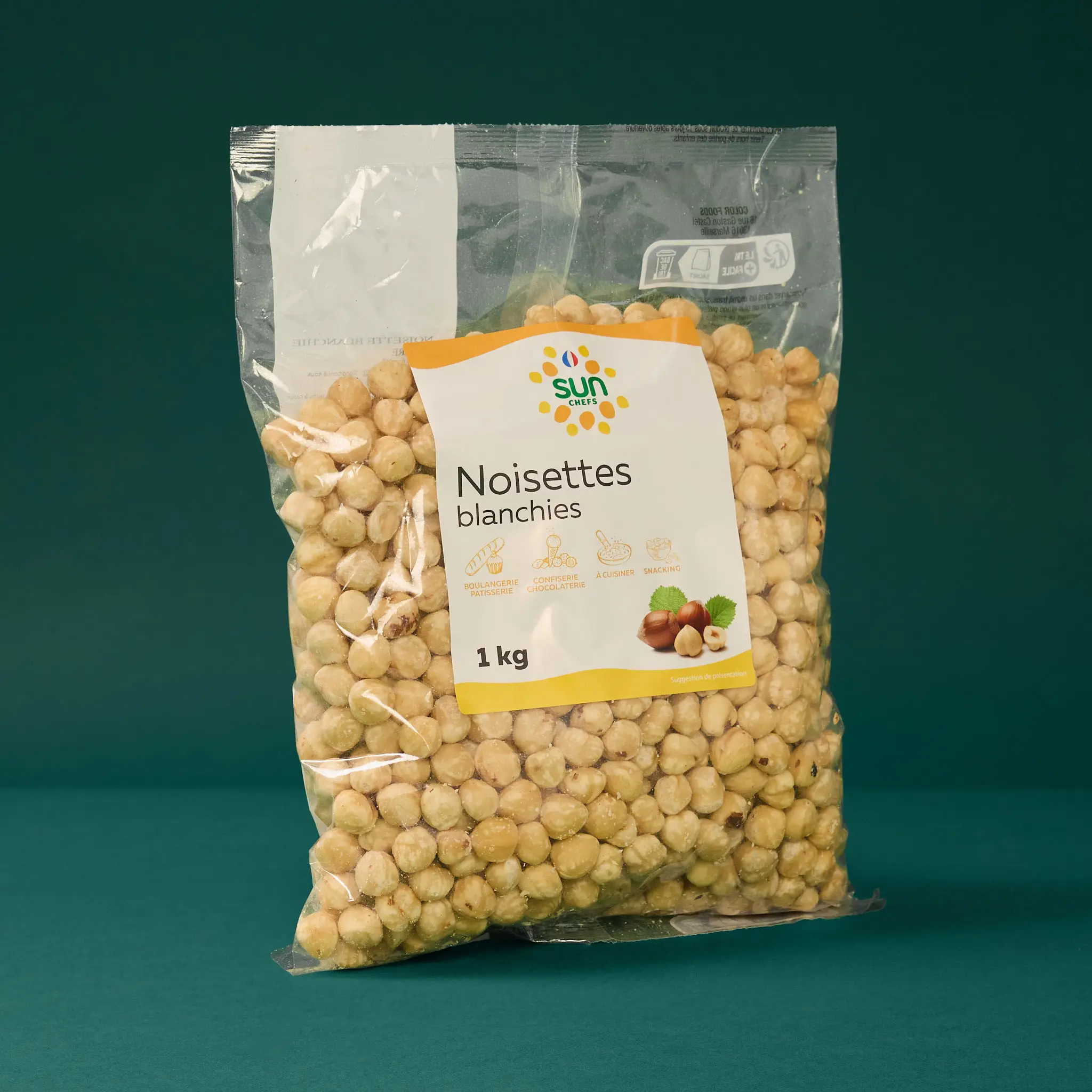
For regular buyers, we also carry bulk one-kilo quantities depending on availability. The 500 g bag remains the standard household size, well suited to regular use in cooking and baking.
On a personal note, many customers from the neighborhood have been buying their walnut kernels here for decades, specifically for their traditional walnut cakes. It's a straightforward, reliable staple we've always stocked — because a good French walnut in a cake makes all the difference compared to a cheap industrial one.
\nFrequently asked questions
\nWhat is the difference between extra halves and broken pieces?
\nExtra halves are kernels split into two regular, presentable halves. Broken pieces are smaller, irregular fragments. For incorporated uses (batters and doughs), broken pieces do the job just as well and cost less.
\nAOP Grenoble or Périgord?
\nThe label indicates France as the origin without specifying the region. Both AOP designations coexist in France — Périgord and Grenoble. For guaranteed AOP-specific products, we carry a few dedicated references in store.
\nHow do you reduce bitterness?
\nA light toast for five minutes at 150 °C, or a quick soak in warm water followed by thorough drying. The tannic bitterness is inherent to French walnuts.
\nHow should kernels be stored after opening?
\nSix to eight weeks in a cool, dry place; three to four months in the refrigerator. French walnuts go rancid more quickly than other nuts.
\nSuitable for a gluten-free diet?
\nWalnuts are naturally gluten-free. The absence of gluten allergens is not explicitly certified — check the label if you have a confirmed sensitivity.
\nWhat pairs well with walnut kernels in cooking?
\nBlue cheese (roquefort, fourme), fresh goat cheese, balsamic vinegar, mild honey, green apple, country bread. French walnuts are best paired with bold, assertive flavors that balance their tannic character.
Price per kg |
20,48 € |
Description
Half walnut kernels from selected varieties, shelled and sorted for superior quality.
Characteristics
- Weight: 0.500 kg
- Ingredients: 100% walnut kernels
- Allergens: May contain traces of other nuts
- Legal name: Extra Half Walnut Kernels
- Storage conditions: Store in a cool, dry place
Nos derniers contenus
Découvrez les nouveautés dans notre entreprise !