


Mammoth pecan nuts 500g — dried fruit | G. Detou Paris
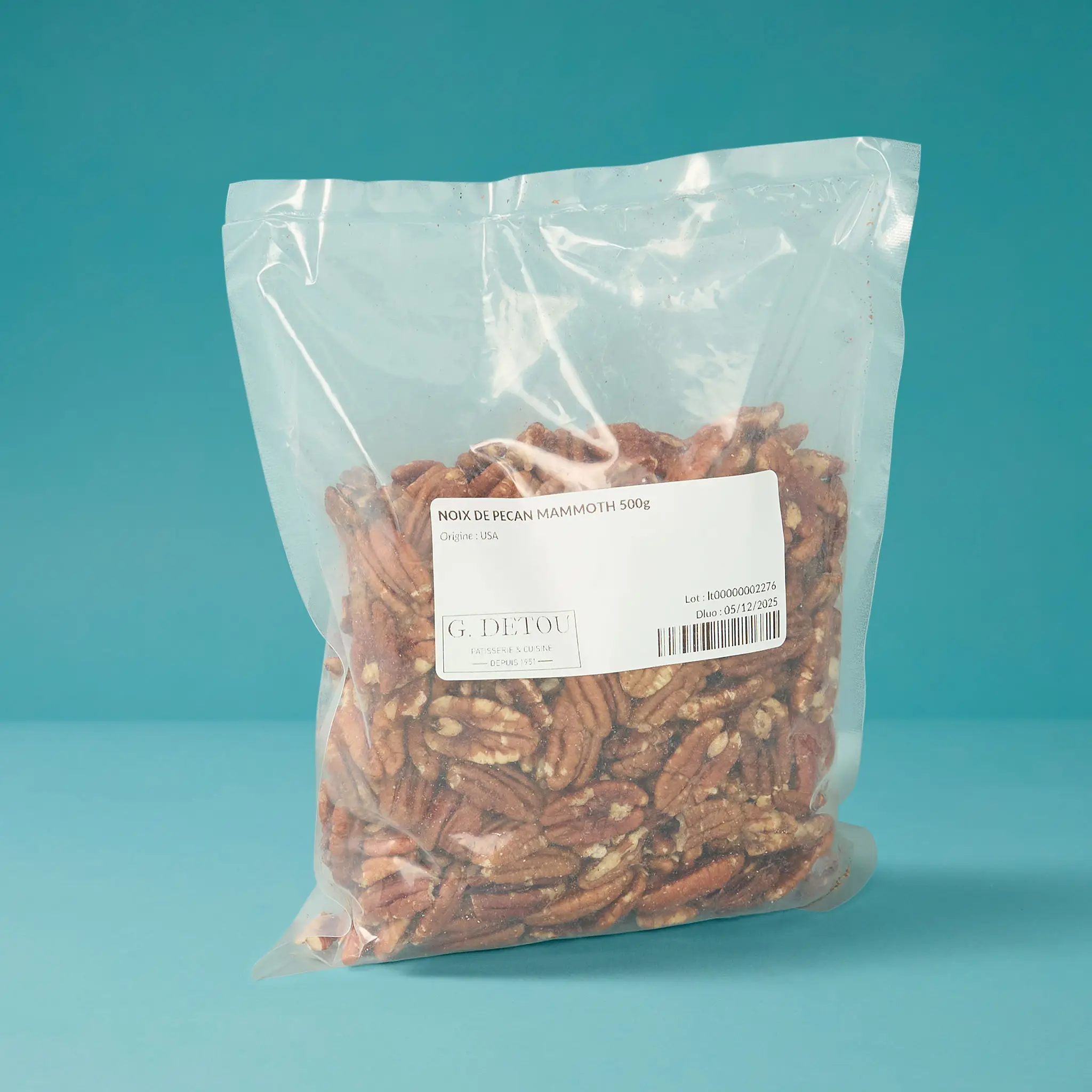
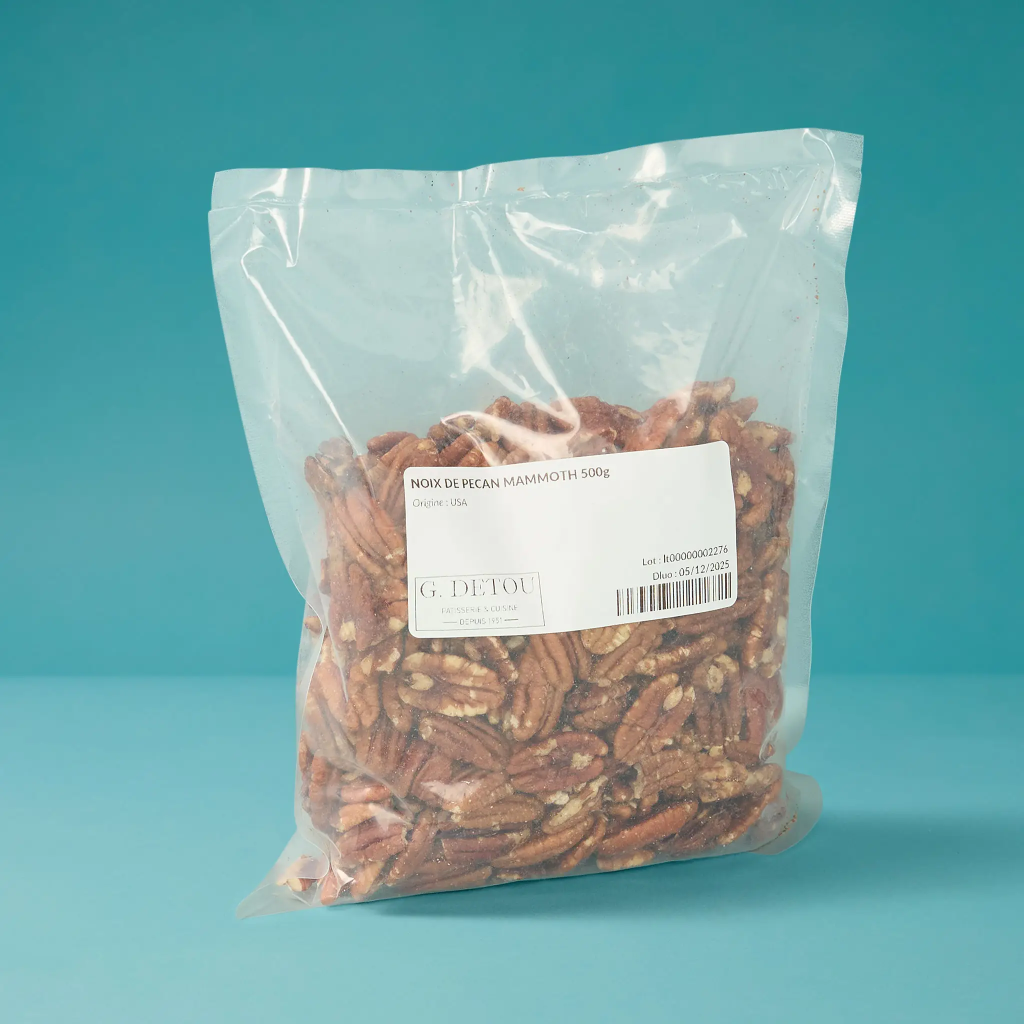
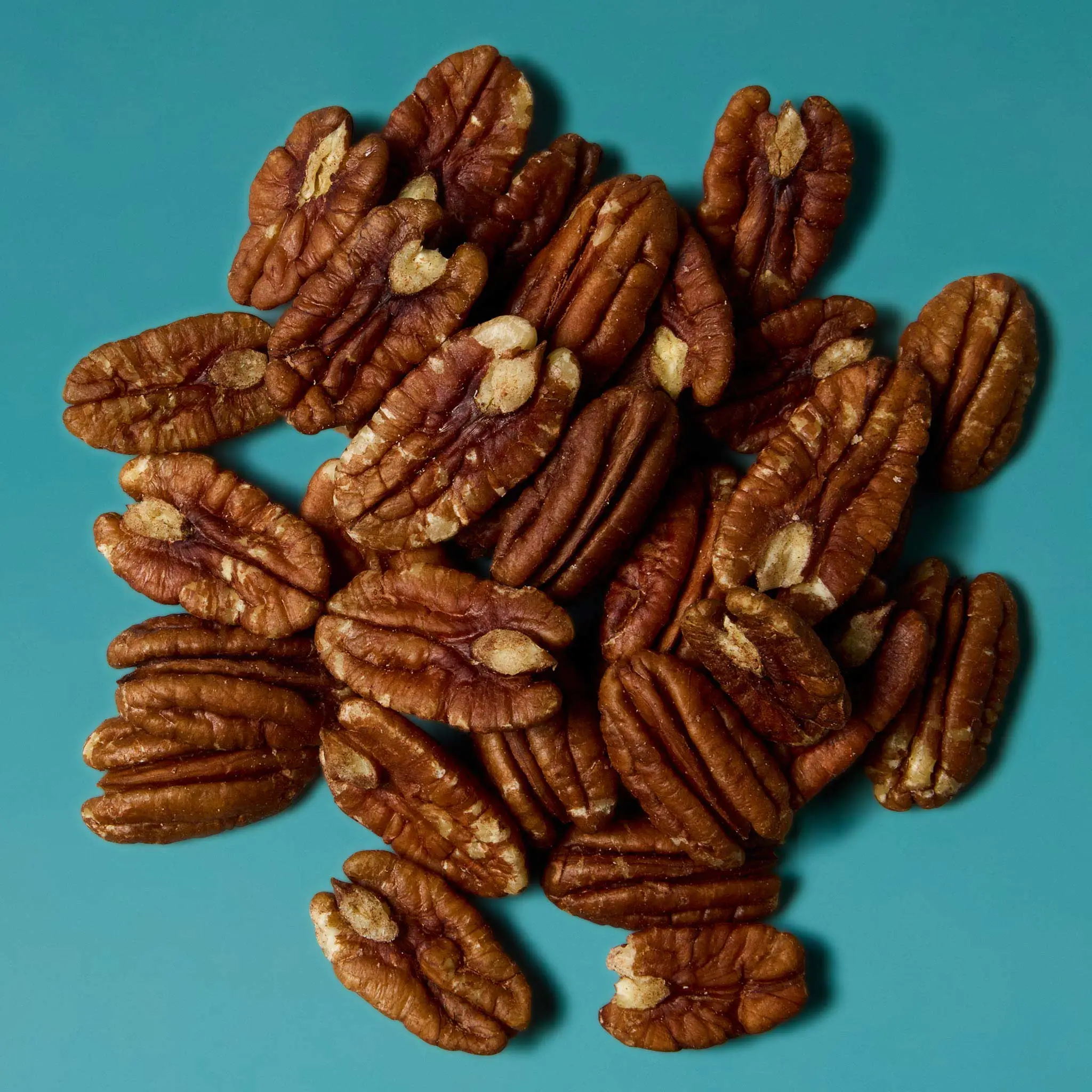
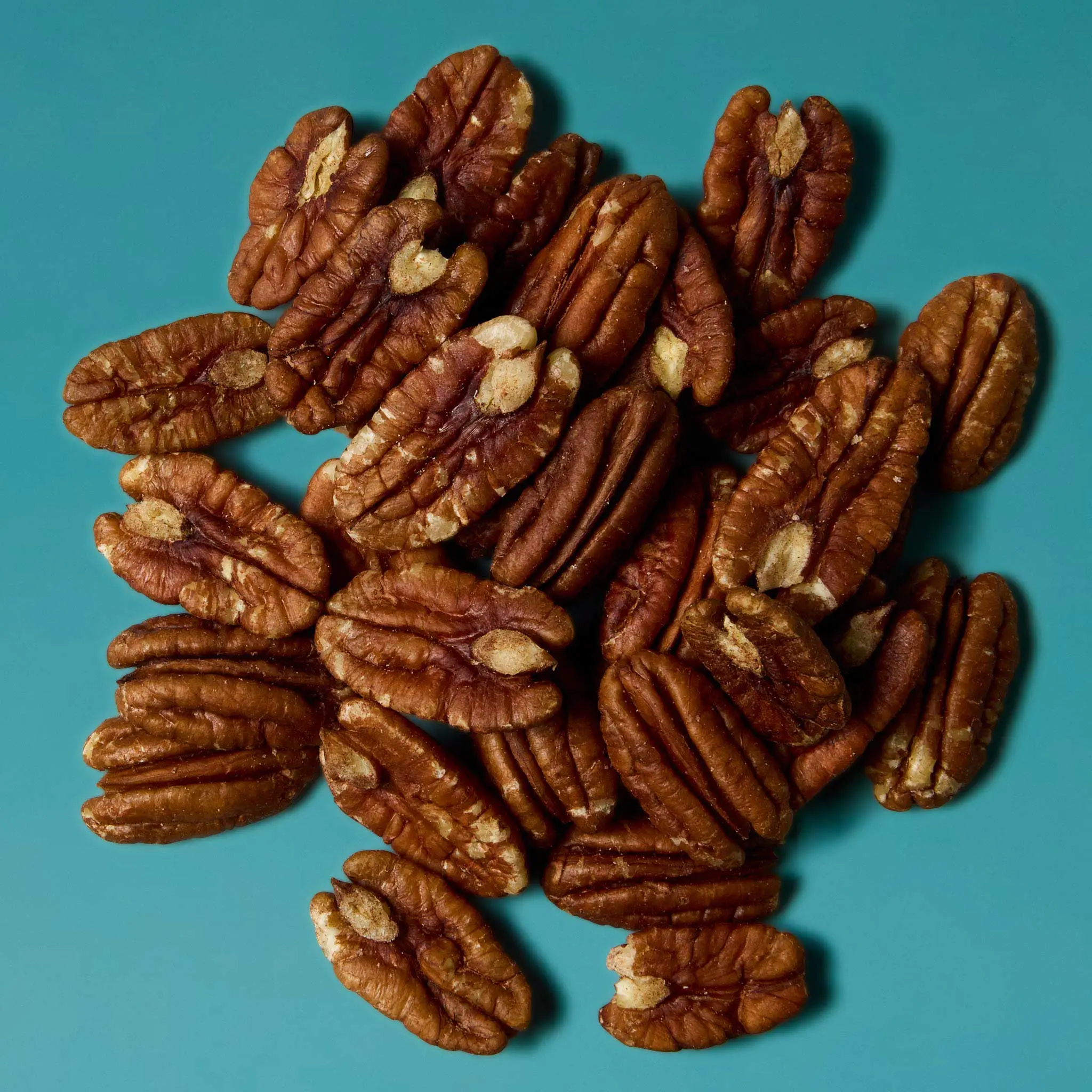
The "mammoth" pecan refers to the largest commercial grade available in the United States: whole, long, plump halves chosen for visible garnishing rather than folding into batters. The manufacturer's label simply states USA origin — pecans are still grown primarily in Georgia, Texas, and New Mexico.
On the product sheets we carry in-store, this is the quintessential American nut. Milder than the French walnut, oilier, and more tender to the bite. The aroma is distinctive: butter, vanilla, and a subtle hint of wood.
What the mammoth grade changes
The mammoth grade corresponds to roughly 240 to 260 halves per pound — a format reserved for presentation use. By comparison, a junior mammoth grade drops to around 350. The size of the halves directly affects the result in a pecan pie, where you want whole halves arranged in a crown on top.
Best-before date as stated by the manufacturer: 24 months. Pecans are high in lipids and turn faster than almonds or hazelnuts — which is why we recommend storing them in a cool place after opening.
The pecan tree (Carya illinoinensis) is native to the southern United States. The pecan is among the oldest cultivated nuts in North America — Native American peoples were consuming them long before the arrival of European settlers. Commercial cultivation took off in the 19th century, primarily in Georgia and Texas.
Serving suggestions
The classic pecan pie remains the benchmark recipe: whole halves arranged in a crown over a filling of brown sugar, maple syrup, eggs, and butter. Bake for 35 minutes at 175 °C. Allow to cool completely before slicing.
In an autumn salad, roughly broken halves pair beautifully with fresh pear, arugula, crumbled blue cheese such as fourme d'Ambert or bleu d'Auvergne, and a walnut oil vinaigrette. It's a classic combination that works every single year.
In cookies, swap French walnuts for pecans: the flavor is milder, the texture more tender, the result more quintessentially American. Toast them first for five minutes at 160 °C to bring out the aromas.
For salted caramel pecans (a signature American recipe), cook a dry caramel to 175 °C, add a knob of salted butter off the heat, toss in the pecans, and spread on parchment paper. Once set, break into pieces. An excellent garnish for ice cream, chocolate fondant, or tartlets.
For a revisited pecan cake, fold 200 g of roughly chopped pecans, 50 g of maple syrup, and orange zest into a classic cake batter. Baking for 50 minutes at 170 °C develops a caramelized crust that is distinctly North American in character. Serve warm with a scoop of vanilla ice cream — it's the year-end dessert we happily recommend in-store.
The pecan industry in the United States is heavily mechanized — harvesting by tree shaking, automated collection, optical sorting. This mechanization accounts for the accessible price point relative to other premium nuts, despite flavor quality that is well preserved by modern processing standards.
Pickup and storage
Available in 500 g bags, with in-store pickup at our Paris location (58 rue Tiquetonne), Tuesday through Saturday, or shipping anywhere in metropolitan France within three to five business days. Once opened, we recommend storing in an airtight jar in the refrigerator, which extends shelf life by several months.
The American harvest season runs from October through March. Bags sold within the year following harvest are at peak freshness. Beyond 12 to 18 months post-harvest, the aromas begin to fade — something we monitor closely in-store through stock rotation.
Pecans have a pronounced seasonality on the American market: the new crop arrives in October–November, and roasting facilities gradually move through their inventory until summer. That's why we recommend purchasing preferably in winter or spring for the freshest-tasting bags. Late-summer bags may start to show a slightly rancid note, especially given the pecan's high lipid content.
Frequently asked questions
What is the difference between a pecan and a French walnut?
The pecan is longer, more tender, and oilier, with a flavor profile leaning toward butter and vanilla. The French walnut (Périgord, Grenoble) is more tannic, more structured, with a pronounced bitterness.
Can pecans replace walnuts in a brownie?
Yes, it's a common substitution. The brownie will be milder and less tannic. To preserve some character, try a half-and-half blend of pecans and French walnuts.
How do you toast pecans before use?
Five to seven minutes at 160 °C in the oven, stirring halfway through. Pecans brown faster than almonds — keep a close eye during that last minute to avoid bitterness.
How should the bag be stored once opened?
Up to two months in an airtight jar at room temperature, or six months in the refrigerator. Pecans go rancid faster than almonds due to their high fat content.
Suitable for a gluten-free diet?
Pecans are naturally gluten-free. For this specific bag, the absence of gluten allergens is not explicitly certified — please check the packaging if you have a confirmed sensitivity.
What is the difference between mammoth and junior mammoth?
Mammoth is the extra-large grade (240–260 halves per pound). Junior mammoth is slightly smaller (300–350 per pound), still generous but more economical. For visible garnishing, mammoth is the clear choice. For incorporated use, junior mammoth is perfectly adequate.
Price per kg |
25,52 € |
Description
High-quality pecan pieces, ideal for baking, confectionery or snacking.
Characteristics
- Weight: 0.500 kg
- Ingredients: pecan nuts
- Allergens: Nuts, tree nuts
-
Nutritional values:
Energy (kJ): 2996.07
Energy (kcal): 715.60
Total Fat (g): 67.60
Saturated Fat (g): 6.25
Total Carbohydrate (g): 15.30
Carbohydrate (sugars) (g): 4.44
Protein (g): 11.50
Salt (g): 0.01
Dietary Fiber (g): 10.06 - Legal name: pecan nuts
- Storage conditions: Store in a dry place away from direct light.
- Best before date: 24 months
Nos derniers contenus
Découvrez les nouveautés dans notre entreprise !