




Baking Ingredients
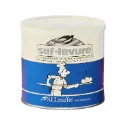
This is undoubtedly our broadest, most densely stocked category — and the one that has built the house's reputation since 1951. Baking ingredients at G. Detou means the complete pastry chef's arsenal: praliné, candied fruits, setting agents, specialty sugars, almond and hazelnut powders, butters, coating pastes, food colorings, natural flavorings, sheet gelatin, starches, yeasts, glucose, isomalt, Mycryo, glucose syrup, cocoa butter, and fondant pâtissier. Everything you need, right here at 58 rue Tiquetonne. 🍫
If you're looking for a technical ingredient you won't find at a regular grocery store — 100% pure nut paste, whole house-made candied fruits, 200 Bloom gelatin, invert sugar — this is the place. The shop was designed from the very beginning to serve the pastry chefs of the neighborhood; today, it serves Michelin-starred chefs and passionate home bakers alike — including those making their galette des rois from scratch.
Choosing your baking ingredients wisely
Pastry is a technical discipline. The quality of the result depends 80% on the quality of the raw ingredients. A few universal criteria to keep in mind:
- Purity: a "pure" pistachio paste should contain 100% pistachios — not an almond-pistachio-coloring blend
- Grind and consistency: extra-fine almond powder yields flawless macarons; a coarser grind will cause them to crack
- Origin: Apt candied fruits vs. industrial Asian-made candied fruits; Piedmont hazelnuts vs. generic Turkish hazelnuts
- Format: pistoles, fèves, blocks, powder, paste, pods, sheets, granules — each format has its own use
- Technical brands: we carry the references that define professional pastry-making: Valrhona, Barry, Weiss, Callebaut, Louis François for setting agents and specialty additives
Our selection at G. Detou
Here are the major product families you'll find on our shelves.
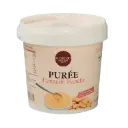
Praliné and nut pastes: almond-hazelnut praliné 50%, Piedmont hazelnut praliné 60%, pure pistachio paste (Iran or Sicily), pure hazelnut paste, white and gray almond paste, gianduja, house-made nut paste. Praliné is one of our all-time bestsellers.
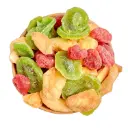
Candied fruits: whole candied oranges, candied lemons, candied cherries, orange and lemon peel, angelica, mixed candied fruits for fruit cake. We work with confectioners from Apt and the Rhône Valley. A homemade fruit cake made with real candied fruits beats any mass-produced version hands down — see our fruit cake recipe.
Technical couverture chocolates: pistoles from Valrhona, Barry, Weiss, and Callebaut. Mycryo cocoa butter for simplified tempering. Dark and ivory coating pastes for technical enrobing work.
Specialty powders and flours: extra-fine almond powder, hazelnut powder, pistachio powder, Van Houten cocoa powder, T45, T55, T65, and T80 flour, buckwheat flour, chestnut flour, cornstarch, potato starch.
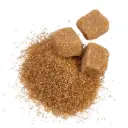
Technical sugars: anti-caking powdered sugar, granulated sugar, raw cane sugar, light and dark vergeoise, invert sugar (trimoline), isomalt, dextrose, white fondant pâtissier, glucose syrup, atomized glucose.
Setting agents and additives: 200 Bloom sheet gelatin (Louis François), agar-agar, NH and yellow pectin, X58 pectin, xanthan gum, soy lecithin, citric acid, tartaric acid. To understand the differences, see our gelatin vs. agar-agar guide.
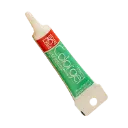
Flavorings and colorings: vanilla extracts, natural flavorings, orange blossom and rose waters, powder and oil-soluble food colorings (see the Food decoration category).
Uses in pastry-making
Each ingredient serves a specific purpose. Praliné is used as an insert in entremets, as a filling in Paris-Brest choux pastry, and as a base for chocolate confections. Pure pistachio paste flavors pastry creams, bavarian creams, and macarons. Candied fruits go into fruit cake, panettone, pudding, and nougat.
On the professional technique side, Mycryo cocoa butter allows you to temper chocolate without a complex tempering curve: heat to 104°F (40°C), cool to 93°F (34°C), add 1% Mycryo, then pour at 88°F (31°C). Clean, precise, and repeatable.
200 Bloom gelatin (Louis François) is the go-to reference for bavarian creams, panna cottas, marshmallows, and mirror glazes. Agar-agar, a Japanese plant-based setting agent, produces firmer textures and holds up under heat. Glucose syrup prevents sugar crystallization in caramels, fruit pâtes de fruits, and sorbets.
When it comes to colorings, it's essential to distinguish water-soluble colorings (used for syrups, creams, and water-based glazes) from oil-soluble ones (used for chocolate and butter-based ganaches). Mixing the two will yield disastrous results. See our food coloring guide.
Storage and best practices
Each baking ingredient has its own storage requirements:
- Praliné and nut pastes: store away from light in an airtight container; up to 12 months after opening if kept refrigerated
- Candied fruits: 6 to 12 months at room temperature in an airtight jar; they may harden over time but can be rehydrated in warm syrup
- Sheet gelatin: 2 to 3 years in its original dry, sealed packaging
- Powders (almond, hazelnut, cocoa): 6 to 9 months, kept away from moisture; freezing is possible
- Mycryo cocoa butter: 2 years in a sealed jar at room temperature
- Glucose syrup: 2 years at room temperature
- Food colorings: 3 to 5 years in an airtight container
One universal tip: weigh everything. Pastry is an exact science. A scale accurate to the gram — ideally to 0.1 g for setting agents and colorings — is the single most worthwhile investment you can make to go from good to great.
History and G. Detou expertise
G. Detou has been a mandatory stop for Parisian pastry chefs since 1951, and this category is largely the reason why. The chefs of legendary establishments — Lenôtre, Fauchon, Hédiard, Pierre Hermé — long sent their commis to pick up our house praliné, Apt candied fruits, and 200 Bloom gelatin. At a time when professional ingredients were virtually unavailable anywhere else in Paris, 58 rue Tiquetonne was the definitive reference for anyone who wanted to work at a high level.
That DNA remains fully intact today, now welcoming passionate home cooks alongside the professionals. When you walk through our door, we make no distinction between a three-Michelin-star chef and an amateur tackling their first Paris-Brest: we take the time to explain NH pectin vs. yellow pectin, the difference between fondant pâtissier and royal icing, the right sugar-to-fruit ratio in a homemade pâte de fruits. And if you stop by the shop, there's often a sample waiting for you 😉.
FAQ — Baking ingredients
What is the difference between praliné and pralin?
Praliné is a smooth paste made by grinding caramelized nuts (typically almonds and hazelnuts) for an extended time, with a nut content of 50% or 60%. Pralin is a coarser, crunchier crush with visible pieces. Praliné fills; pralin decorates.
Which gelatin should I choose: sheets or powder?
For precision, 200 Bloom sheets (Louis François) remain the professional standard. Powdered gelatin also works, but the conversion must be observed (1 sheet ≈ 2 g of powder). Avoid: the vaguely dosed gelatin products sold at supermarkets.
How do I substitute agar-agar for gelatin?
2 g of gelatin ≈ 1 g of agar-agar, but the textures differ (agar produces a brittle gel; gelatin produces a supple one). Agar-agar must be boiled for 1 minute to activate. See our gelatin vs. agar-agar guide.
Which praliné should I use for a Paris-Brest?
A classic 50% almond-hazelnut praliné works beautifully. For a more premium version, go with a 60% Piedmont hazelnut praliné: higher nut content, less sugar, and deep, complex aromas.
What is invert sugar (trimoline) used for?
It prevents sugar crystallization, keeps cakes and cookies moist, and lowers the freezing point of ice creams. A must-have in professional recipes for ice creams, financiers, and madeleines.
How do you use Mycryo cocoa butter?
To temper chocolate: melt the chocolate to 104°F (40°C), cool to 93°F (34°C) for milk/white or 95°F (35°C) for dark, add 1% Mycryo, and stir down to 88°F (31°C) for dark, 86°F (30°C) for milk, or 84°F (29°C) for white. Clean, consistent results every time.
Do you sell ready-to-use baking kits?
We don't carry pre-assembled kits, but we're always happy to help you put together a complete ingredient list in store for any recipe — galette des rois, bûche de Noël, macarons, you name it. We also have a beginner baking kit article on our blog.
Do you offer professional pricing for pastry laboratories?
Yes. Pro accounts with volume-based pricing (3–5 kg bags) are available upon request at contact@gdetou.com.
Three Key Techniques to Master in Pastry
More than the raw quality of your ingredients, a handful of techniques are what separate a decent dessert from a truly remarkable one:
- Chocolate tempering: essential for bonbons, molded pieces, and decorations. Without tempering, chocolate blooms and loses its snap. See our tempering guide.
- Working with cooked sugar: caramels, nougatines, pulled sugar. A precision cooking thermometer is non-negotiable. Sugar moves from thread stage to soft ball to hard crack in just a few degrees.
- Mastering gelling agents: gelatin, NH pectin, yellow pectin, and agar-agar all behave differently (heat resistance, texture, dosage). Choosing the right setting agent makes all the difference in a mirror glaze or a pâte de fruits.
These three techniques come quickly once you have the right products at hand. That's the advantage of coming to see us: we take the time to explain the difference between NH pectin and yellow pectin right at the moment of purchase.
Going Further
This category runs deep. To explore further, visit our Chocolates & Confectionery category, which pairs naturally with your pastry pantry. And the best thing you can do is come visit us in store — in Paris or in Lyon — and leave with exactly what you need.