



Smoked and salted almonds — dried fruit | G. Detou Paris
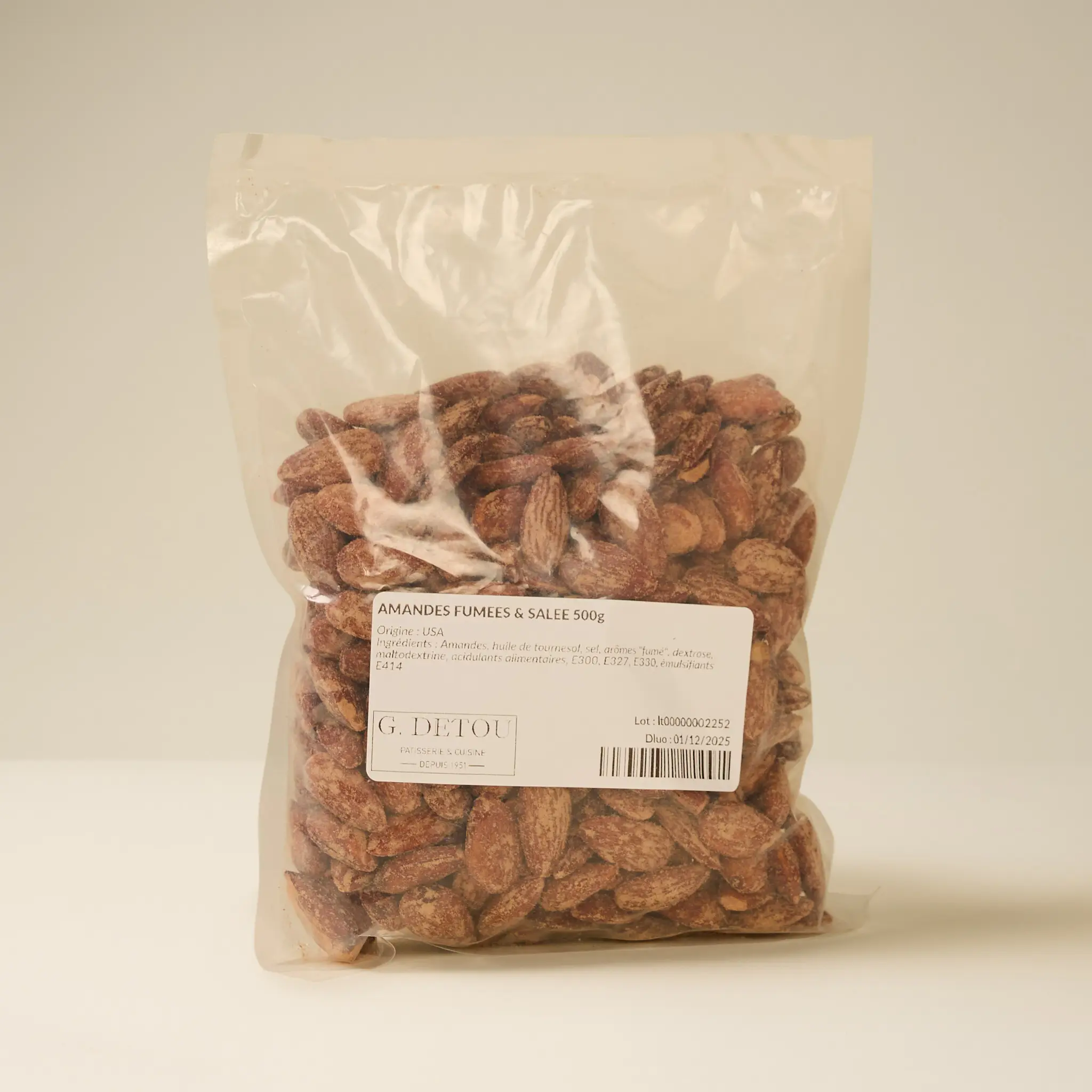
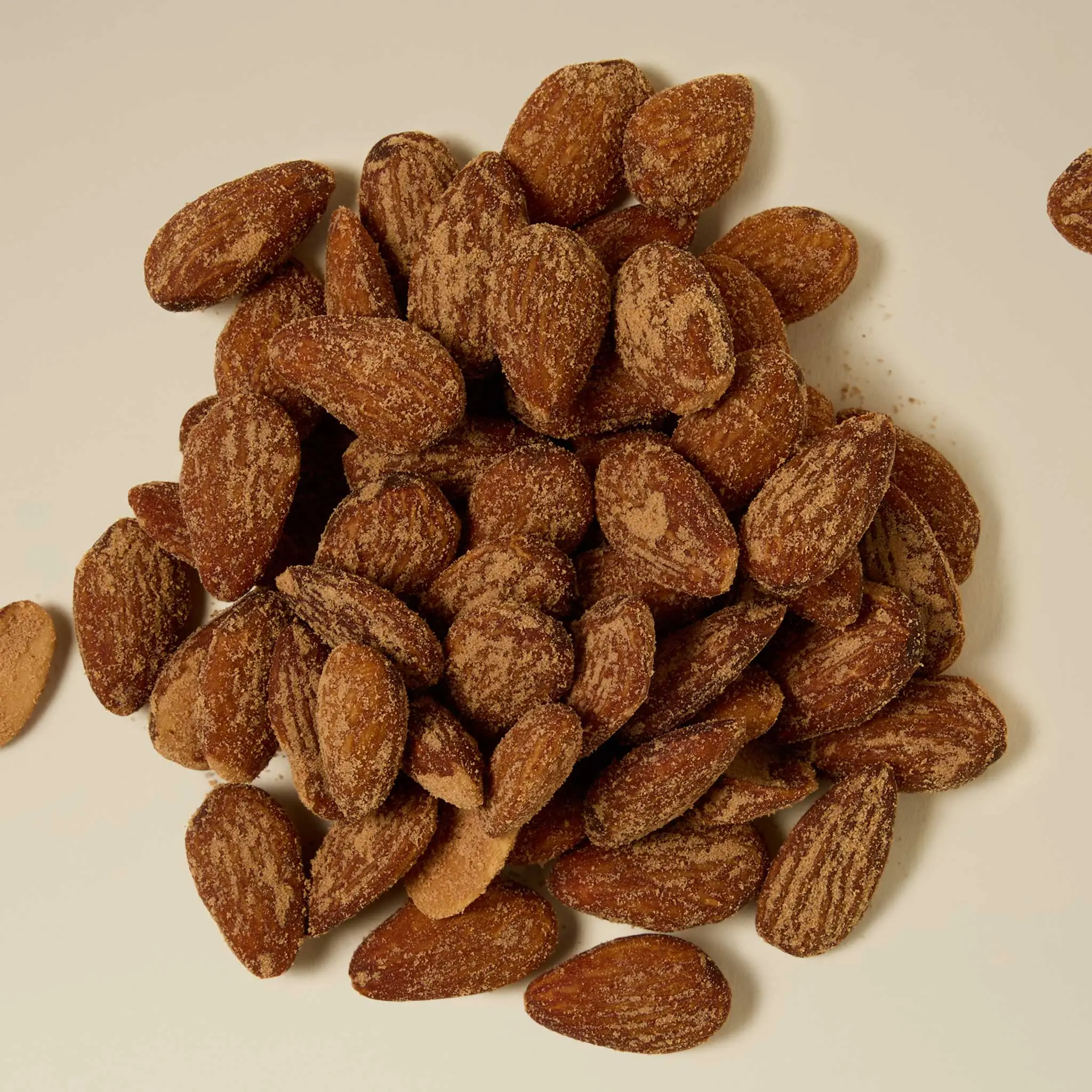
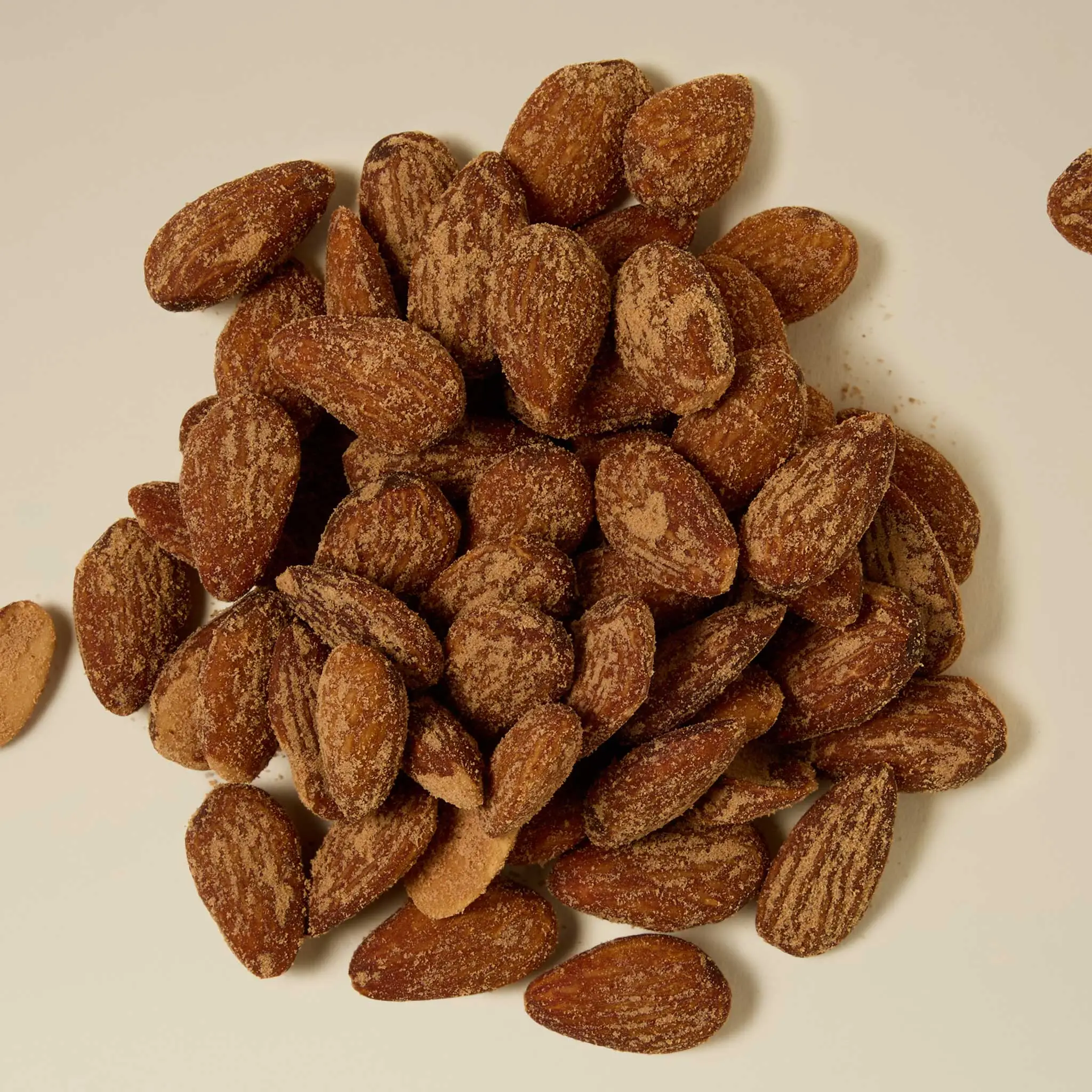
Smoked and salted almonds make for a truly out-of-the-ordinary snack: the smoke flavor is added during roasting, lending a wood-grilled note reminiscent of bacon or peated whisky. Origin: USA, as with the majority of almonds sold for industrial roasting.
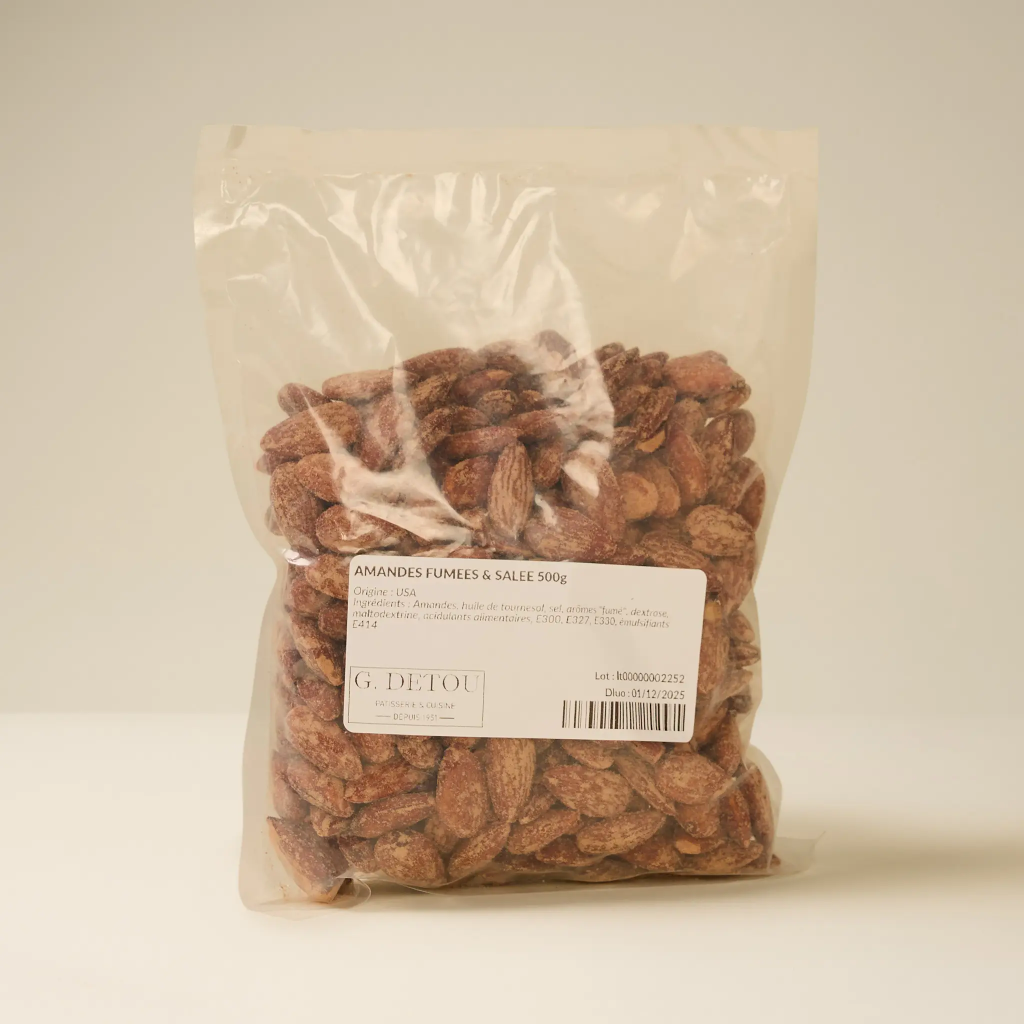
The label details the full ingredient list: almonds, sunflower oil, salt, smoke flavoring, dextrose, maltodextrin, food acidulants, antioxidants, emulsifiers. This is the standard formula for a smoked flavored almond — the smokiness comes from a reconstituted flavoring, not traditional wood smoking.
\nWhat sets the smoked version apart
\nCompared to a plain salted almond, the smoked version adds an extra aromatic layer that takes it well beyond the classic cocktail snack. Smoke pairs particularly well with peated spirits (Scotch whisky, bourbon, mezcal) and with resinous, hoppy IPAs.
The smoke flavor is produced industrially from wood smoke condensates — a common, stable food-grade process that delivers consistent results from one batch to the next. Artisan wood-fired smoking of almonds remains possible but yields very different results.
Industrial smoke flavoring via condensates was developed in the 1970s to standardize smoky flavor in canned goods and dry products. It replicates the aromatic profile of wood smoking (typically hickory or mesquite for American almonds) without the batch-to-batch variation inherent in artisan smoking.
\nServing ideas
\nAs an aperitif snack, serve in a separate bowl. The smoke profile is pronounced, so avoid mixing them with plain almonds or sweet dried fruit. They pair beautifully with a light single malt Scotch or a dark ale.
In the kitchen, crush them over a composed salad to add a smoky crunch: try endive with crispy lardons (or smoked tofu for a vegetarian version), fresh pear, and crushed smoked almonds as a finishing touch. Dress with a walnut oil vinaigrette.
On a cheese board, serve alongside an aged comté or a smoked sheep's milk cheese — the smokiness in the almonds echoes that of the cheese.
For a smoked aperitif mix, combine 100 g of smoked almonds with 50 g of pitted prunes and 30 g of crushed sun-dried tomatoes. The smoky-fruity-acidic contrast is unexpected but works remarkably well with a peated whisky or a mezcal.
For a winter cheese board, pair the smoked almonds with a 24-month aged comté, a Pyrénées sheep's milk cheese, and a bold blue such as Bleu de Termignon. The smoky profile of the almonds complements the complex notes of aged cheeses and provides a satisfying crunch that contrasts with the soft, creamy textures.
Industrial smoke condensate flavoring delivers consistent aromatic stability that artisan wood smoking simply cannot match. It is a deliberate trade-off between tradition (wood smoking) and regularity (reconstituted flavor). For a more complex result, home smoking on a barbecue grill remains an option.
\nDelivery and G. Detou stores
\n500 g bag, available for in-store pickup at our Paris location or for shipping anywhere in France. Store away from heat and light. Once opened, transfer to an airtight jar — the smoke aroma can migrate into other foods if the bag is not properly resealed.
For those who prefer a more natural smoke, we carry a selection of wood-smoked almonds in store, available in limited quantities depending on stock arrivals. The 500 g bag on this page is our standard reference, available year-round.
For enthusiasts seeking an even more authentic smoky flavor, these almonds can be enhanced with a few hickory or mesquite wood chips tossed in a dry pan with the almonds for 30 seconds. This simple trick adds a noticeably stronger smoky note right away.
\nFor more advanced culinary use, smoked almonds can be finely ground and used as a condiment on grilled dishes (fish, white meat). A dusting of the smoked powder just before serving adds an aromatic layer found in both Basque cuisine and contemporary Andalusian cooking — a signature ingredient worth building into your own signature recipes.
\nFrequently asked questions
\nNatural wood smoke or flavoring?
\nFood-grade smoke flavoring. No traditional smokehouse process involved — this is the industry standard for smoked almonds. The result is consistent from bag to bag.
\nGluten-free?
\nAlmonds and the listed ingredients contain no gluten. The absence of gluten allergens is not explicitly certified — please check the packaging if you have a confirmed sensitivity.
\nMay contain traces?
\nThe label indicates possible traces of peanuts, other tree nuts, and sesame. This is standard for a multi-product facility.
\nA less industrial alternative?
\nFor an almond with a less "commercial" profile, consider switching to blanched Valencia almonds, roasted plain, and smoking them at home on a barbecue grill — it takes more effort, but the result is noticeably different.
\nHow long does the aroma keep?
\nSix to eight weeks in an airtight jar. The smoke aroma gradually fades over time, even when sealed.
\nHow does it compare to home barbecue-smoked almonds?
\nThe aromatic profile is similar but not identical. Home smoking yields more complex, more variable flavors from batch to batch. The industrial almond is more consistent but less distinctive. Comes down to personal preference.
Price per kg |
19,92 € |
Description
Roasted and then smoked almonds with salty flavors
Characteristics
- Weight: 0.500 kg
- Ingredients: Almonds, salt, vegetable oil (various types), smoke flavoring
- Allergens: May contain traces of peanuts, other nuts, sesame
-
Nutritional values:
Energy (kJ): 2662
Energy (kcal): 640
Total Fat (g): 56
Saturated Fat (g): 5.5
Total Carbohydrate (g): 8.6
Carbohydrate (g): 4.6
Protein (g): 22
Salt (g): 0.21
Dietary Fiber (g): 8.3 - Legal name: Smoked and salted almonds
- Storage conditions: Store away from heat and light.
Nos derniers contenus
Découvrez les nouveautés dans notre entreprise !