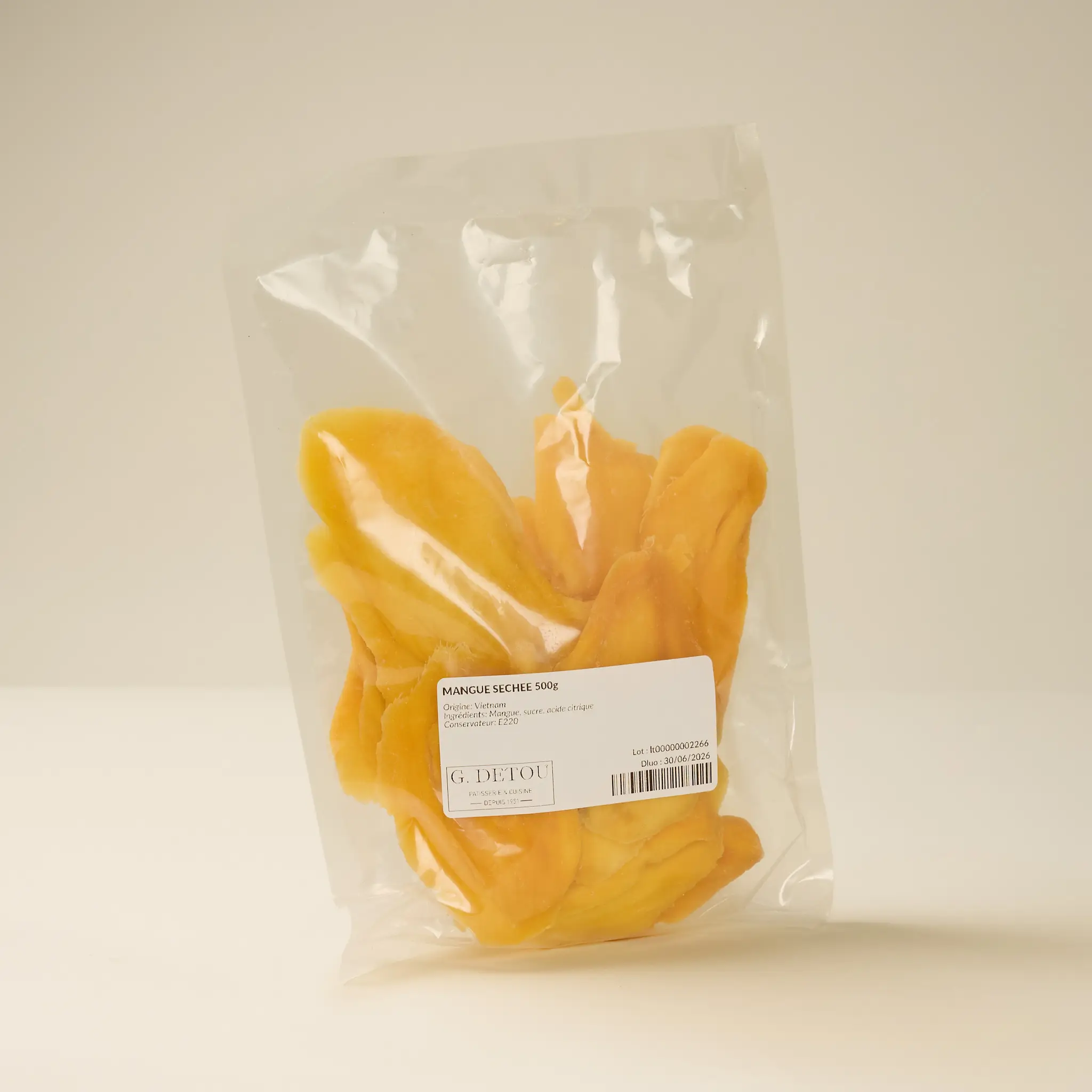



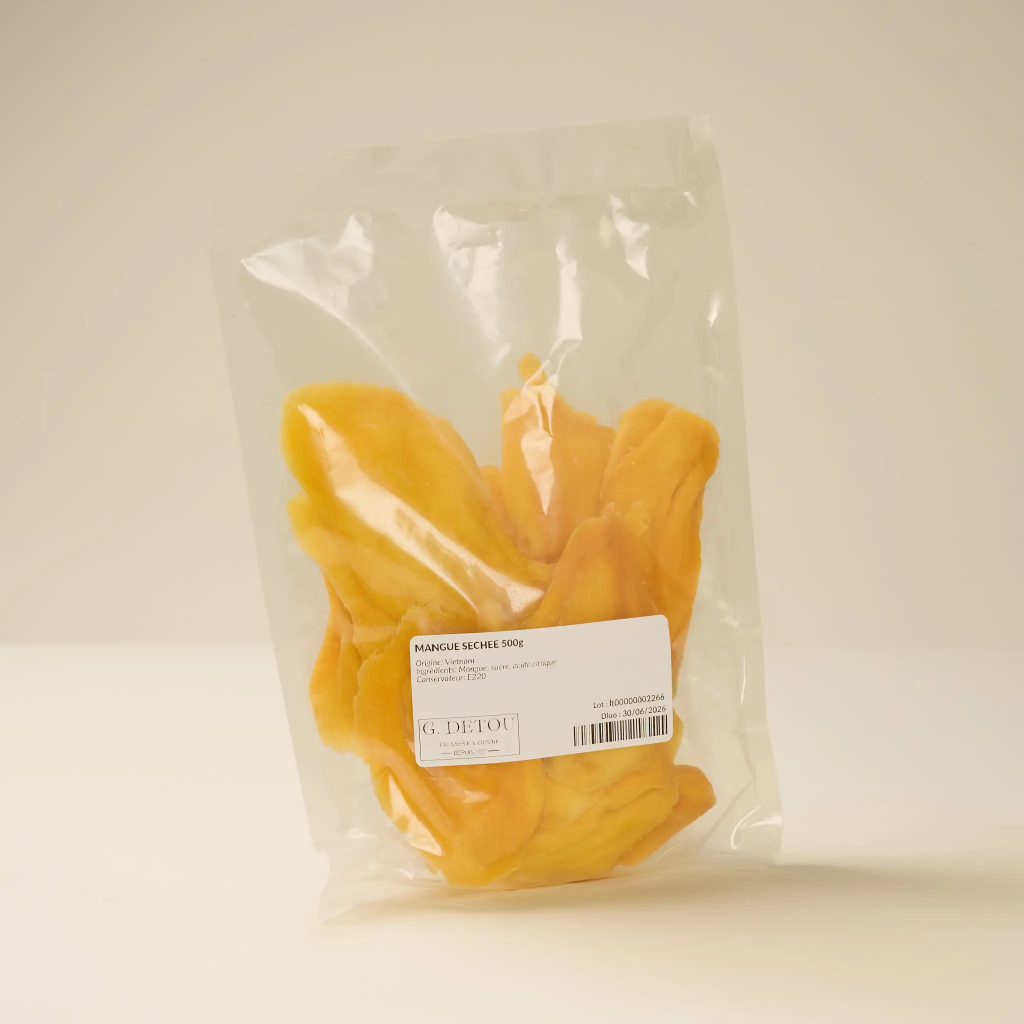
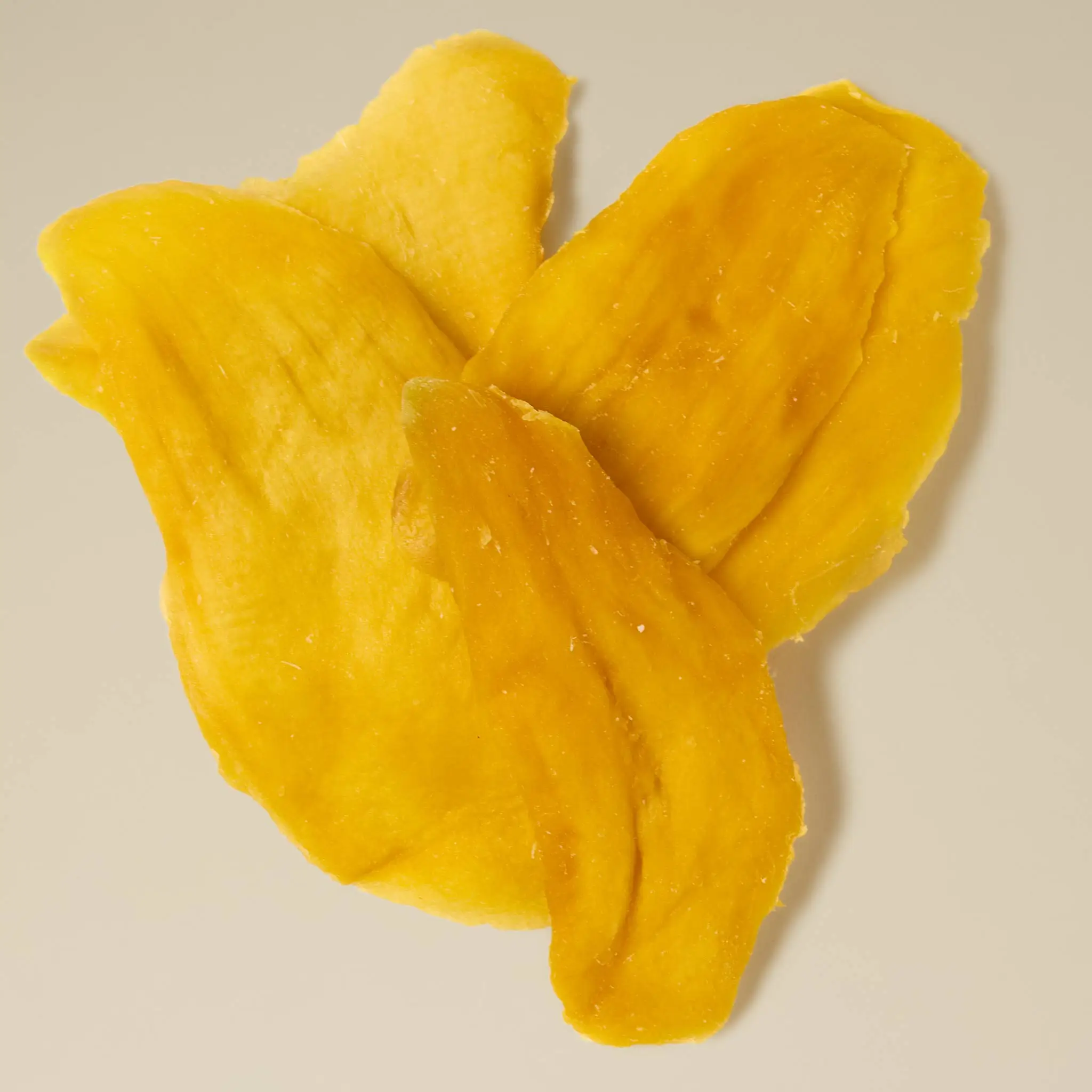
Dried mango 500g
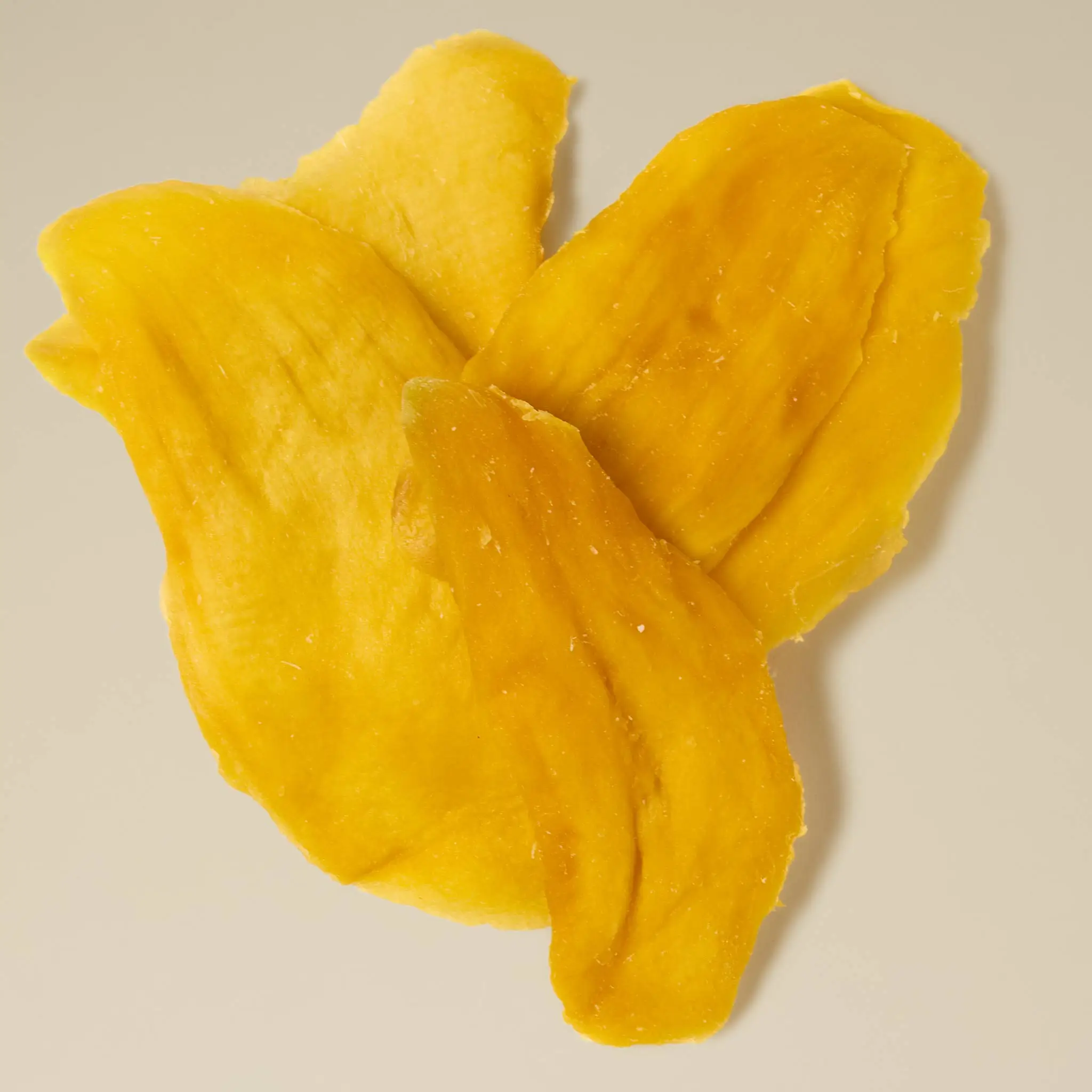
Dried mango is the tropical dried fruit we recommend for after-school snacks, healthy on-the-go eating, and desserts with an exotic profile. The slices are lightly sweetened during drying to preserve their soft, chewy texture — the standard preparation method for Asian-style dried mangoes.
Origin: Vietnam, which has become a major exporter of dried mango. The ingredient list is straightforward: mango, sugar, citric acid, preservative E220 (sulfur dioxide). The sulfite preserves the characteristic deep yellow color.
What sugar-assisted drying changes
Fresh mango is extremely juicy, and drying it without any preparation would yield tough, fibrous slices. A light surface sugaring (5 to 10%, depending on the producer) keeps the texture soft and tender at the core while stabilizing the fruit for several months of shelf life.
Sulfite E220 (sulfur dioxide) is the standard preservative used in commercially dried fruit. It protects color and prevents oxidation. Worth noting for anyone sensitive to sulfites — the allergen is declared in the ingredient list.
Vietnam emerged as a leading dried mango exporter in the 2010s, thanks to the quality of its fresh mango varieties (Cat Hoa Loc, Cat Chu) and its industrial processing capacity. The sector is now well-structured, operating under European export standards.
Serving ideas
As a straight snack, dried mango slices are ready to eat as-is. Ideal for after school, hiking, or travel — they hold their shape and deliver a serious energy boost.
In a fruit salad, chop and combine with orange segments, pomegranate seeds, and slivered almonds, dressed with a honey-lime vinaigrette. The dried mango contributes its concentrated sweetness, balancing the acidity of the citrus.
Rehydrated for 30 minutes in warm water or a splash of rum, the mango regains a juicier texture — perfect for a compote, spooned over fromage blanc, or stirred into a sweet-and-savory chicken tagine.
For a tropical fruit cake, fold 100 g of chopped dried mango with 50 g of dried coconut and 50 g of crushed macadamia nuts into a classic cake batter. Bake for 50 minutes at 170 °C for a fragrant loaf that makes a welcome change from traditional dried-fruit cakes.
For a homemade tropical smoothie, blend 100 g of dried mango with yogurt, orange juice, and a banana. Dehydrated mango blends easily and produces a thick, fruity texture with more concentrated flavor than fresh mango. It makes for a quick, energy-packed breakfast.
Vietnam has established itself as a top dried mango exporter thanks to the quality of its tropical varieties (Cat Hoa Loc, Cat Chu) and its industrial capabilities. The Vietnamese supply chain covers the entire process, from fresh fruit to export-ready packaging, in full compliance with European import standards.
Pickup and storage
500 g bag, available for pickup at our Paris store (58 rue Tiquetonne) or shipped anywhere in France. Store away from direct light and moisture. Reseal the bag after opening to keep the slices soft. No refrigeration needed.
If you love exotic dried fruits, we also carry dried pineapple, dried papaya, and seasonal dried mangosteen. Mango remains the most versatile for everyday use.
To turn dried mango into a quick confection, finely chop and coat with melted dark chocolate, spreading into thin strips on parchment paper. Five minutes in the refrigerator to set. The result is a homemade "chocolate-orange-mango" treat that appeals to all ages.
For fans of exotic dried fruits, we also carry dried pineapple, dried papaya, and dried mangosteen (limited seasonal availability). Each fruit has its own flavor profile. Mango remains the most versatile and widely loved — it appeals to a broad audience, from children to devoted fans of tropical flavors.
The Vietnamese supply chain covers every step: growing, harvesting, processing, and packaging. European export standards are met in accordance with EU regulations.
For lovers of exotic products, dried mango is an everyday fruit appreciated for its concentrated natural sweetness. It's also a hit with children as part of an after-school snack — a wholesome alternative to processed candy. That said, enjoy in reasonable quantities, given the sugar concentration that comes with dehydration.
Frequently asked questions
Added sugar or not?
Yes, added sugar — as with the vast majority of dried mangoes on the market. The sugar is what keeps the texture soft; unsweetened dried mango would be too fibrous.
Are sulfites a concern?
Sulfites are a standard preservative in dried fruit, where they protect color. Worth noting for anyone with a sulfite sensitivity — the allergen is listed in the ingredients.
Is an organic option available?
This product is conventional. Organic dried mangoes do exist in other formats — ask in store.
Can it be rehydrated?
Yes: soak for 30 minutes in warm water or a spirit (rum, candied ginger syrup). The mango regains a juicier texture, close to fresh fruit.
How do I keep it soft after opening?
Three to four months in a well-sealed bag kept in a dry place, or up to six months in an airtight jar.
Is it too sweet for children?
Dried mango contains its natural sugars, enhanced by a light industrial sugaring. It works as a snack alternative to candy — healthier than standard sweets, but best enjoyed in moderation (1–2 slices per child at a time).
Price per kg |
26,70 € |
Description
Dried mangoes, from organic farming, ideal for a healthy and tasty snack.
Characteristics
- Weight: 0.500 kg
- Ingredients: 100% organic mangoes
- Allergens: May contain traces of soy, nuts, milk and peanuts
-
Nutritional values:
Energy (kJ): 1212
Energy (kcal): 289
Total Fat (g): 2.2
Saturated Fat (g): 0.5
Total Carbohydrate (g): 62
Carbohydrate (sugars) (g): 60.3
Protein (g): 2.9
Salt (g): 0.13
Dietary Fiber (g): 8.2 - Legal name: Dried mango 500g
- Storage conditions: Store away from direct light and moisture.
- Best before date: See date indicated on the package
Nos derniers contenus
Découvrez les nouveautés dans notre entreprise !