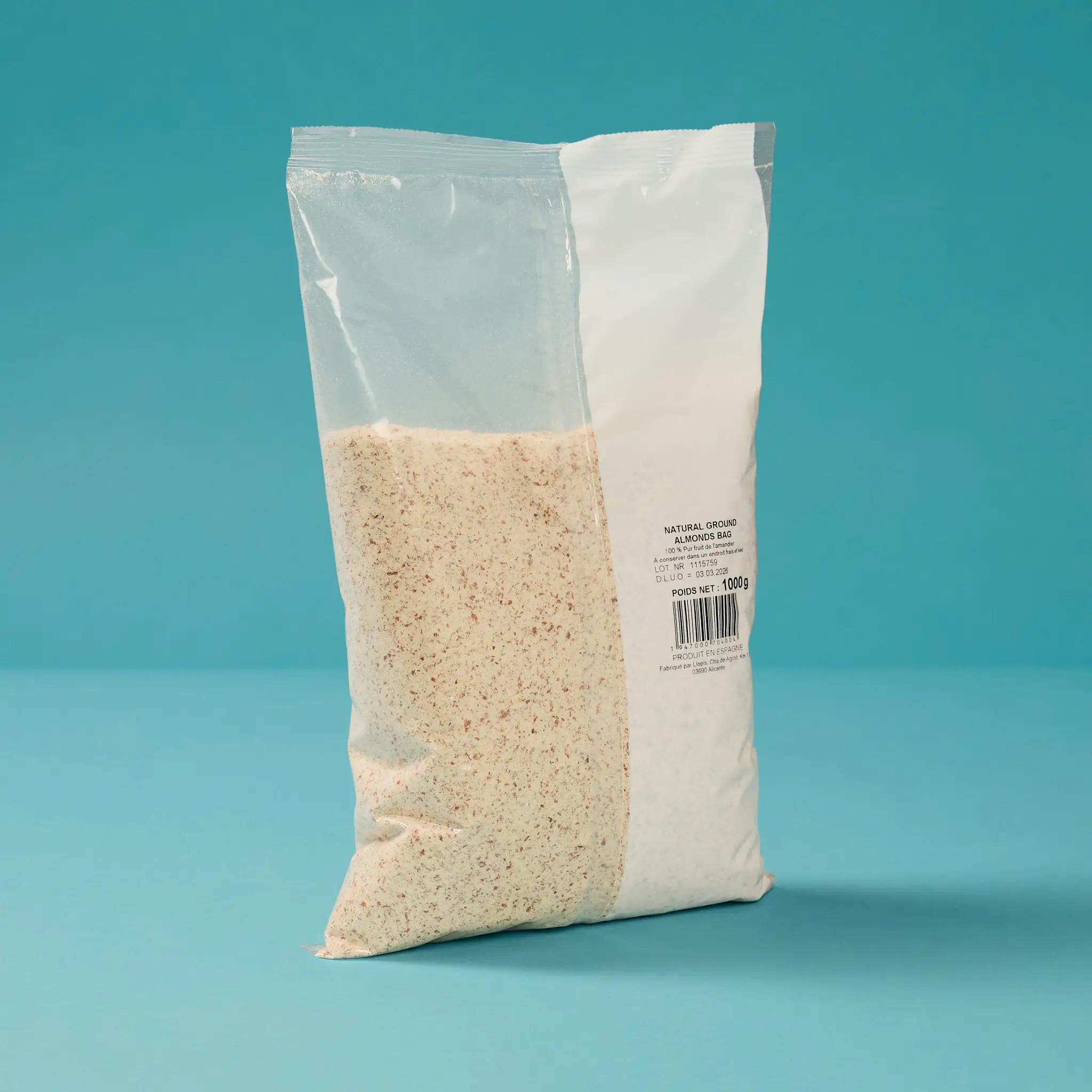



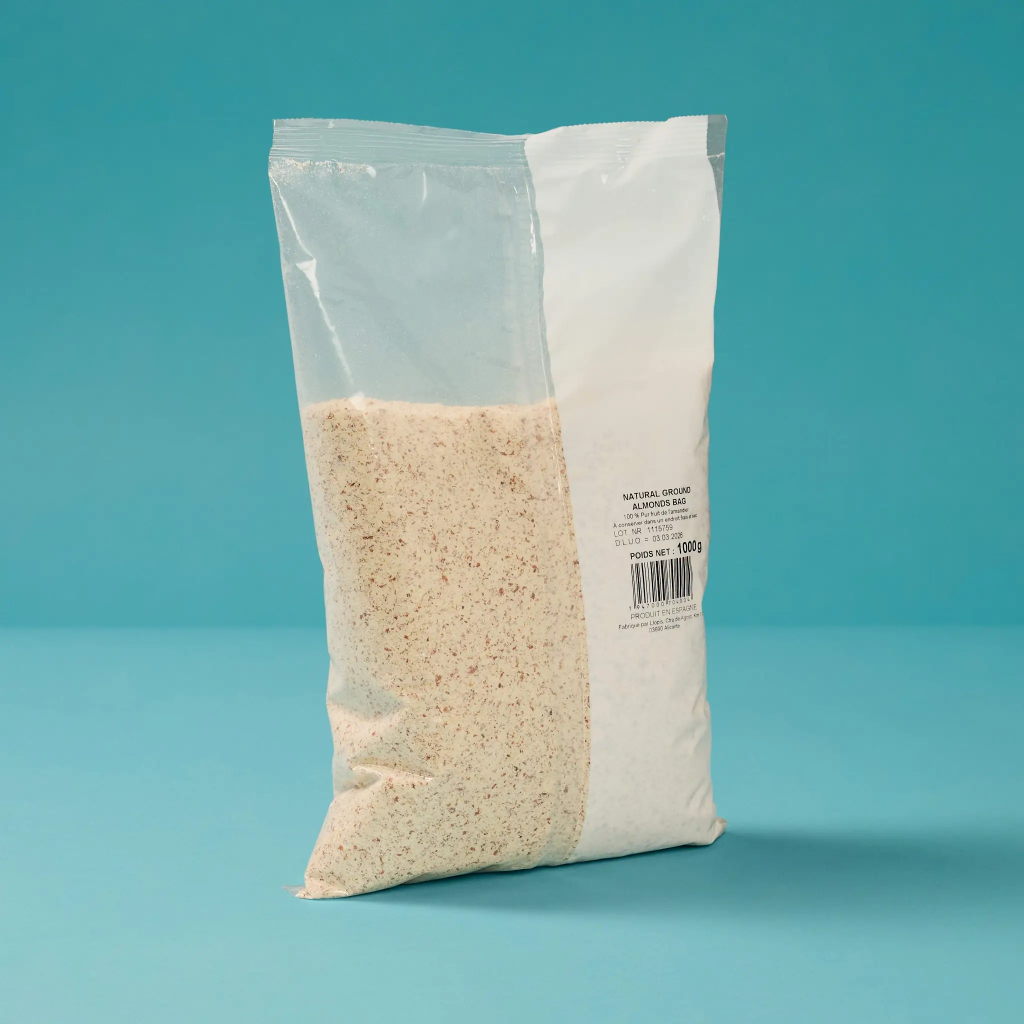
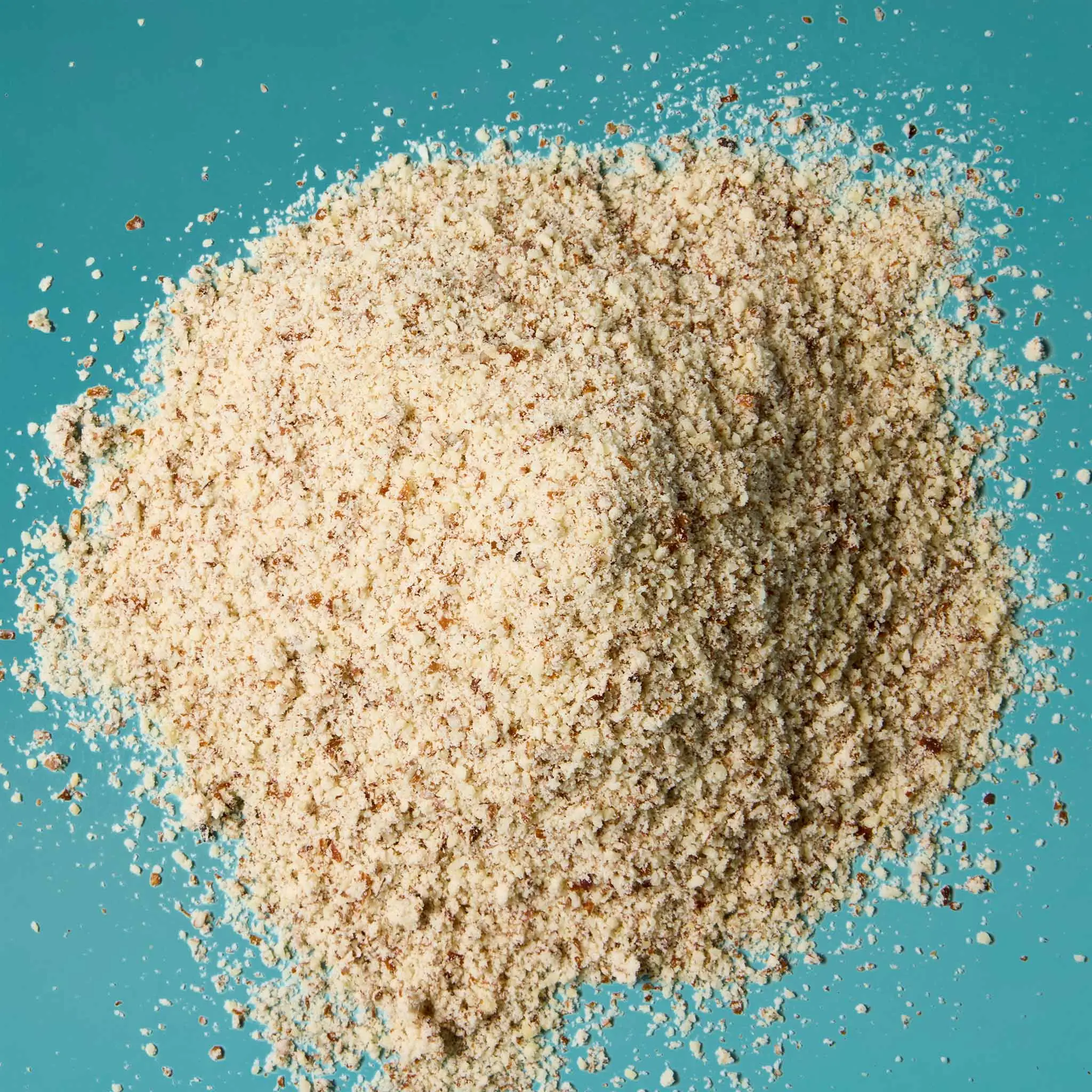
Grey almond powder 1kg
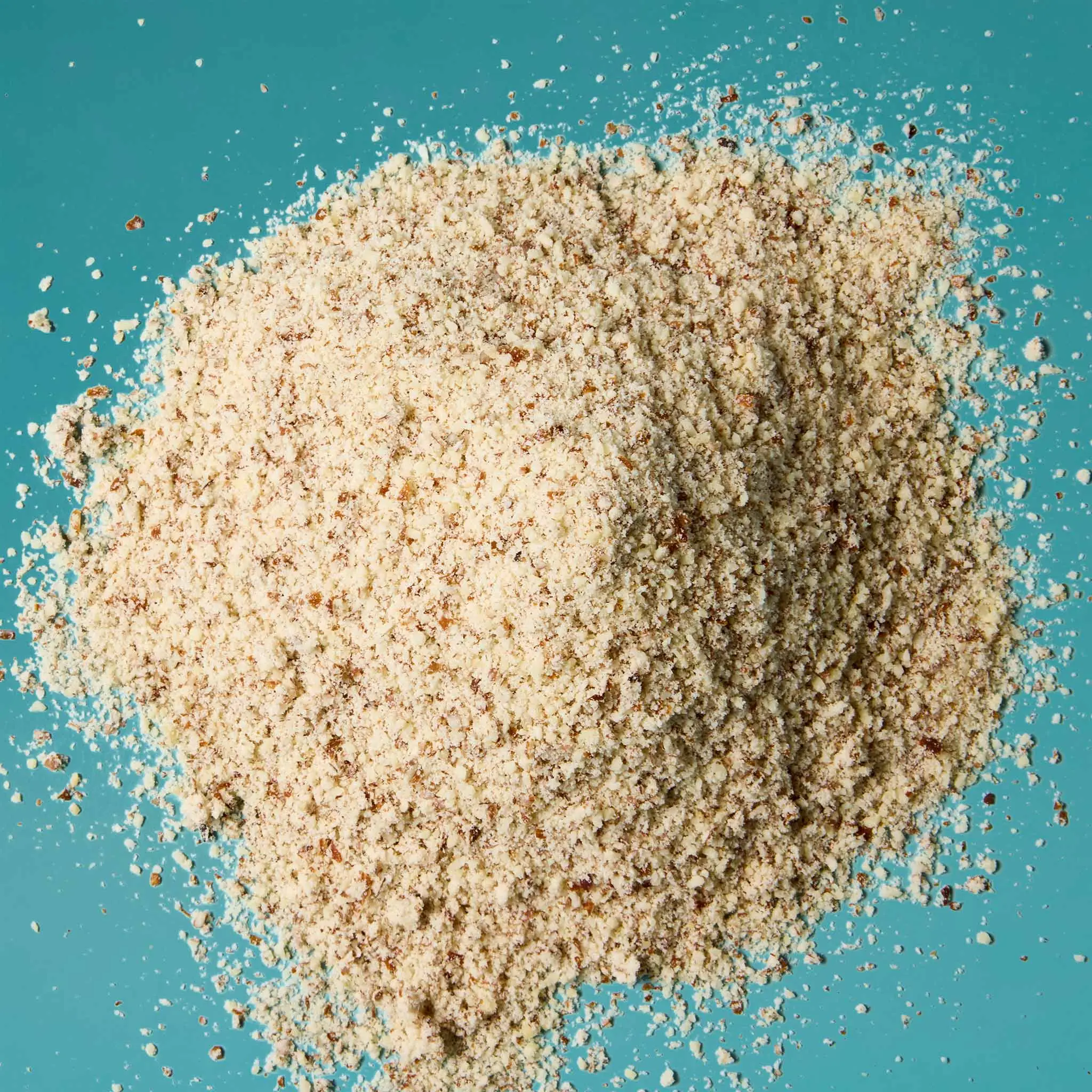
Gray almond flour is made from almonds ground with their brown skin still on — hence the speckled, grayish color. Compared to blanched almond flour, it delivers a pronounced tannic bitterness and a far more intense almond aroma. One hundred percent ground almonds, nothing added.
This is the almond flour we recommend to anyone after boldly flavored financiers, deeply aromatic frangipane, or rustic biscuits like Breton sablés. 1 kg bag, workshop-style packaging for regular use.
\nWhy keep the skin on
\nThe almond's brown skin holds tannins and a higher concentration of aromatic compounds than the pale flesh. Keeping it on during grinding yields a more deeply colored, more intensely flavored flour. This is the choice when you want a pronounced almond backbone — not just a neutral base.
Gray almond flour is coarser than standard blanched flour — the skin is fibrous and doesn't pulverize as finely. In practice, this means it works best in recipes where grind fineness isn't critical (financiers, frangipane, sablés) and is less suited to macarons with a smooth, polished shell.
Gray (skin-on) almond flour is the traditional choice of Italian and Spanish pastry — it's used in Sienese ricciarelli, almond biscotti, and Sicilian pan di mandorle. Its grayish color and assertive flavor are sought-after hallmarks of these Southern European recipes.
\nTips for use
\nIn a homemade financier, swapping blanched almond flour for gray flour radically shifts the profile: you move from a neutral, buttery financier to an intense, almost rustic one. Worth trying on a half batch to compare.
For a galette des rois frangipane, a 50% blanched / 50% gray blend strikes a good balance between mildness and character. Pure gray flour will give a very assertive frangipane — best reserved for true almond enthusiasts.
In Breton sablés or diamant shortbreads, the gray flour brings that frank, genuine almond flavor found in certain artisan cookies — something nearly impossible to achieve with standard blanched flour.
For homemade almond biscotti, combine 250 g flour, 100 g gray almond flour, 150 g sugar, two eggs, a little baking powder, and lemon zest. Shape into a log, bake for 25 minutes, slice, then return to the oven for 10 minutes. The classic double bake gives biscotti their signature crunch.
For anise-scented Italian cantucci, mix 200 g flour + 100 g gray almond flour + 100 g whole almonds + 2 teaspoons anise seeds + 150 g sugar + 2 eggs. Shape into a log, bake 25 minutes at 180 °C, slice, then return to the oven for 10 minutes. The double baking pass is the traditional cantucci technique.
Gray (skin-on) almond flour is the historic choice of old Italian pastry — long before the fashion for blanched flour took hold in the 20th century. It remains in use in authentic regional recipes: Sienese ricciarelli, Sicilian pan di mandorle, mandorlini di Ponti. Its grayish hue is part of what defines these cookies.
\nStorage in store
\n1 kg bag, available for pickup at our Paris store or shipped anywhere in France. Store in a cool, dry place away from light. Once opened, an airtight jar is essential — the brown skin contains oils that can turn rancid faster than in blanched almond flour.
For almond flavor purists, gray is the right call. For baked goods where a pale color matters (macarons, pastel dacquoise), switch to the extra-fine blanched version. Both have their place depending on the recipe.
For lovers of authentic Italian cookies, gray almond flour is the signature ingredient. We recommend it without hesitation whenever a customer asks how to recreate "the taste of the biscuits you find in Italy." Standard blanched flour will never deliver that distinctive aroma.
\nGray almond flour also has a long tradition in Corsican pastry — fiadone and other regional specialties call for skin-on almonds to achieve that full, assertive flavor. It's a Mediterranean tradition shared by Sardinia and Sicily alike. Gray flour is the authentic choice for these regional preparations.
\nFrequently asked questions
\nDoes it taste stronger than blanched?
\nNoticeably, yes. The tannins in the skin add a gentle bitterness and a more pronounced almond aroma.
\nCan it be used for macarons?
\nNot recommended. The gray flour's coarser grind means the shell won't smooth out properly. Stick to extra-fine blanched almond flour for macarons.
\nHow long does gray almond flour keep once opened?
\nTwo months in an airtight jar in a cool, dry place; four months in the refrigerator. Gray flour does go rancid a little faster than blanched.
\nCan it be blended 50/50 with blanched flour?
\nYes — it's actually a common technique in frangipane and financiers to hit a middle ground: the mildness of blanched plus the character of gray.
\nIs it suitable for a gluten-free diet?
\nAlmonds are naturally gluten-free. However, the absence of gluten cross-contamination is not certified — check the packaging if you have a confirmed sensitivity.
\nCan you make it at home from whole skin-on almonds?
\nYes — pulse whole unpeeled almonds in a food processor in 30-second bursts, scraping down the sides between each pass. Sift out any larger pieces. The result will be coarser than commercial flour, but perfectly usable for financiers and sablés.
Price per kg |
11,53 € |
Description
Ground grey almonds, ideal for pastry preparations and desserts.
Characteristics
- Weight: 1.000 kg
- Ingredients: 100% almonds
- Allergens: almonds
- Legal name: Grey-dusted pulverized almonds
- Storage conditions: Store in a cool, dry place, away from light.
Nos derniers contenus
Découvrez les nouveautés dans notre entreprise !