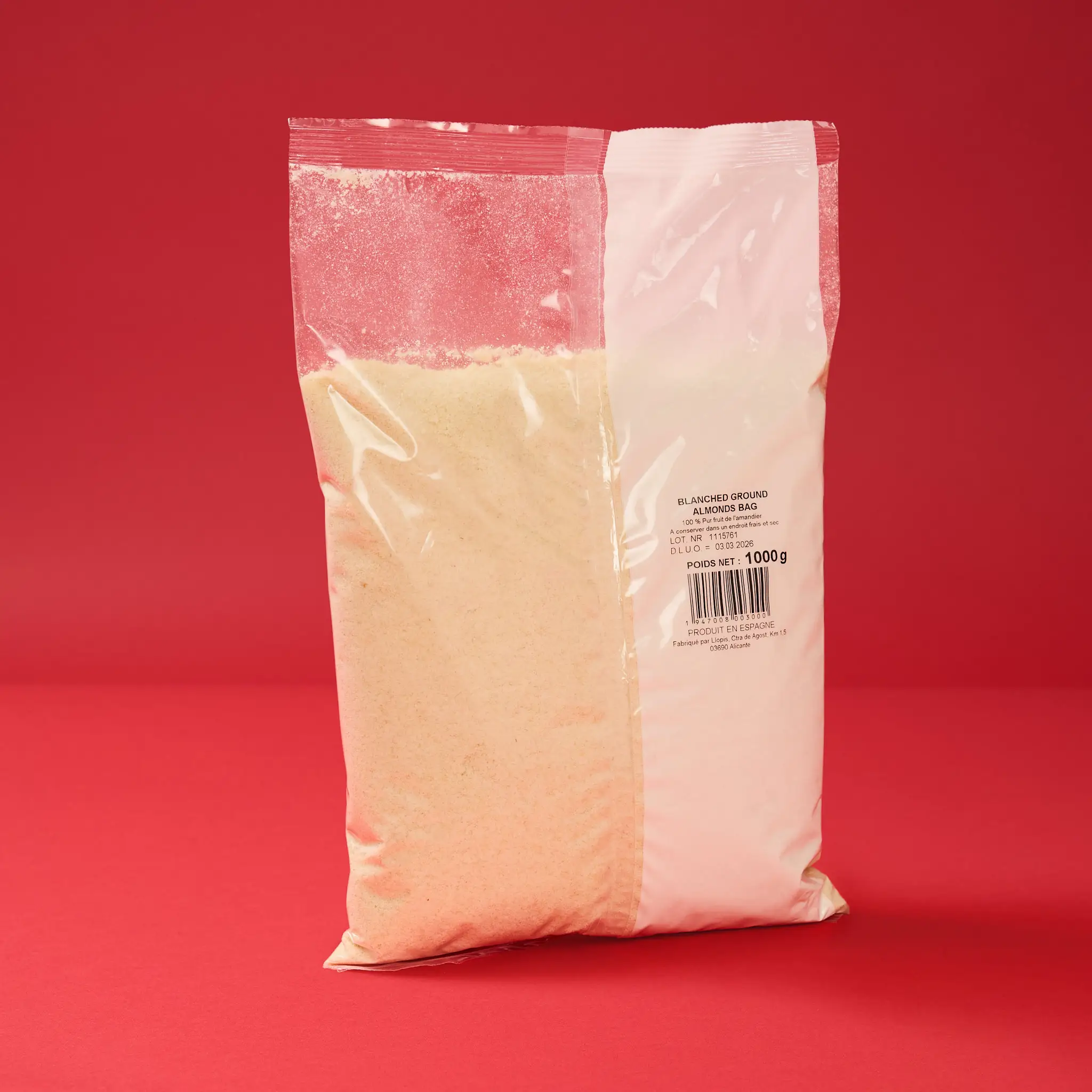



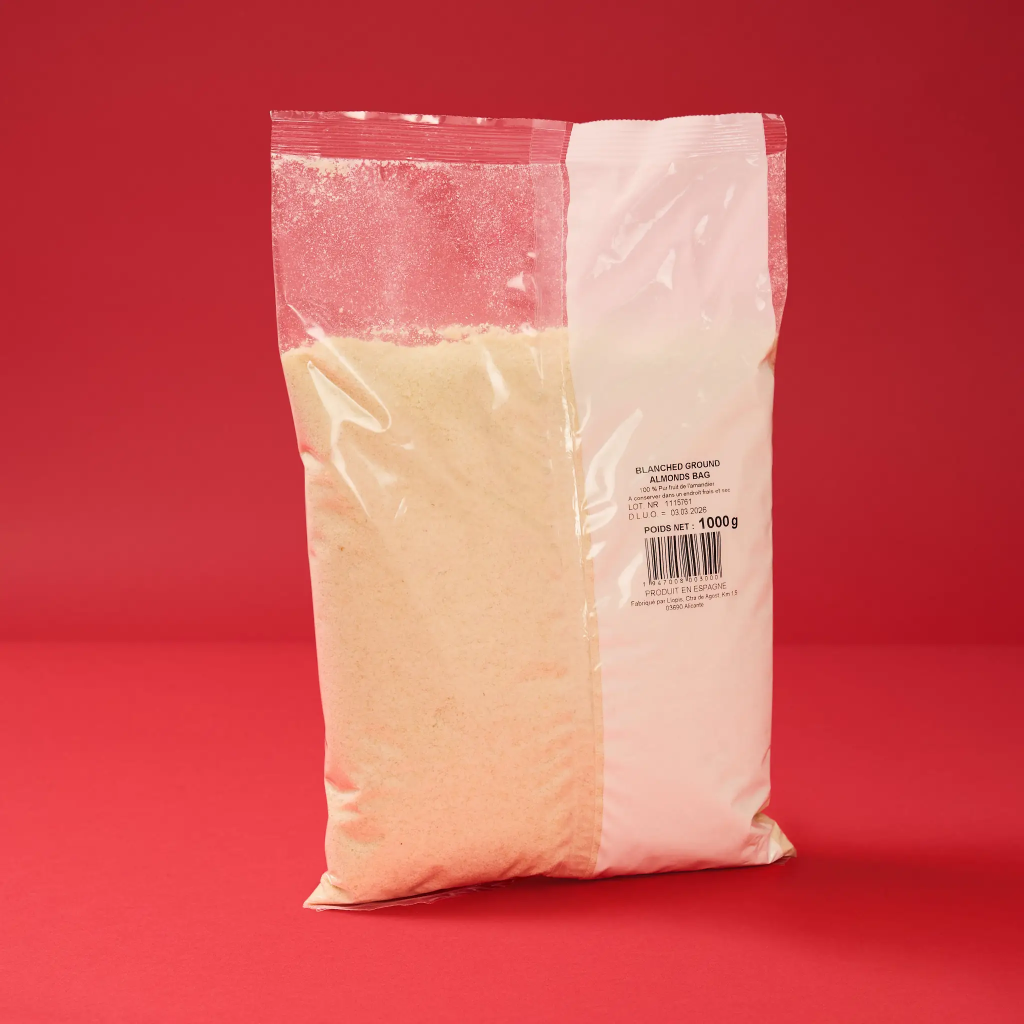
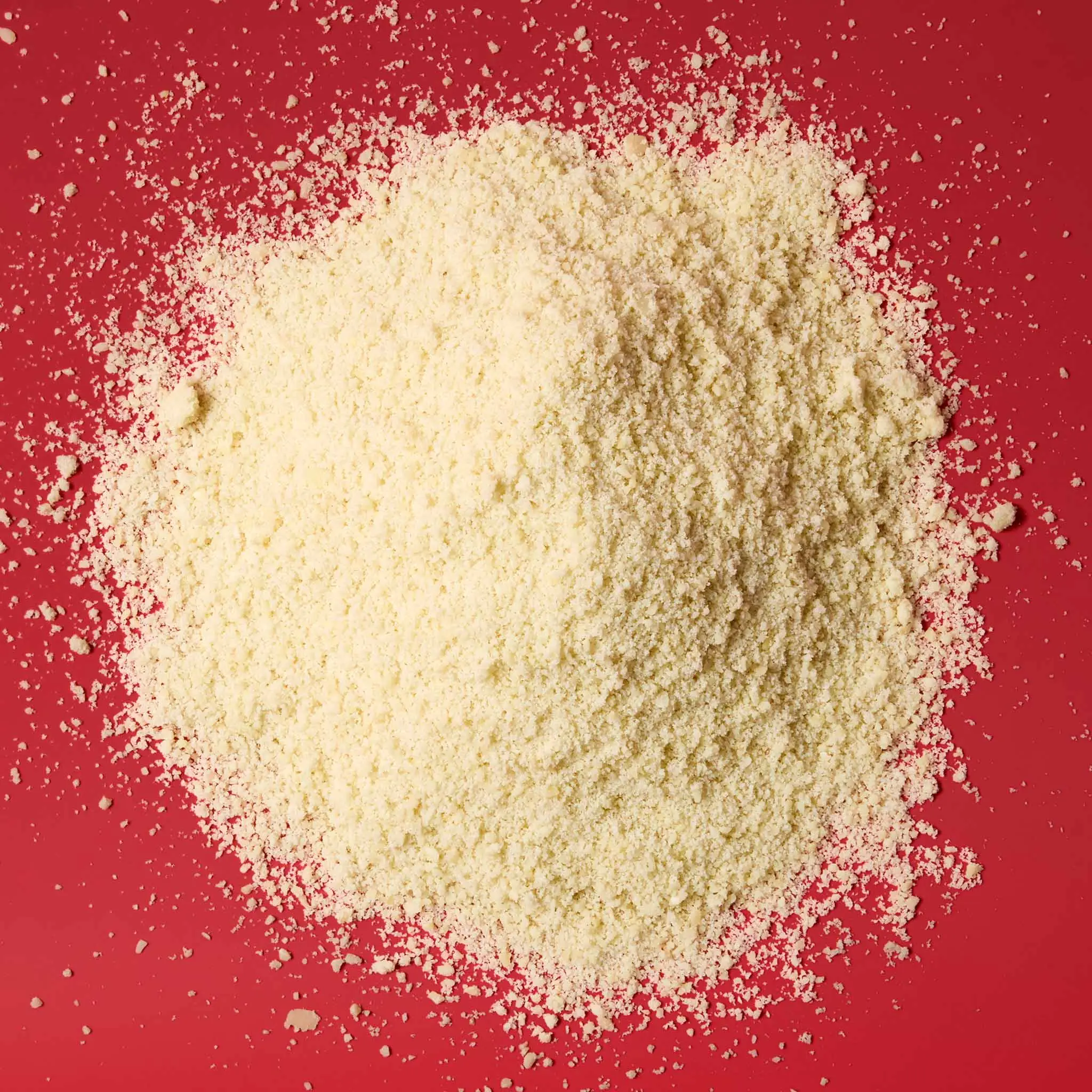
Standard US almond flour 1kg
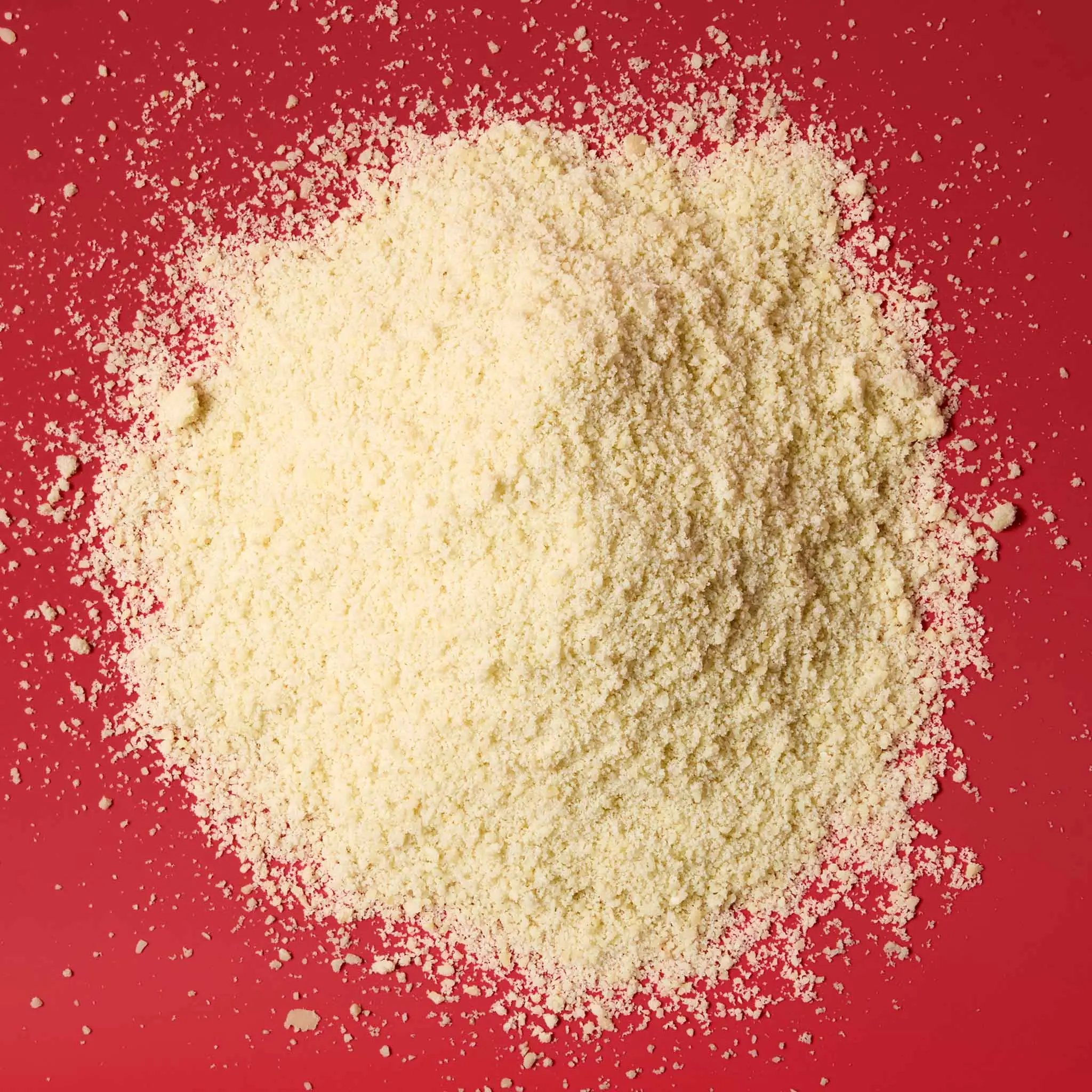
Standard-grind almond flour is the go-to, all-purpose staple of the baking aisle. More affordable than extra-fine, it suits every application where grind fineness isn't critical: frangipane, financiers, tart shells, almond cream, and cookies. One hundred percent ground almonds, nothing added.
1 kg bag in professional packaging, ideal for regular use. At our Paris shop, this is the almond flour we recommend first to home bakers who bake weekly but aren't specifically targeting macarons.
\nStandard vs. extra-fine: what difference does it make?
\nStandard grind corresponds to a particle size in the range of 800 to 1,000 microns — the industry-standard fineness. Fine enough to blend evenly into a batter, but too coarse for the perfectly smooth shell of a Parisian macaron.
Here's a simple test: rub the flour between your fingers. Standard grind has a slight, perceptible texture. Extra-fine feels powdery, almost floury. Both are useful — each has its own area of excellence.
The almond flour market is dominated by Californian production — California accounts for over 80% of the world's almond supply. Standard grind meets the high-volume demands of the commercial baking industry. It is a reliable global benchmark, calibrated for everyday incorporated uses.
\nUsage tips
\nFor frangipane, combine equal parts softened butter, sugar, whole eggs, and almond flour. Fill a puff pastry shell and bake for thirty minutes at 350 °F — this is the foundation of the galette des rois and many almond tarts.
For financiers, the classic ratio is: 100 g almond flour, 150 g confectioners' sugar, 80 g flour, 4 egg whites, 150 g browned butter. Bake 12–15 minutes at 350 °F in rectangular molds.
For almond cream in a fruit tart, combine equal parts butter, sugar, egg, and almond flour; spread over the tart shell before adding fresh fruit. Bake 35 minutes at 350 °F.
For a homemade almond tart crust (a gluten-free alternative), combine 200 g standard almond flour with 50 g cornstarch, 80 g melted butter, one egg, and 50 g confectioners' sugar. Roll out, line your pan, and blind bake. The crust is slightly more delicate than a classic shortcrust, but the almond flavor is wonderfully pronounced.
For financier and petit four enthusiasts, standard almond flour is the quality-value choice: noticeably less expensive than extra-fine and perfectly sufficient for these applications where grind fineness isn't critical. It's a versatile product we recommend as a reliable staple for any regular home baking practice.
The Californian almond industry has dominated the global market since the 1980s, delivering consistent quality standards and competitive pricing. This dominance explains the wide availability of almond flour across Europe, despite Mediterranean almonds offering superior aromatic complexity but remaining less accessible at an industrial scale.
\nStorage at the shop
\n1 kg bag, available for in-store pickup at our Paris location (58 rue Tiquetonne) or shipped anywhere in France. Store in a cool, dry place. Once opened, transfer to an airtight container — almond flour readily absorbs moisture and can clump, which makes accurate measuring difficult.
The 1 kg format covers roughly one month of regular use for a serious home baker. For occasional use, 500 g bags are available on other listings in the aisle.
For occasional bakers, the 500 g format is available on other listings. The 1 kg is sized for regular use — 3 to 4 batches of financiers per month, or a monthly family baking session. For very occasional use, transferring to an airtight container kept in a cool spot after opening will help maintain quality.
\nThe 1 kg bag of standard almond flour comfortably covers one month of regular use for a serious home baker — 4 to 6 batches of financiers, or 3 frangipane almond tart shells, or a month of daily baking. It's a format sized for consistent use, and one that makes buying in quantity well worth it compared to smaller packaging.
\nFrequently asked questions
\nWhen should I use standard rather than extra-fine?
\nFrangipane, financiers, almond cream for tarts, cookies, and cakes. Any application where the almond is incorporated into a batter. For smooth-shell macarons, extra-fine is preferred.
\nIs it less expensive than extra-fine?
\nYes, slightly. Extra-fine grind requires an additional sifting and intensive milling step.
\nHow long does it keep after opening?
\nThree months in an airtight container kept dry, six months in the refrigerator. Almond flour can turn rancid due to its natural fat content.
\nOrigin USA — does that matter?
\nCalifornia produces over 80% of the world's almonds — that's the structural reality of the market. For a Mediterranean almond, we carry Valencia and Marcona varieties elsewhere in the aisle.
\nCan it be toasted?
\nNot recommended: the fine grind burns quickly. For a more pronounced flavor, try gray almond flour, which retains the skins.
\nWhat pairs well with it for a flavored frangipane?
\nVanilla, orange blossom water, or dark rum. Three classic combinations: vanilla (the crowd-pleaser), orange blossom water (a southern French touch, as in pithiviers à la fleur d'oranger), and rum (for a Creole-style galette). Use a light hand so the almond flavor stays front and center.
Price per kg |
12,65 € |
Description
Almond powder made by Almendras Llopis, obtained from high-quality blanched almonds.
Characteristics
- Weight: 1.000 kg
- Ingredients: 100% almonds
- Allergens: Almonds, a common allergen
-
Nutritional values:
Energy (kJ): 575
Energy (kcal): 164
Total Fat (g): 14.2
Saturated Fat (g): 1.1
Total Carbohydrate (g): 21.2
Carbohydrate (sugars) (g): 4.4
Protein (g): 21.1
Salt (g): 0.01
Dietary Fiber (g): 12.5 - Legal name: US Standard Almond Powder 1kg
- Storage conditions: Store in a cool, dry place.
Nos derniers contenus
Découvrez les nouveautés dans notre entreprise !