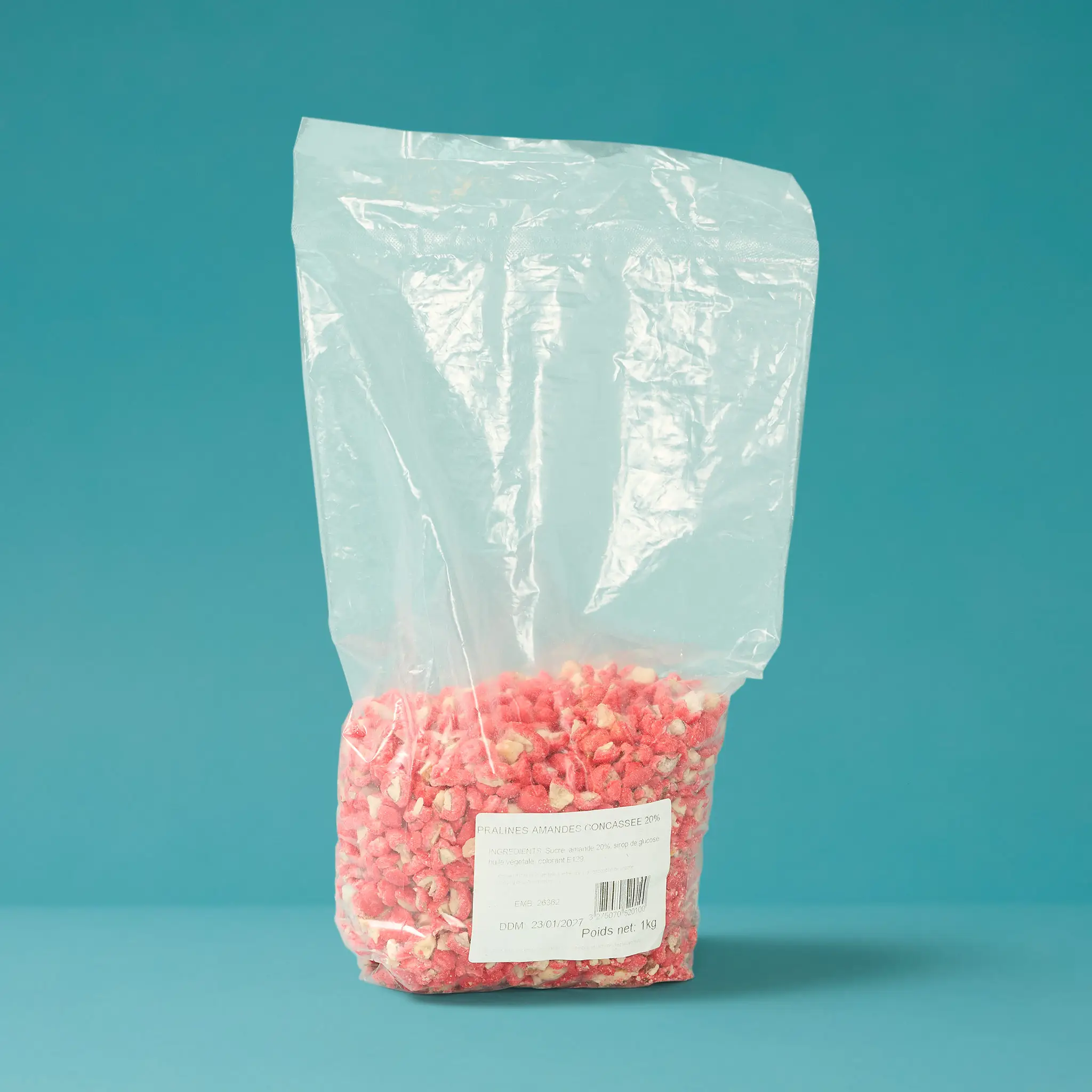


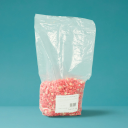
Crushed almond pralines (20%) 1kg
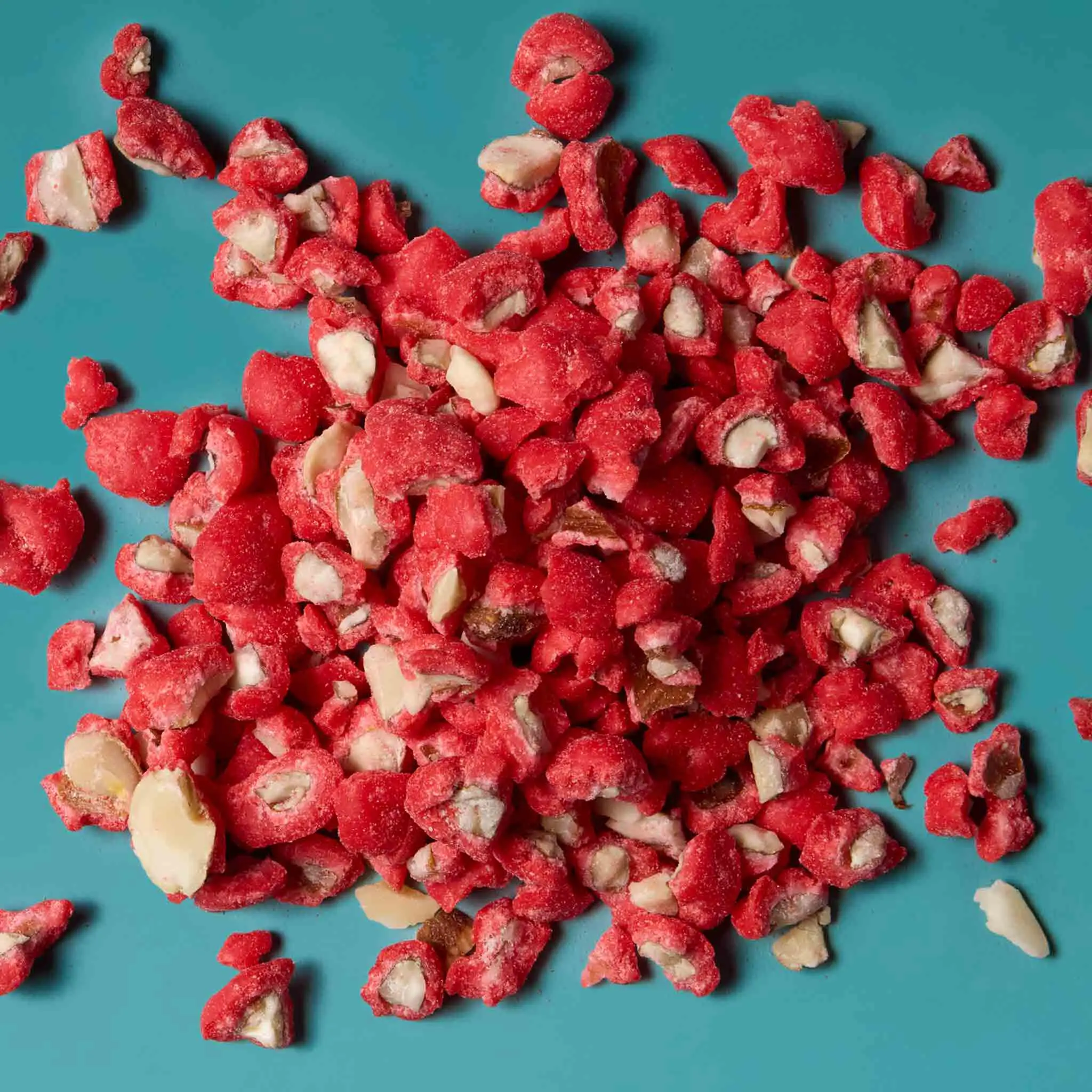
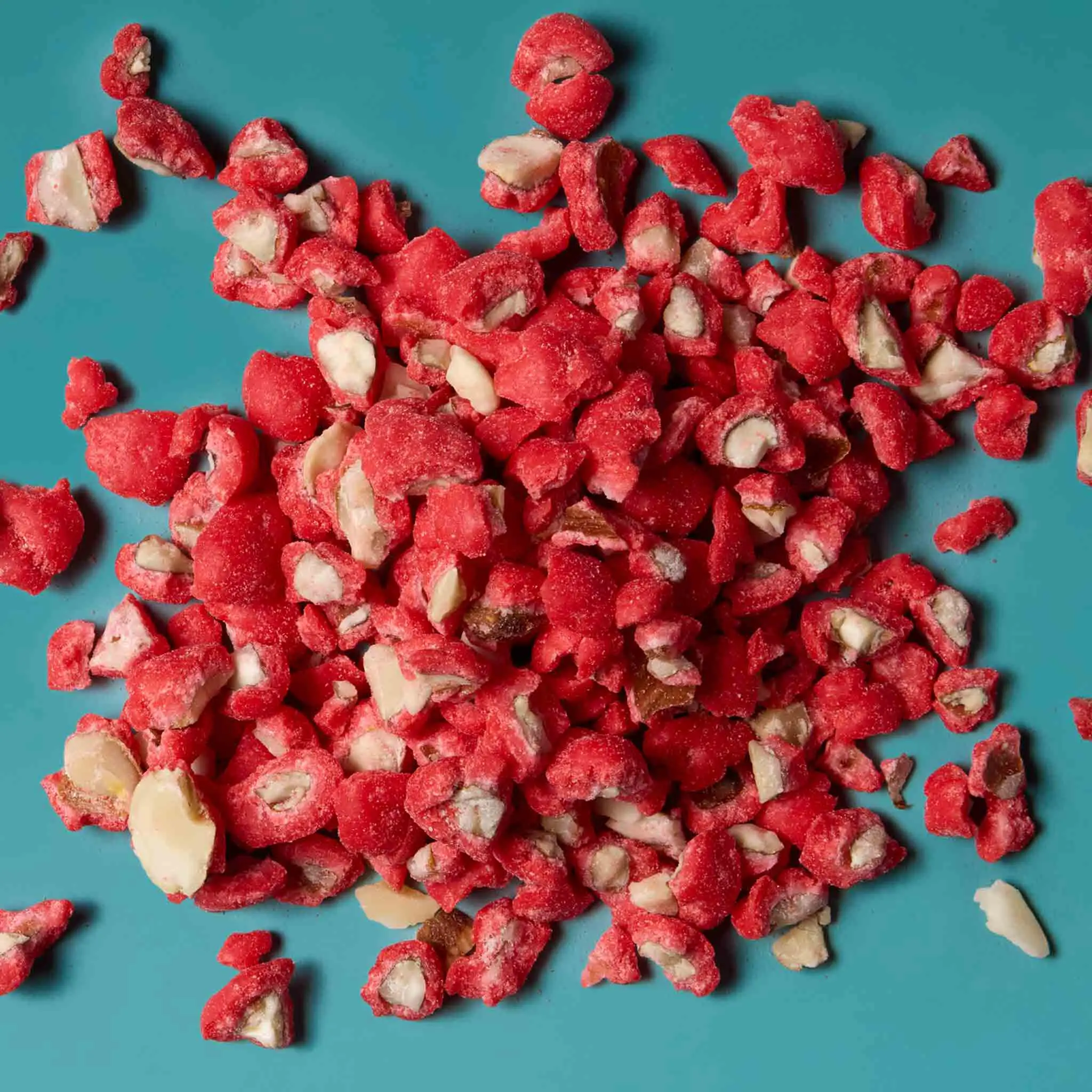
Crushed pink pralines are the signature ingredient of the Lyonnaise praluline and the famous tarte aux pralines. Almond content: 20% — the traditional percentage found in the red pralines of southeastern France. Pre-crushed, they blend directly into doughs with no prep work required.
Ingredients: sugar, almonds (20%), glucose syrup, starch, glazing agent (vegetable oil), vanillin flavoring, colorant E129 (cochineal red). Manufactured in Valence per the supplier's label. 1 kg bag, professional format.
\nWhy 20% almonds
\nAlmond content defines the character of a praline. At 20%, you get the classic balanced recipe: vivid pink color, pronounced crunch, predominantly sweet with a distinct almond note. Higher percentages (30%+) yield a more rustic, less sweet praline — an entirely different profile.
Crushing produces pieces of a few millimeters, ideal for folding into brioche dough, shortcrust pastry, or a tart filling. It eliminates the time-consuming step of breaking pralines with a rolling pin, which produces uneven chunks.
The Lyonnaise praline is a regional classic with roots in the 17th century. The traditional recipe calls for blanched almonds coated in a sugar syrup colored with cochineal red — the characteristic bright pink of pralines from Saint-Genix or the baker's praluline of southeastern France. Modern production stays true to this historical recipe.
\nUsage tips
\nFor a homemade praluline lyonnaise, fold 200 g of crushed pralines into brioche dough during the final shaping, just before the last proof. Baking for 25 minutes at 180 °C gently melts the pralines at their core while preserving intact pieces throughout.
For tarte aux pralines roses (Lyon recipe), combine 250 g of crushed pralines with 250 g of thick crème fraîche, spread over a pre-baked shortcrust shell, and finish in the oven for 15 minutes at 180 °C. A beautifully simple, single-component filling.
As a decoration for cakes or tartlets, scattered over a ganache or pastry cream. The vivid pink draws the eye, and the satisfying crunch provides a texture contrast against the cream.
For a pink praline sablé breton (a festive variation), fold 100 g of crushed pralines into a classic sablé breton dough before baking. The bright pink flecks reveal themselves on the cut — a striking visual effect, especially for a teatime cookie at a children's gathering or a dinner party.
For an authentic Lyonnaise dessert, the praluline is a praline-enriched brioche. Recipe: classic brioche dough + 200 g of crushed pralines folded in during shaping. Bake 25 minutes at 180 °C. The vivid pink crumb on the cut is the hallmark of a traditional praluline — one of Lyon's most iconic specialties.
The story of the pink praline traces back to the 17th century and the Maréchal du Plessis-Praslin, whose chef is credited with inventing the almond coated in colored cooked sugar. The bright pink Lyonnaise version took hold in the 19th century in the region's bakeries — giving rise to the baker's praluline that became a beloved regional specialty.
\nDelivery and G. Detou store
\n1 kg bag, available for in-store pickup at our Paris location (58 rue Tiquetonne) or shipped anywhere in France. Best stored between 15 and 18 °C in a dry place away from light. Higher temperatures may soften the sugar shell. Best-before date announced by the manufacturer: 12 to 24 months.
At the Paris store, you'll also find whole pralines on the shelf (more visually striking, great for snacking or decoration) and plain sugar-coated almonds. The 1 kg crushed format remains the most practical professional size for praluline and tarte aux pralines.
At the Paris store, we always keep a jar of whole pink pralines for the children who stop by with their parents — a sweet little tradition that makes the visit memorable. The 1 kg crushed format is the workshop staple, but that vivid pink color remains a powerful asset in pastry work.
\nFrequently asked questions
\nWhat is colorant E129?
\nCochineal red — a food colorant of animal origin (insect) used to achieve the deep red of traditional pink pralines. It is the historic colorant of the Lyonnaise praline.
\nHow much do I use for a praluline?
\n200 g for a family-sized brioche made with 600 g of dough. Fold in during final shaping to keep the pieces intact.
\nHow much for a tarte aux pralines?
\n250 g of crushed pralines + 250 g of cream for a 24 cm tart. A quick bake gently melts the pralines at their core.
\nWhat's the difference from whole pralines?
\nCrushed pralines are ready to use, perfect for folding into doughs or creams. Whole pralines are decorative and great for snacking; they need to be crushed with a rolling pin before incorporating into a recipe.
\nHow long do crushed pralines keep after opening?
\nSix to eight months in a well-sealed bag stored between 15 and 18 °C. Beyond that, the sugar may begin to visibly crystallize but the pralines remain perfectly edible.
\nDoes the pink color hold through baking?
\nYes — colorant E129 (cochineal red) is heat-stable. The vivid pink is preserved up to 200 °C. This is what sets pink pralines apart from products using natural colorants (such as beet) which turn brown under heat.
Price per kg |
7,43 € |
Description
Traditional Dauphiné pralines made with crushed almonds (20% almonds), coated in a characteristic shiny red cooked sugar. Used in pastry making (praline tarts, Saint-Genix brioche) or confectionery.
Characteristics
- Weight: 1.000 kg
- Ingredients: Sugar, Almonds (20%), Glucose syrup, Starch, Glossing agent: vegetable oil, Flavoring: vanillin, Color: E129
- Allergens: Contains: almonds. May contain traces of: other nuts.
- Legal name: Pink pralines with crushed almonds 20%
- Storage conditions: Ideally, store at a temperature between 15°C and 18°C, in a dry place and away from light.
- Best before date: Pralines generally have a best before date of 12 to 24 months.
Nos derniers contenus
Découvrez les nouveautés dans notre entreprise !