


Zaatar Thyme-Sumac-Sesame Blend 200g — Levantine Spice | G. Detou Paris
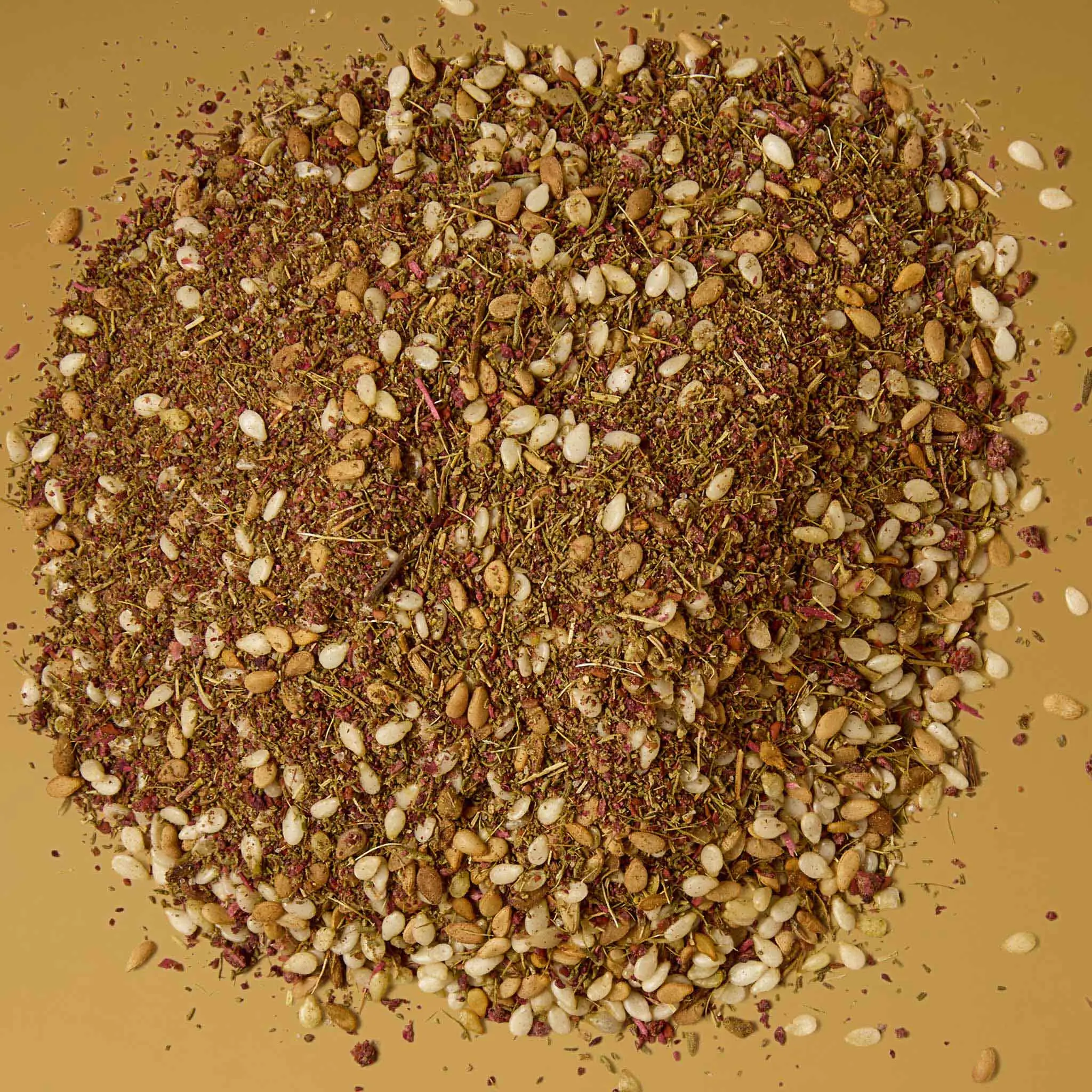
Zathar — or zaatar, depending on the transliteration — is the iconic spice and herb blend of the Levant. The base recipe: sumac, sesame, thyme, salt. It's the condiment found on Lebanese manakish, on the morning flatbreads of the Middle East, on grilled vegetables.
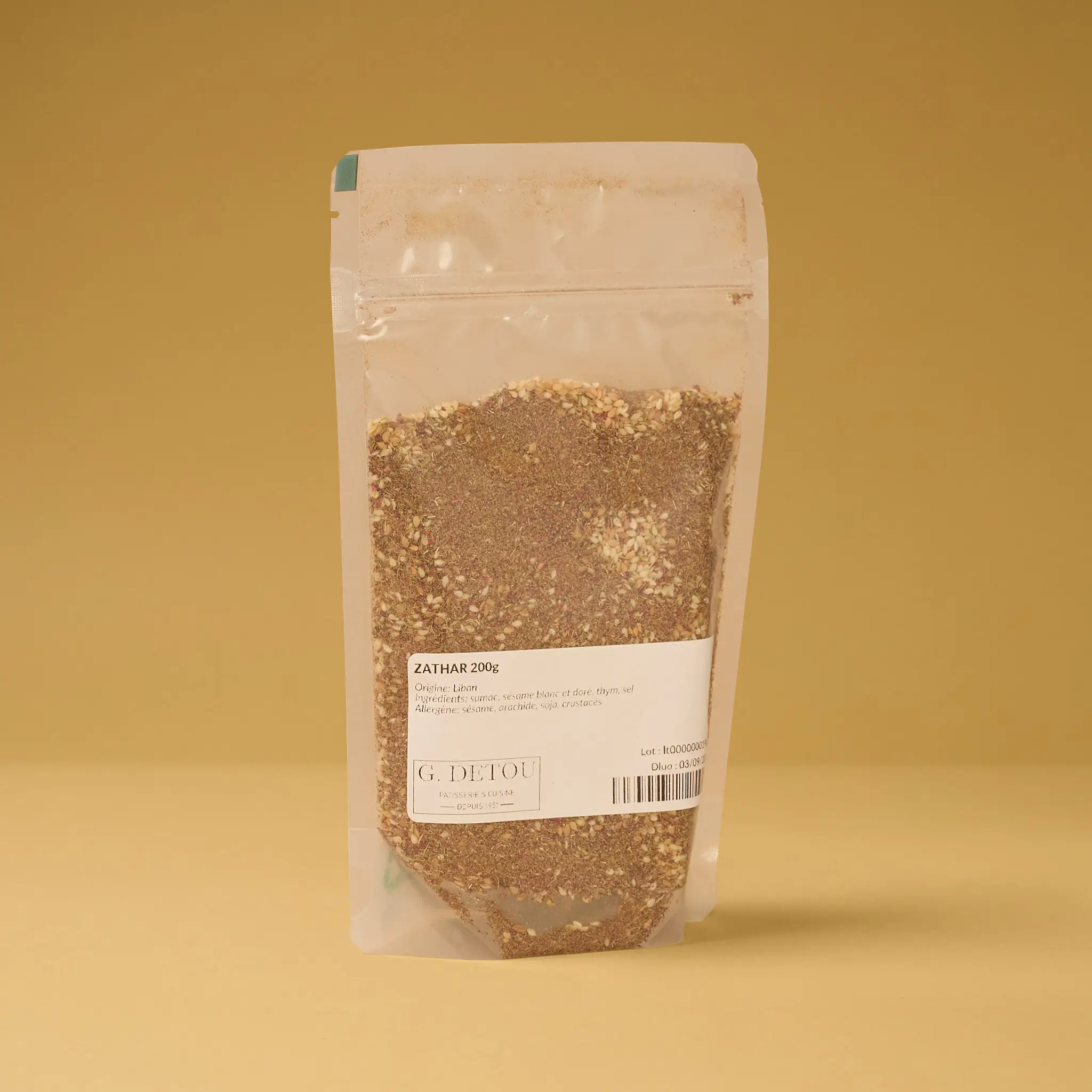
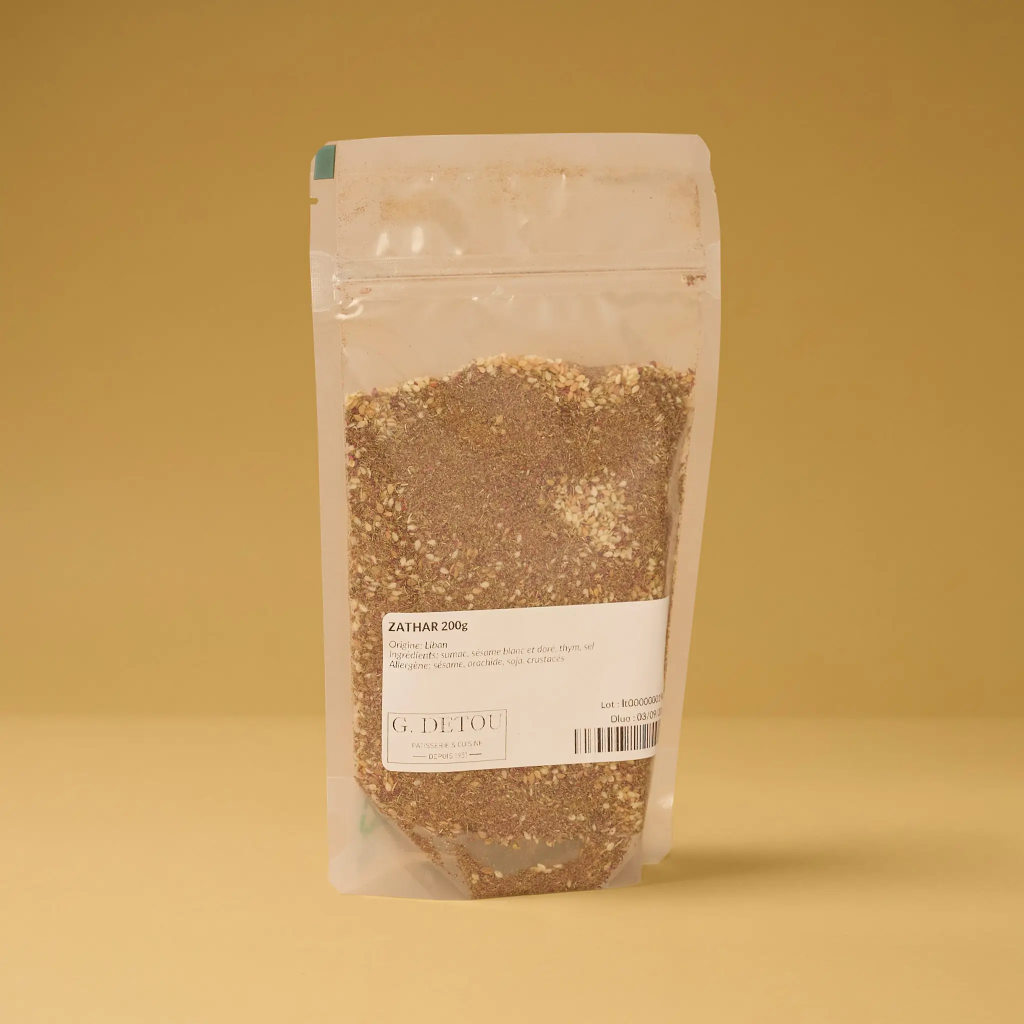
The label details the exact composition: sumac, white sesame, golden sesame, thyme, salt (14%). No oil, no added flavoring. Origin: Lebanon. This is a classic zathar made to a traditional recipe, seasoned for everyday cooking.
What makes a good zathar
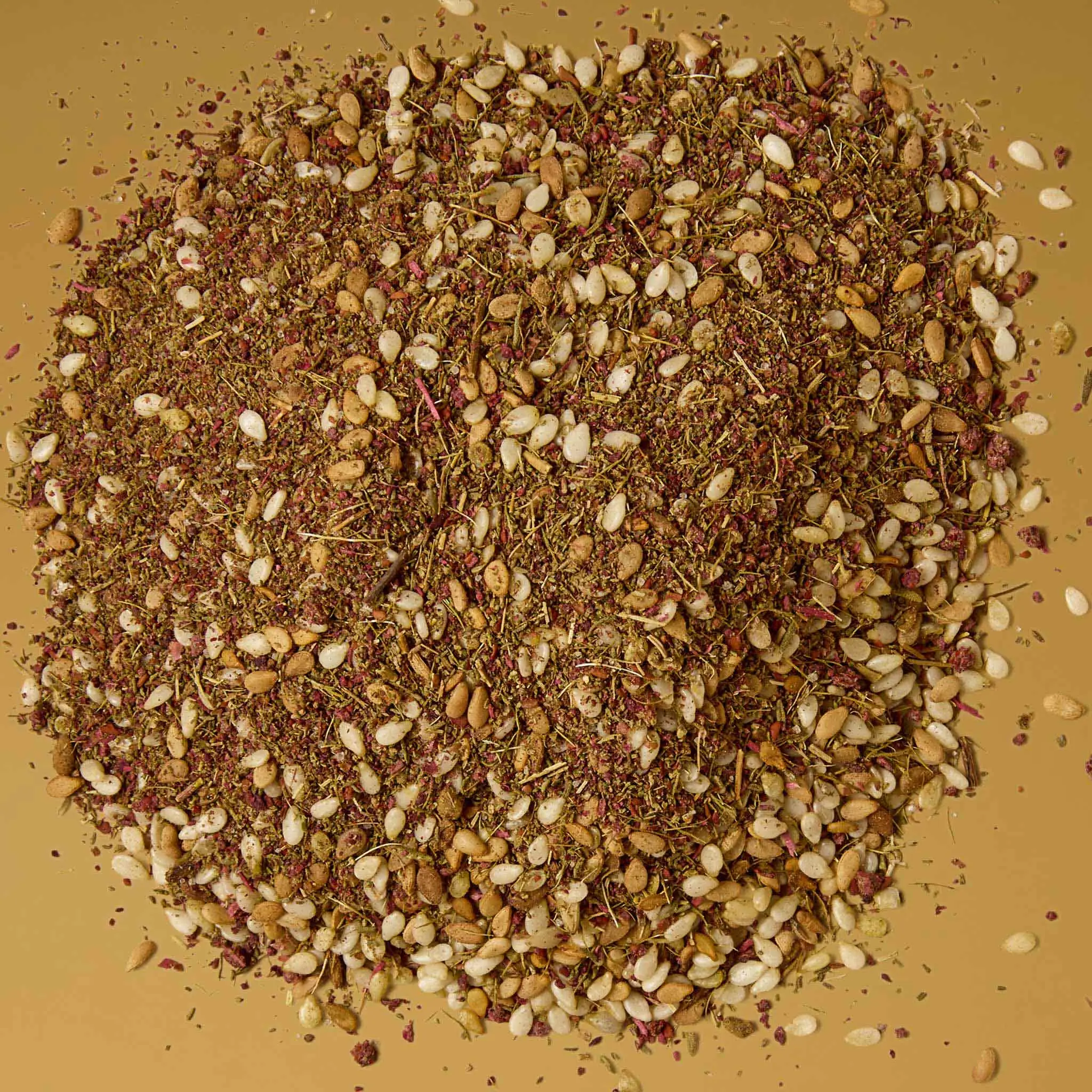
Four ingredients are all it takes for a quality zathar: sumac brings the acidity and deep red color, sesame the richness and toasted warmth, thyme (the variety — the Arabic word "zaatar" refers to several herbs related to thyme and oregano, varying by region) the herbaceous note, and salt the balance.
A salt content of 14% falls within the norm for Levantine zathar. Some blends go as low as 8–10% for a less salty result, while others climb to 20% for a bolder condiment punch. At 14%, you're looking at a well-balanced, standard ratio.
Zathar carries deep cultural significance in Lebanon and across the Levant — it's the everyday spice, present on the family table from breakfast onward, with manakish. The recipe varies by region and family, but the sumac-sesame-thyme-salt quartet remains the common foundation recognized by purists.
How to use it
On Lebanese flatbread — manakish — stirred into olive oil and spread over the dough before baking. This is the most traditional use, and the one that best reveals the blend's aromatic profile.
Over grilled vegetables (zucchini, eggplant, tomatoes), sprinkled on right after cooking while they're still hot. A drizzle of additional olive oil — zathar needs a fat to release its aromas.
Stirred into hummus — a teaspoon worked into the chickpea paste — or simply scattered on top as a finishing touch before serving. Zathar and hummus are a time-honored pairing in Middle Eastern cooking.
For zathar labneh (Lebanese-style strained yogurt), mix 200 g of labneh with a tablespoon of zathar and a drizzle of olive oil. Serve with warm flatbread as part of a mezze spread. This is the classic convivial use of zathar in everyday Lebanese home cooking.
For a Lebanese-style seasoned Greek yogurt, mix 200 g of Greek yogurt with a tablespoon of zathar and a drizzle of olive oil. Serve alongside hot grilled pita as an appetizer mezze. It's a daily staple in Lebanon, easily adapted to any kitchen.
Choosing quality zathar comes down to sourcing from a reputable supplier — many mass-market blends add cracked wheat to bulk up the mix and cut costs. An authentic Lebanese zathar is recognizable by the absence of any filler ingredient and by the freshness of the herbs, still perceptible on the nose.
In store & storage
200 g bag, available for pickup at our Paris location (58 rue Tiquetonne) or shipped anywhere in France. Store in an airtight jar, away from moisture and light. The sesame in zathar can turn rancid if exposed to heat — ideally keep it refrigerated during summer.
For fans of Middle Eastern cuisine, we also carry Palestinian za'atar (oregano-based rather than thyme-based) and baharat (a more complex spiced blend) in store. Lebanese zathar is the ideal entry point for exploring this family of spices.
For Mediterranean food lovers, Lebanese zathar also works beautifully on scrambled eggs, in an omelet, or scattered over smashed avocado toast. It's an everyday spice across the Middle East — by no means reserved for morning flatbreads alone.
Frequently asked questions
How is this different from the za'atar blend sold in supermarkets?
Supermarkets often carry an industrial blend made with Turkish oregano, sumac, and sesame — sometimes bulked out with cracked wheat. A traditional Lebanese zathar like this one contains only sumac, sesame, thyme, and salt.
Allergens?
Sesame (major allergen). Possible traces according to the label: celery, mustard, tree nuts, peanuts, soy, crustaceans. Worth noting for anyone with sensitivities.
Is it suitable for a gluten-free diet?
Sumac, sesame, thyme, and salt are naturally gluten-free. Check the bag's label if you have a confirmed sensitivity — some industrial zathars add cracked wheat.
How long does it keep after opening?
Six months in an airtight jar stored in a dry place. The sesame may begin to turn rancid beyond that, especially in summer.
Can I make my own zathar at home?
Yes: sumac (50%), toasted sesame (30%), dried thyme (15%), salt (5%). That said, the quality of the sumac remains the deciding factor — it's what delivers the blend's signature acidity.
How do I know if a zathar is good quality?
On the nose, you should be able to distinctly pick out notes of thyme and sumac. If the smell is dominated by salt or reads as a generic spice blend, it's a less characterful product. The sumac should lend its distinctive deep red color to the mix.
Price per kg |
29,74 € |
Description
Za'atar is a traditional Middle Eastern spice blend made with sumac, sesame seeds, and thyme. It offers warm, lemony, and slightly salty flavors. Ideal for accompanying mezze or dipping in olive oil, it adds a unique Mediterranean touch to your dishes.
Characteristics
- Weight: 0.200 kg
- Ingredients: Sumac, white sesame, golden sesame, thyme, salt (14%).
- Allergens: May contain: celery, sesame, mustard, nuts
-
Nutritional values:
Energy (kJ): 1387
Energy (kcal): 331
Total Fat (g): 22
Saturated Fat (g): 3.87
Total Carbohydrate (g): 13.23
Carbohydrate (sugars) (g): 0.89
Protein (g): 11
Salt (g): 14.5 - Legal name: Zatharah (Zaatar) Blend
Nos derniers contenus
Découvrez les nouveautés dans notre entreprise !