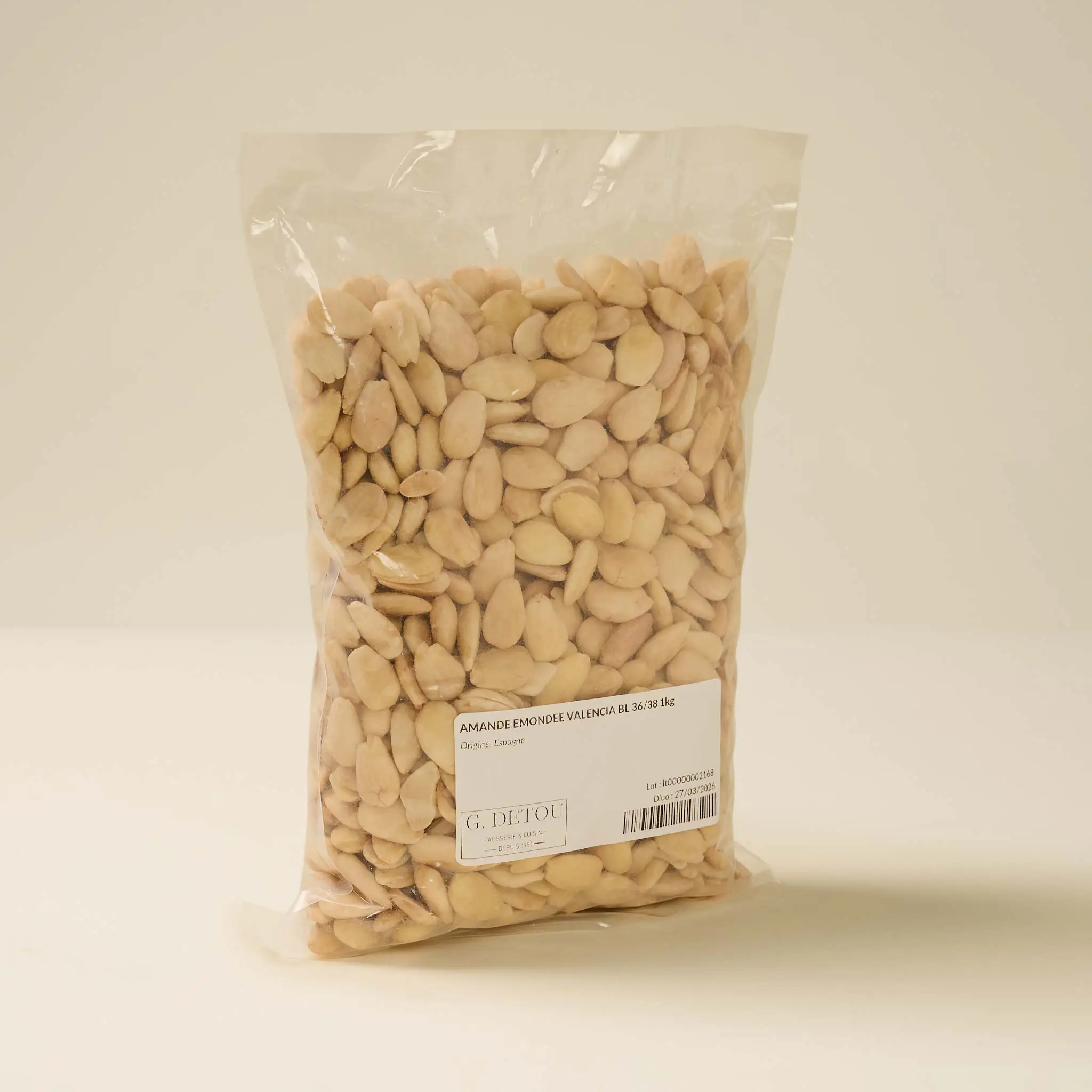



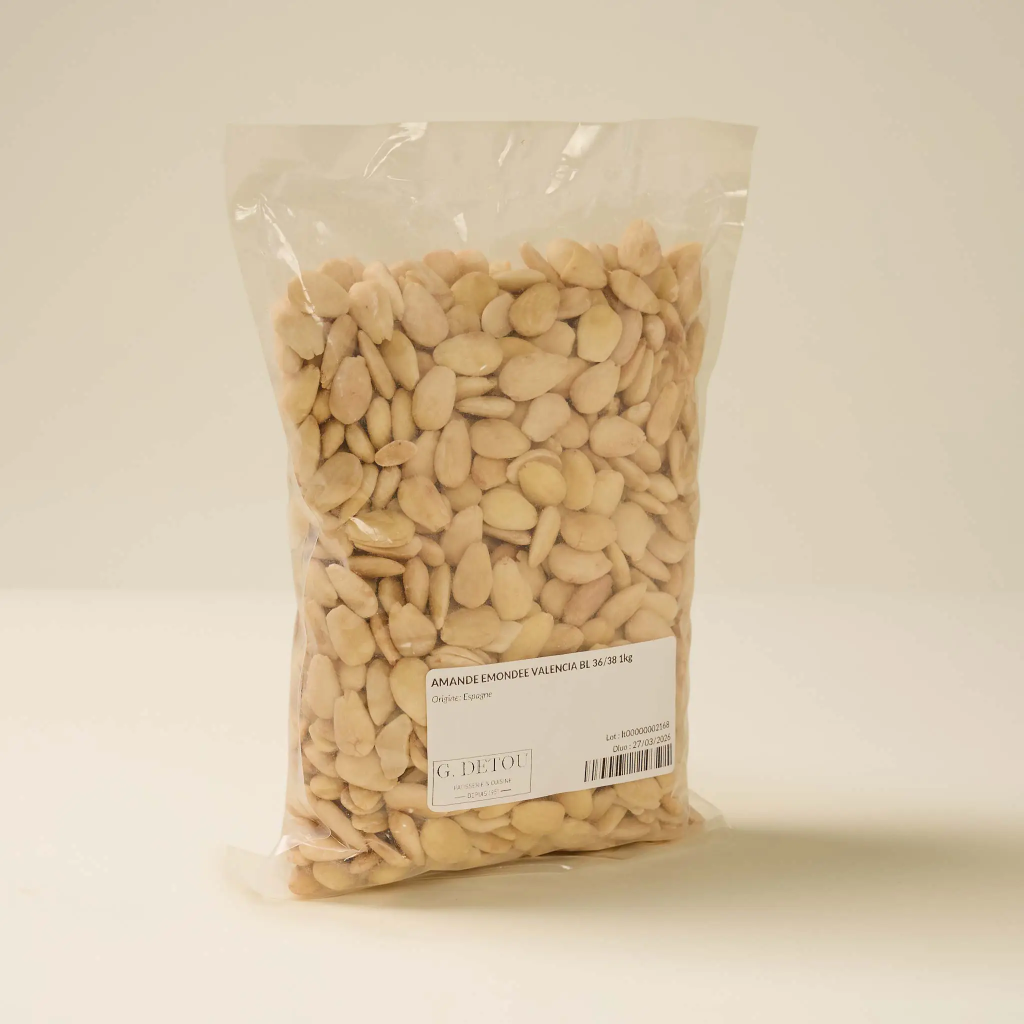
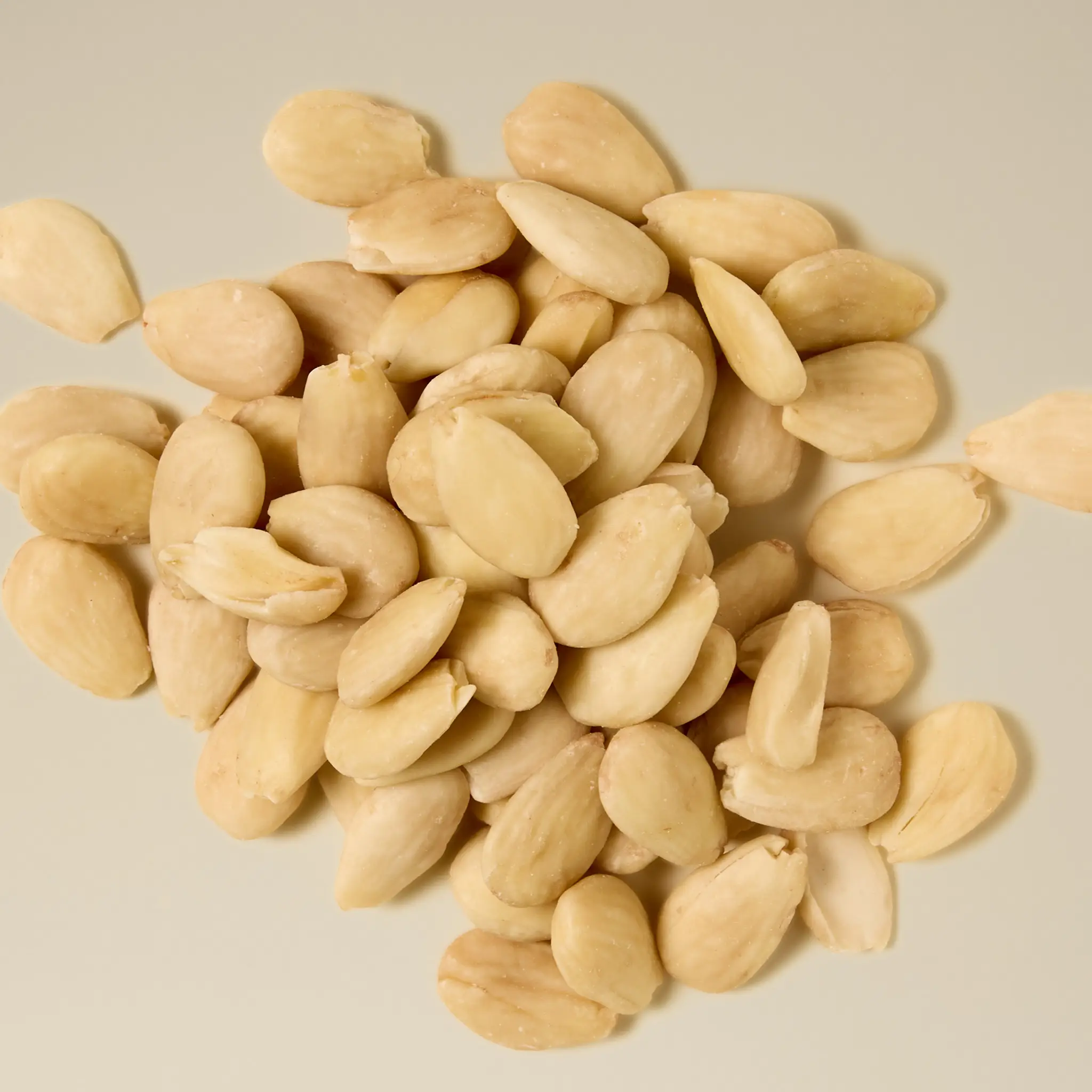
Blanched Valencia almonds 36/38 1kg
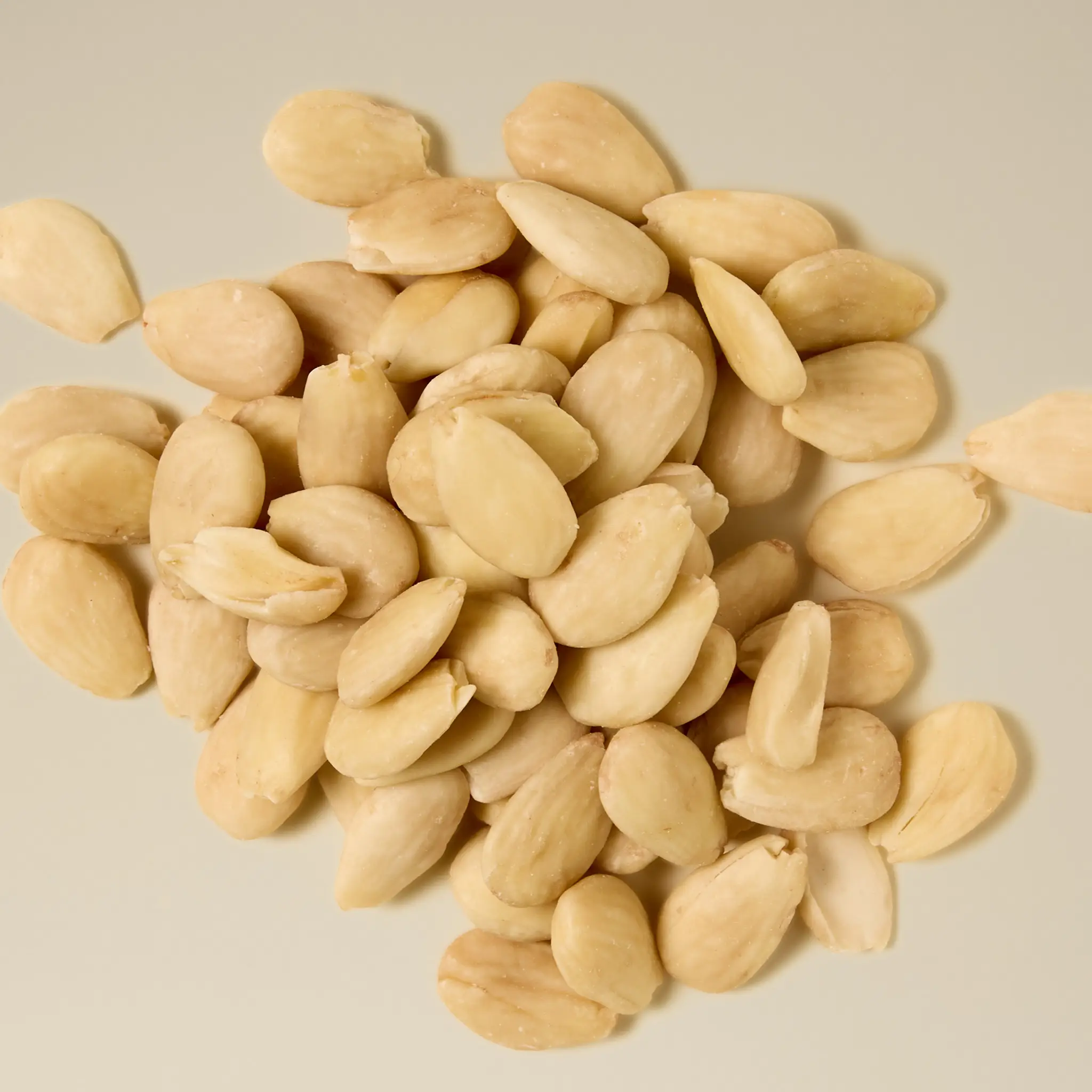
The blanched Valencia almond is the large-format variety reserved for preparations where the brown skin must not appear: white marzipan, white nougat, dragées, pale-crumbed pastries. Blanched means the almonds have been briefly scalded in boiling water and had their skins removed — either by hand or mechanically.
Size 36/38, meaning 36 to 38 almonds per gram — the standard pastry caliber. Spanish origin confirmed on the manufacturer's label. 1 kg bag, professional format or for the serious home kitchen.
\nBlanched vs. skin-on: what it actually changes
\nThe brown almond skin contains tannins and contributes bitterness. By removing it, you get an almond with a milder, more neutral flavor and a smooth, cream-white color. This is the almond you want for white marzipan, traditional white nougat, or dragées.
The blanching process adds cost compared to skin-on almonds, but it saves real time in the kitchen — you skip the tedious step of scalding in boiling water and peeling off the skins one by one.
Blanched Valencia almonds are traditionally used in Spain for Jijona nougat (turrón blanco), a classic winter confection. The recipe calls for blanched almonds, pure honey, sugar, and egg whites, cooked low and slow then molded. This is the signature use of this almond in Spanish confectionery.
\nServing and use ideas
\nFor homemade white marzipan: process 250 g blanched almonds in a food processor, then mix with 250 g confectioners' sugar, one egg white, and a few drops of vanilla extract. Keeps for one month in the refrigerator wrapped tightly in plastic wrap. Perfect for Christmas figurines or cake covering.
For white nougat, the blanched almonds are lightly toasted, then folded into a sugar syrup cooked to 145 °C (293 °F) with whipped egg whites and honey. A technical recipe, but the result is in a league of its own compared to anything store-bought.
For homemade dragées or sugar-coated almonds — cook a syrup to 121 °C (250 °F) with a touch of glucose syrup, then coat the blanched almonds in successive layers. The process is time-consuming, but the results are spectacular.
For a homemade visual praliné effect (whole, glossy almonds), coat the blanched Valencia almonds in a sugar syrup cooked to 145 °C (293 °F), roll in white granulated sugar, and let cool. The almonds take on the look of white dragées and keep for one month in an airtight container.
For a 50% homemade white marzipan with a pronounced almond flavor, the blanched version is non-negotiable — grind 250 g blanched almonds with 250 g confectioners' sugar, one egg white, and a teaspoon of orange blossom water. Shape into a ball, wrap in plastic, and rest for 24 hours before use. The flavor is noticeably more intense than any standard commercial marzipan.
Industrial almond blanching is carried out in Spain or Italy in specialized facilities. The process uses a brief blast of hot steam (60–80 °C / 140–176 °F) to loosen the skin, followed by mechanical friction between rollers. It is a clean process that does not alter the nutritional qualities of the almond.
\nStorage and delivery
\n1 kg bag, available for in-store pickup at our Paris location or shipped anywhere in France. Store in a cool, dry place with the bag resealed. Once opened, an airtight jar is recommended. Without its protective skin, the blanched almond absorbs moisture more readily.
The 1 kg format is sized for regular nougat, marzipan, or dragée-making sessions. For occasional one-off use, the 500 g roasted blanched almonds available on the shelf are a fine option.
On the almond shelf, you'll often find both versions — skin-on and blanched — side by side. It's a great opportunity for enthusiasts to compare them visually and choose based on their intended use. For applications where the almonds are incorporated into a batter and the color won't show, the skin-on version (less expensive) works perfectly well.
\nThe blanched Valencia almond is Spain's reference almond for turrón de Jijona — a traditional winter confection combining blanched almonds and heated honey. This regional specialty remains widely enjoyed at Christmas throughout Spain and stands as a testament to the historic culinary heritage built around this variety.
\nFrequently asked questions
\nWhy blanched rather than skin-on?
\nFor preparations where a pale color and neutral flavor are essential: white marzipan, white nougat, dragées, light-colored pastries.
\nCan you blanch them yourself?
\nYes: drop them into boiling water for three minutes, drain, then slip the skins off between your fingers. More time-consuming, but entirely doable if you have a bag of skin-on almonds on hand.
\nWhich size to choose?
\n36/38 is the standard pastry caliber. For larger cocktail-style almonds, look to sizes 23/25 (California) or Marcona.
\nHow long do blanched almonds keep once opened?
\nSix to eight months in an airtight jar kept in a dry place. Blanched almonds have a slightly shorter shelf life than skin-on almonds, as the skin helps protect the natural oils.
\nSuitable for a gluten-free diet?
\nAlmonds are naturally gluten-free. However, the absence of gluten cross-contamination is not certified — check the label if you have a confirmed sensitivity.
\nWhat does the industrial blanching process involve?
\nA hot water bath (80–90 °C / 176–194 °F) for 3–5 minutes softens the skin, which is then removed mechanically between rollers. This industrial process accounts for the price premium of blanched almonds over their skin-on counterparts.
Price per kg |
13,03 € |
Description
Valencia BL 36/38 blanched almonds (1kg) offer a crunchy texture and delicate flavor. Perfect for baking, snacks, or toppings, they add a delicious and refined touch to your creations.
Characteristics
- Weight: 1.000 kg
- Ingredients: 100% almonds
Nos derniers contenus
Découvrez les nouveautés dans notre entreprise !