



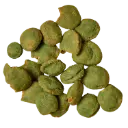
Dried Fruits & Snacking
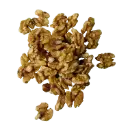
Almonds, walnuts, hazelnuts, pistachios, pecans, cashews, pine nuts, macadamia nuts… Nuts and dried fruits take up an entire wall of the shop, lined up in jars, bags, and bulk bins. Since 1951, we've chosen them with the same exacting standards as a pastry chef: variety, size, freshness, drying method. That's what sets apart a nut that snaps when you bite it from a soft almond banished to the back of a cupboard. 🥜
At 58 rue Tiquetonne, we've seen every trend come and go: the golden age of apéritif snacking, the health-food comeback of oilseeds, the explosion in demand for Iranian pistachios, the worldwide shortage of Piedmont hazelnuts… We stay the course with reliable suppliers, transparent sourcing, and regular deliveries to make sure nothing sits long enough to go rancid.
How to choose your nuts and dried fruits
The term "dried fruit" covers two broad families: oil-bearing tree nuts (almonds, hazelnuts, walnuts, pistachios, pecans, macadamia nuts, cashews, pine nuts) and dried sweet fruits (raisins, apricots, figs, dates, cranberries, mangoes). Quality criteria differ between the two.
For tree nuts, look for:
- Origin: California or Provence almonds, Piedmont or Turkish hazelnuts, Iranian or Sicilian (Bronte) pistachios
- Size grading: uniform sizing ensures even roasting
- Freshness: the oils in nuts go rancid quickly — a recent delivery makes all the difference
- Processing: raw, blanched, skin-on, skinned, dry-roasted or salted, ground, chopped, or slivered
For dried fruits, we favor versions without added sulfites whenever possible, check for unnecessary added sugar, and look for a moist, supple texture when cut. A plump, glossy apricot isn't more natural — it's usually the opposite.
Our selection at G. Detou
We carry what pastry chefs and home cooks have been asking us for decades.
Almonds: whole raw almonds, blanched, skin-on, slivered, and extra-fine ground almond flour. Almond flour is one of our top sellers, especially during galette des rois and macaron season.
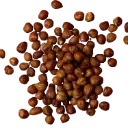
Hazelnuts: whole Piedmont hazelnuts (IGP lobbied), roasted or raw, ground, chopped, and 100% pure paste. Piedmont hazelnut paste remains one of our best sellers for home baking.
Pistachios: skinned pistachios from Iran or Sicily (Bronte), 100% pure paste (no colorants, no added sugar), and pistachio powder. Not to be confused with commercial "pistachio pastes" that are often bulked out with almonds and food coloring.
Pecans, cashews, macadamia nuts, pine nuts: available in home-use formats or professional bags, raw or roasted.
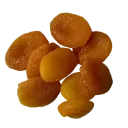
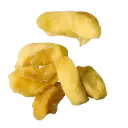
Dried fruits: Corinth and Sultana raisins, soft dried apricots, dried figs, Medjool dates, cranberries, dried mangoes, dried pineapple.
Snacking: apéritif mixes, tamari almonds, roasted peanuts, trail mixes.
On the brand side, we also carry a few technical references used by professional pastry chefs: Valrhona Piedmont hazelnut praliné paste, Barry roasted nuts in professional format (2.5 kg bags), and the storied Weiss pralinés. For gelling agents and additives (essential once you start working nut pastes into chocolate confections or candies), the Louis François range is available in-store.
Uses in pastry, cooking, and apéritif spreads
Nuts and dried fruits are everywhere. In pastry, almond flour is the backbone of macarons, financiers, frangipanes, and dacquoises. Roasted hazelnut powder works wonders in Breton shortbread, Viennese biscuits, and tart shells. Pure pistachio paste transforms pastry creams and Bavarian mousses.
In savory cooking, we love toasted pine nuts over a warm goat cheese salad, caramelized pecans alongside roasted poultry, crushed pistachios over a pan-seared foie gras, and walnuts in an endive and Roquefort salad.
For apéritifs, a mix of tamari almonds, roasted cashews, and shell-on pistachios beats any store-bought chip. If you're looking to put together a serious homemade apéritif spread, we have a dedicated post on the blog.
On the pairing front: almond + vanilla + apricot (a classic), hazelnut + milk chocolate + caramel (the winning combo), pistachio + raspberry (the modern pairing), walnut + honey + Bleu d'Auvergne (the show-stopping apéritif move).
Storing and getting the most from your nuts and dried fruits
The great enemy of nuts is oxidation of their oils. A rancid almond can ruin a cake. A few ground rules:
- Cool, dry storage: 59–68 °F (15–20 °C), away from direct light
- Airtight jar: once opened, transfer to a glass jar with a tight-fitting lid
- Freezer-friendly: for bulk purchases, the freezer extends shelf life by 6 months to a year
- Home roasting: 10 minutes at 300 °F (150 °C) right before use brings the aromas back to life
- Taste before you use: a rancid almond announces itself with a stale, oily flavor
For dried fruits, the concern isn't oxidation but drying out. An airtight jar in a cool spot is enough; to rehydrate hardened apricots or figs, a 10-minute soak in hot tea or a light syrup does the trick.
History and G. Detou expertise
The nut trade in Paris has always been tied to the Les Halles neighborhood. When G. Detou opened in 1951, burlap sacks filled with Provence almonds, Turkish hazelnuts, and Lebanese pine nuts were wheeled down rue Tiquetonne by hand cart. The shop inherited that bulk-trade culture: to this day, we still sell a large portion of our range by weight, in whatever quantity you need, with no unnecessary packaging.
We work with a handful of long-standing importers, direct-trade cooperatives (particularly for Piedmont hazelnuts and Bronte pistachios), and we taste every incoming delivery. It's less glamorous than chasing the latest trend, but it's what ensures that an almond you buy from us will taste exactly as it should.
FAQ — Nuts and snacking
What is the difference between blanched, skinned, and slivered almonds?
"Skinned" (mondée) and "peeled" (émondée) mean the same thing: the almond with its brown skin removed. "Blanched" is a synonym. Whole un-peeled almonds keep their skin on; for macarons and white almond flour, you need skinned almonds.
Why is G. Detou pistachio paste more expensive than the supermarket version?
Because we sell 100% pistachio paste — no colorants, no filler almonds, no added sugar. The cheap commercial "pistachio paste" often contains only 30–40% pistachio; the rest is almond, sugar, and green food coloring.
How do I roast nuts at home?
Spread the nuts on a baking sheet and roast in a convection oven at 300 °F (150 °C) for 10–12 minutes, stirring halfway through. You'll know they're ready when they've turned lightly golden and your kitchen smells amazing.
What is the shelf life of nuts and dried fruits?
6 to 12 months for whole shell-on nuts, 3 to 6 months for nut flours and chopped nuts (which oxidize faster). 6 to 12 months for dried sweet fruits.
Do you sell wholesale to pastry chefs?
Yes. Most of our products are available in 2.5 kg, 5 kg, or larger bags. Professional pricing available on request at contact@gdetou.com.
Which hazelnut is best for pastry?
The Piedmont IGP hazelnut (Tonda Gentile delle Langhe variety) is the gold standard: large, round, fragrant, and slightly sweet. It's pricier, but unrivaled in pure paste or praliné.
Are nuts fattening?
They are calorie-dense (550–650 kcal per 100 g), but rich in healthy fats, fiber, and plant protein. Eaten in a sensible portion (about 1 oz / 30 g per day), they fit perfectly into a balanced diet. And at apéritif time, they're a far better choice than chips.
Do you make custom mixes?
In store, yes: we can put together a custom aperitif mix or a student mix on request, in whatever proportions you like.
A short glossary of nuts and snacking
A few terms you'll often hear in the store — worth knowing before you buy:
- Blanched / skinned: nut with the brown skin removed. These terms are synonymous.
- Sliced (effilé): almond cut lengthwise into thin slivers (for financiers, tart decoration)
- Roughly chopped (concassé): nut coarsely broken into irregular pieces
- Finely chopped (haché): nut cut into small, more uniform pieces — finer than concassé
- Slivers / sticks (bâtonnets): almonds or pistachios cut into matchsticks (for decorating ice creams and entremets)
- Extra-fine powder: finely ground, ideal for macarons and financiers
- Pure paste: 100% nut, no added sugar or other ingredients
- Praliné: a paste made from caramelized nuts (typically 50% nuts)
- Pralin: a coarser, crunchier version of praliné
- Gianduja: hazelnut paste blended with chocolate and sugar — a Piedmontese specialty
This terminology carries over into professional pastry: when a chef asks for "blanched almonds in sticks," they expect a very specific product. That's exactly why we stock every variation rather than grouping them under vague catch-all names.
Going further
Nuts open the door to a whole world of pastry-making. To dive deeper, check out our homemade praliné guide, our article on hazelnut paste, and the Pastry Ingredients category, where almonds, hazelnuts, and pistachios meet candied fruits, chocolate, and specialty sugars. And if you stop by one of our stores — in Paris or Lyon — we'll be happy to guide you through our selection of almonds, hazelnuts, and pistachios. 🌰