


"It's chocolate, it's chocolate." "Vanilla is vanilla." "Spices are spices." You often hear these shortcuts used to justify buying supermarket products rather than specialty grocery items. But anyone who has ever compared a cake made with Valrhona couverture chocolate to the same cake made with a supermarket bar knows that this equivalence is a myth.
What we mean by "fine food shop"
A clear definition
A fine food shop is not a fancy organic grocery store, nor a luxury boutique selling gold-packaged products at triple the price. It is a retailer — physical or online — that selects its products based on criteria of intrinsic quality: composition, origin, production method, and aromatic profile.
A fine food shop worthy of the name:
Works directly with manufacturers or importers
- Knows the exact origin and composition of every product it carries
- Offers products that mass-market retailers don't stock (professional formats, brands reserved for artisan producers)
- Provides expert guidance on how to use its products
- The online fine food shop: quality made accessible
Historically, fine food shops were downtown boutiques, accessible only to locals. The shift to e-commerce has changed the game. Today, an
online fine food shop allows anyone in France to access professional-quality ingredients, delivered right to their door. It's something of a quiet revolution for cooking and baking enthusiasts who live far from major cities. Gone are the days of waiting for a trip to Paris to pick up Valrhona chocolate or professional-grade sheet gelatin.
Comparison 1: Vanilla — a quality gulf
Vanilla - Fine food shop vs. supermarket
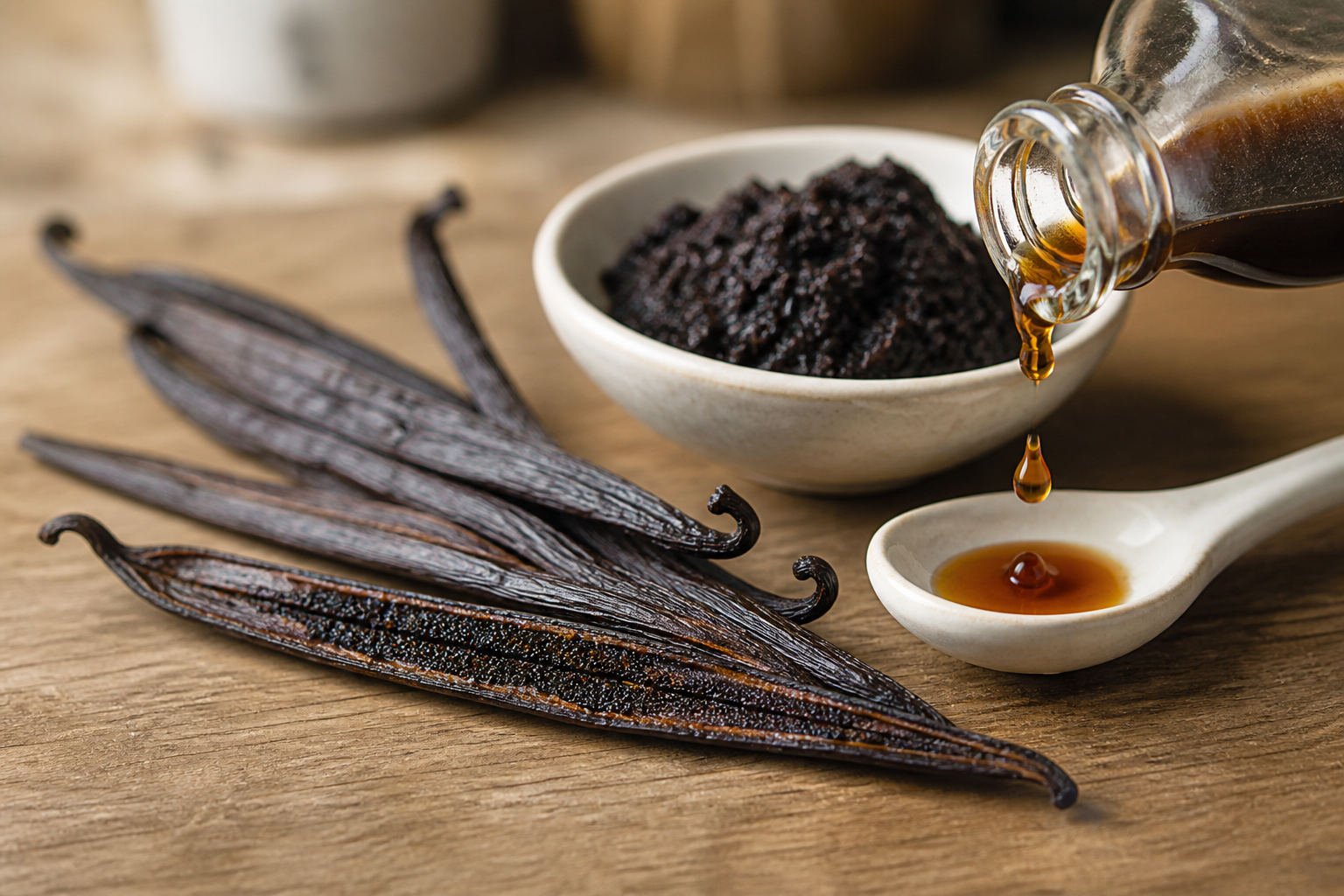
In the baking aisle of a standard supermarket, you'll find:
Vanilla sugar sachets (containing 0.5 to 1% real vanilla at most, with the rest being sugar and synthetic flavoring — vanillin)
- Liquid vanilla extract (often synthetic, sometimes labeled "natural" but derived from biotechnology, not from vanilla pods)
- Occasionally vanilla beans sold in blister packs at high prices ($8 to $15 for 2 beans), typically dried out and low in aroma
- The core problem: synthetic vanillin reproduces only a single aromatic molecule, whereas a real vanilla bean contains more than 200. The result on the palate is flat and one-dimensional.
At a fine food shop
From a specialist retailer, you'll find:
From a specialist retailer, you'll find:
- vanilla beans selected by origin (Madagascar, Tahiti, Mexico, Uganda), each with a distinct aromatic profile Beans that are plump and supple — a hallmark of freshness and proper curing
- Pure natural vanilla extract, produced by macerating beans in alcohol
- Pure vanilla powder (whole dried beans ground into a fine powder)
- The value for money is often better than at the supermarket: fine food shop beans are more aromatic, meaning half a bean will do the work of a full supermarket blister-pack bean.
The real difference in the kitchen
A crème anglaise made with a quality Madagascar vanilla bean develops warm, buttery, subtly woody notes. The same recipe made with a vanilla sugar sachet produces a generic, sweet taste with no depth. The difference is perceptible to anyone — no trained palate required.
Comparison 2: Chocolate — two entirely different worlds
Chocolate - Fine food shop vs. supermarket
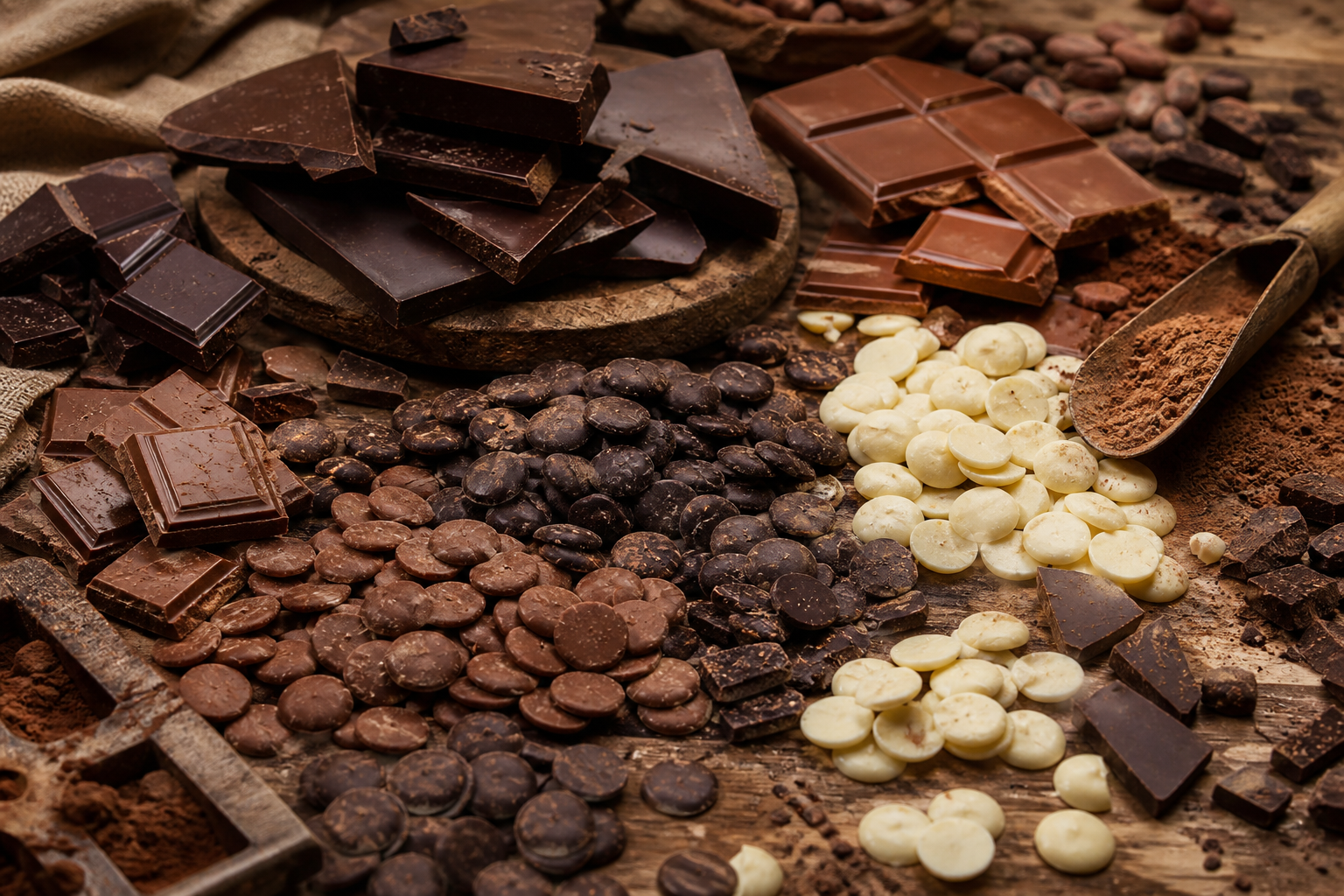
In the baking aisle of a standard supermarket, you'll find:
A low cocoa butter content (rarely stated, often below 25%)
- The presence of vegetable fats (palm oil, shea butter) as partial substitutes for cocoa butter
- A simple aromatic profile: cocoa, sugar, and little else
- A generous helping of emulsifiers
- This chocolate melts well enough in a cake, but it won't temper properly (no glossy snap), it blooms quickly, and the flavor remains basic.
A
From a specialist retailer, you'll find:
professional brand (Valrhona, Barry, Weiss) displays: couverture chocolate and the same cake made with a supermarket bar knows this equivalence is a myth. A minimum of 31% cocoa butter (often 35 to 40%), with no substitute vegetable fats whatsoever
- A traceable bean origin with distinctive aromatic notes (fruity, woody, roasted, floral — depending on the cru)
- A calibrated fluidity suited to tempering, enrobing, and molding
- Professional formats (fèves or pistoles — small uniform discs or drops) designed for even, consistent melting
- The most telling test is a chocolate fondant. Make the same recipe with supermarket baking chocolate and with Valrhona Guanaja 70%. The first will be perfectly acceptable — sweet, chocolatey, and unremarkable. The second will be intense, with a noble bitterness, notes of roasted cacao, and a silkier texture thanks to the high cocoa butter content. Same prep time, same recipe — incomparable results.
A crème anglaise made with a quality Madagascar vanilla bean develops warm, buttery, subtly woody notes. The same recipe made with a vanilla sugar sachet produces a generic, sweet taste with no depth. The difference is perceptible to anyone — no trained palate required.
For tempering (coating confections, Easter eggs), the difference is even more striking: couverture chocolate produces a clean, sharp snap and a mirror-bright sheen that supermarket chocolate simply cannot achieve.
Comparison 3: Spices — freshness vs. age
Spices - Fine food shop vs. supermarket
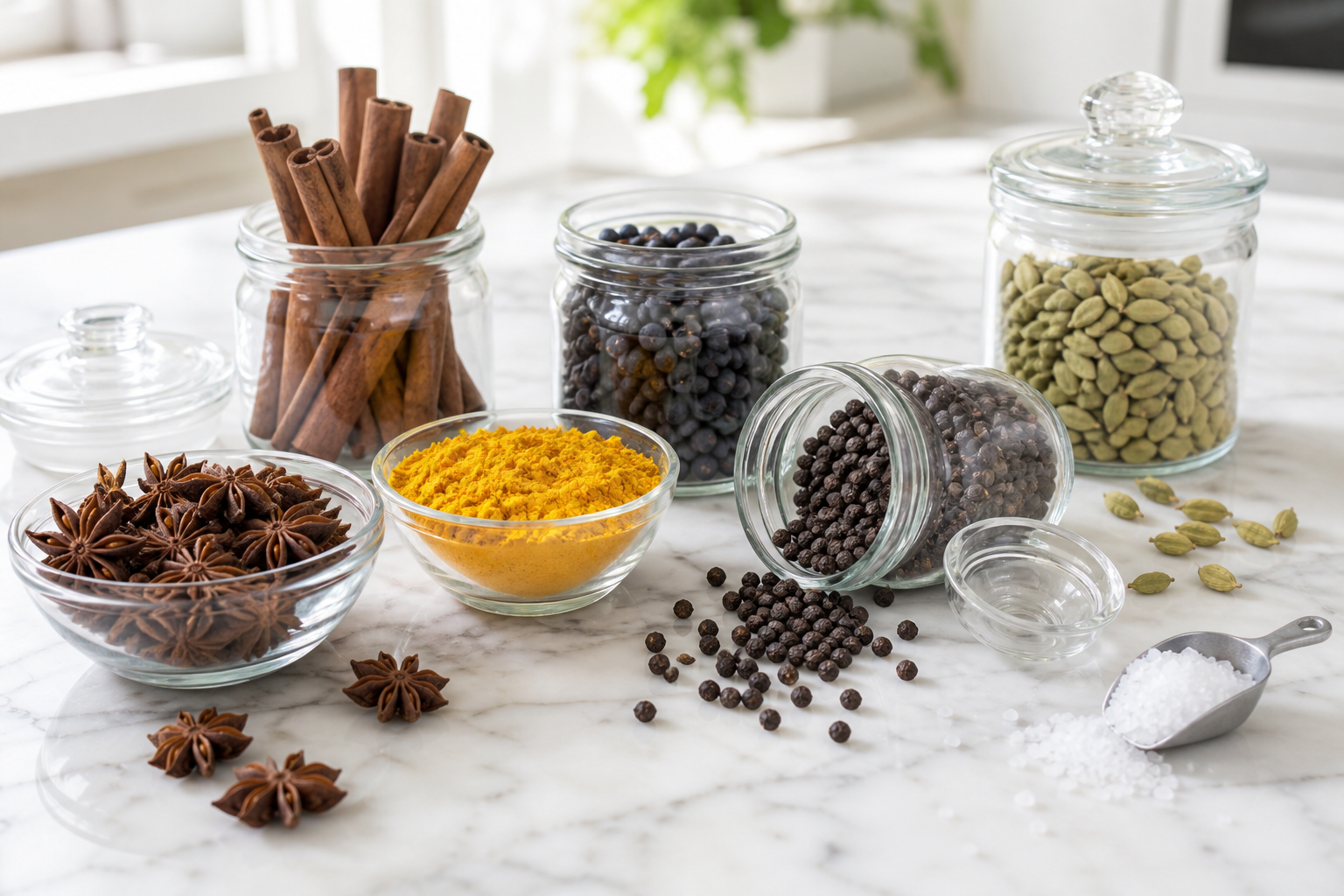
In the baking aisle of a standard supermarket, you'll find:
Packaging in small glass jars or plastic sachets compounds the issue: the portions are tiny (20 to 40 g), yet the price per kilogram is often higher than at a fine food shop.
A quality spice supplier offers:
From a specialist retailer, you'll find:
Spices with rapid stock turnover (frequently replenished, never sitting at the back of a warehouse for months)
- Spices with rapid stock turnover (frequently replenished, never sitting at the back of a warehouse for months)
- Identified origins (Kampot pepper, Ceylon cinnamon, Iranian saffron)
- More generous formats that allow you to use spices in sufficient quantities — chronic under-seasoning is one of the most common pitfalls in home cooking
A crème anglaise made with a quality Madagascar vanilla bean develops warm, buttery, subtly woody notes. The same recipe made with a vanilla sugar sachet produces a generic, sweet taste with no depth. The difference is perceptible to anyone — no trained palate required.
Place a pinch of supermarket cinnamon (likely Chinese cassia) alongside freshly ground Ceylon cinnamon. The first is dusty and bitter. The second is warm, sweet, and complex. In an apple tart, a mulled wine, a pain d'épices (French spiced gingerbread) — the difference is spectacular.
Comparison 4: Baking aids — gelatin, pectin, agar-agar
In the baking aisle of a standard supermarket, you'll find:
You'll find sheet or powdered gelatin, usually of basic quality. The issue: gelatin comes in different bloom grades (bronze, silver, gold, platinum), and supermarkets rarely specify which they're selling. Gelling power is therefore unpredictable, which makes following professional recipes unreliable.
As for NH pectin (essential for mirror glazes) or good-quality agar-agar, they are simply not stocked on supermarket shelves.
From a specialist retailer, you'll find:
You'll find baking aids of professional grade:
- Sheet gelatin in gold grade (200 bloom), the standard in French pastry recipes
- NH pectin, X58 pectin, and precisely dosed agar-agar
- Specialist texturing agents: xanthan gum, carrageenan, gellan gum
For a home baker, gold-grade sheet gelatin and a jar of agar-agar will cover 95% of needs. But having access to NH pectin when a recipe calls for it is precisely what separates the baker who is limited by their supplier from the one who can make anything.
Comparison 5: Nuts and praliné — concentrated flavor
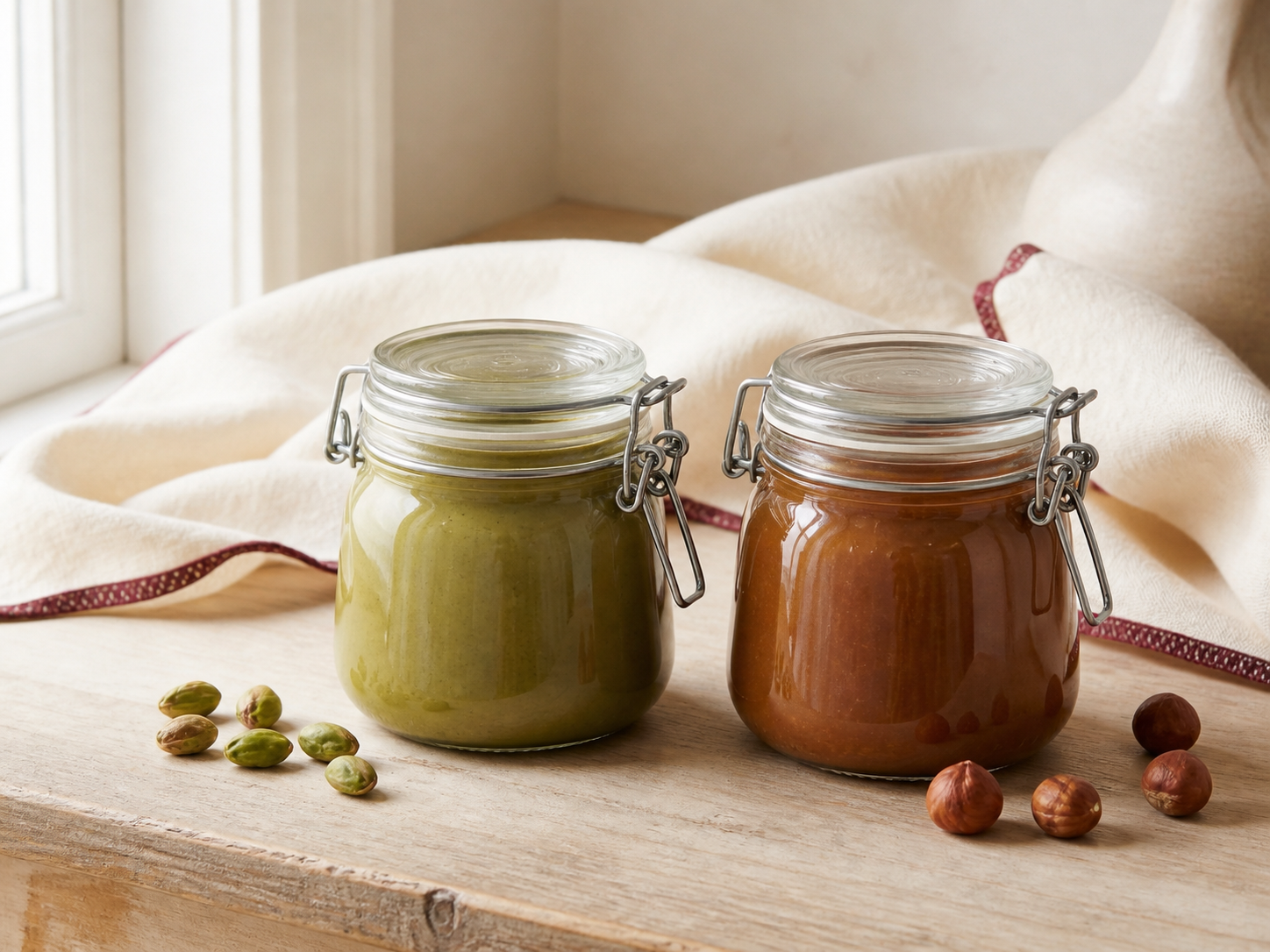
In the baking aisle of a standard supermarket, you'll find:
Supermarket nuts are often:
- Over- or under-roasted
- Long past their prime (the natural fats go rancid over time)
- Sold in small bags at a high price per kilogram
Praliné (a paste of caramelized nuts, typically hazelnuts or almonds) is virtually impossible to find at a supermarket. When something resembling it does appear, it's usually a nut spread masquerading as praliné — check the label: if sugar is listed first and the nut content is below 50%, it's not a true praliné.
From a specialist retailer, you'll find:
You'll find:
- vanilla beans professionally roasted nuts in regular rotation
- True praliné at 50% or 60% nut content, available in 250 g to 1 kg jars
- Pure hazelnut paste (100% roasted hazelnuts), pistachio paste, and almond paste
- Quality candied fruits (not the fluorescent cubes found in industrial fruitcakes, but genuine artisan-made candied fruit)
A crème anglaise made with a quality Madagascar vanilla bean develops warm, buttery, subtly woody notes. The same recipe made with a vanilla sugar sachet produces a generic, sweet taste with no depth. The difference is perceptible to anyone — no trained palate required.
A Paris-Brest made with a true 60% hazelnut praliné and the same dessert made with a supermarket nut spread are simply not the same pastry. The first carries the deep, roasted flavor of real hazelnuts, with a texture that is both sandy and meltingly smooth. The second is sweet and greasy, with hazelnut flavor that barely registers.
The real cost: is a fine food shop actually more expensive?
Price per kilogram vs. perceived price
This is the sticking point for many shoppers. A 1 kg bag of Valrhona Guanaja costs more than a 200 g supermarket baking chocolate bar. But calculated by the kilogram, the gap is often smaller than you'd expect.
A few comparisons:
| Product | Supermarket (price/kg) | Fine food shop (price/kg) | Difference |
|---|---|---|---|
| Dark baking chocolate | €12–18/kg | €25–35/kg | Approx. ×2 |
| Vanilla beans | €800–1,500/kg | €400–600/kg | Cheaper at the fine food shop |
| Cocoa powder | €15–25/kg | €12–20/kg | Often comparable |
| Sheet gelatin | €40–60/kg | €25–40/kg | Cheaper at the fine food shop |
Vanilla is a striking example: blister-packed supermarket beans are among the most expensive per gram on the market, yet the quality is often poor. At a fine food shop, buying 5 or 10 beans at a time brings the price per gram down significantly — for markedly superior quality.
The yield argument
A better-quality ingredient typically offers better yield. A plump, fragrant vanilla bean perfumes more than a dried-out one — you simply need less of it. A cocoa powder with 22% fat content delivers more flavor per gram than one at 10%. A chocolate rich in cocoa butter produces a smoother ganache (a mixture of chocolate and cream used in confectionery and pastry) without requiring extra cream.
In other words, while the price per kilogram may be higher, the cost per use is often comparable — for a result that is incomparably better.
How to choose your online fine food shop
Not all online fine food shops are equal. Here are the criteria to look for:
Depth of catalog
A serious fine food shop doesn't offer just one dark chocolate: it carries a complete range, with different origins, different percentages, and different formats. Catalog depth is a reliable indicator of expertise and genuine knowledge of the craft.
Relationships with producers
The best fine food shops work directly with manufacturers. This guarantees product freshness (no intermediaries adding storage time) and fair, accurate pricing.
Shipping conditions
Chocolate melts, spices lose their aroma, vanilla dries out. A serious fine food shop pays close attention to its packaging and shipping methods so that products arrive in perfect condition.
Expert guidance
Unlike a supermarket where the baking aisle is entirely self-service, a good fine food shop — even online — provides meaningful information about its products: technical data sheets, usage tips, and recipe suggestions.
G. Detou's advice
The test we often suggest to skeptical customers at rue Tiquetonne: make a vanilla crémeux (a rich, set cream used in French pastry) with a supermarket bean costing $2.50, then the same crémeux with a G. Detou Madagascar bean at $5. Taste them blind. The aromas are worlds apart — and the second crémeux holds its fragrance for 48 hours, while the first has lost it within 6. The price doubles, but the result is ten times better.
FAQ — Online fine food shop vs. supermarket
Yes, even for occasional use. Quality ingredients keep well (couverture chocolate lasts 12 to 18 months, vanilla beans 6 to 12 months, cocoa powder over a year). And the difference in results is noticeable from the very first use. If you only bake once a month, you might as well make it count.
The three products where the difference is most dramatic: vanilla (real beans vs. artificial flavoring), chocolate (couverture vs. supermarket baking bars), and praliné (true praliné vs. commercial nut spread). These are the ingredients where the final flavor is most directly determined by the quality of what goes in.
Specialist fine food shops understand the sensitivity of their products. At G. Detou, for example, packaging is specifically designed to protect chocolate from heat during transit. In warmer months, some retailers include cold packs or adjust their shipping methods accordingly.
That is precisely the purpose of specialty fine food shops like G. Detou. They carry the same products used by professional pastry chefs (Valrhona, Barry, Weiss, Louis François), in formats accessible to home cooks. No business registration number required, no wholesale account needed.
See the difference for yourself: browse the G. Detou online shop to access the same ingredients used by professionals, delivered to your door anywhere in France.
To go further: discover the story of G. Detou since 1951.