


The wafer sheet is a discreet yet ubiquitous ingredient in pastry-making and confectionery. Tucked beneath nougat de Montélimar, wrapped around certain calissons, pressed onto decorated cakes — it's everywhere, and yet hardly anyone notices it. This thin, white sheet, made from flour and water, has unique properties that make it truly irreplaceable in certain preparations.
This guide covers everything you need to know about the wafer sheet: its composition, available types, traditional and creative uses, working techniques, and storage.
What is a wafer sheet?
Composition and production
A wafer sheet is made from wheat flour (or potato starch, depending on the manufacturer), water, and sometimes a trace of vegetable oil. It is an unleavened bread — no yeast, no sourdough starter — which accounts for its extreme thinness and crisp texture.
The word azyme comes from the Greek azumos (unleavened). Wafer sheets share this etymological root with the unleavened bread of religious traditions, though the sheets used in pastry-making are an entirely technical product.
To produce them, a very liquid batter is spread in an ultra-thin layer on a heated plate and cooked for just a few seconds. The result is a translucent, rigid, white sheet that dissolves on contact with moisture.
Properties of the wafer sheet
The characteristics that make wafer sheets so valuable in pastry work:
- Neutral flavor: almost completely tasteless, allowing it to be used without altering surrounding flavors
- Dissolves on contact with moisture: it literally melts into moist preparations, becoming invisible
- Rigid when dry: in its dry state, it is firm enough to serve as a structural base
- Printable surface: its smooth surface accepts food-grade inks, making it an ideal decorative medium
- Fully edible: no preparation required before eating
The different types of wafer sheets
Classic white wafer sheets
This is the standard format, the one that has been used for centuries in confectionery. The white wafer sheets come in rectangular or round sheets of varying thickness (generally 0.3 to 0.5 mm).
They are available in several sizes:
- Rectangular sheets (approximately 20 x 30 cm): the most common format, used for nougat and calissons
- Round discs (in various diameters): for macarons de Saint-Émilion and cake bases
- Large sheets (A3 format or larger): for professionals who cut them to their own specifications
Colored wafer sheets
The colored sheets are tinted throughout with food coloring. They come in a range of colors (pink, green, yellow, blue, etc.) and are used primarily for decorating cakes and pastries.
They retain all the same properties as white sheets — dissolving on contact with moisture, neutral flavor — while adding a visual dimension.
Printed wafer sheets
The printed sheets represent the modern evolution of the wafer sheet. Printed with food-grade inks, they make it possible to reproduce patterns, photographs, logos, or illustrations on cakes.
There are two categories:
- Pre-printed sheets: generic motifs (florals, geometric patterns, seasonal themes) ready to use straight out of the package
- Custom-printed sheets: printed to order with a specific image, for birthday cakes or special events
Printed sheets should be applied to a slightly moist surface — buttercream, dampened fondant, glaze — to adhere properly and blend seamlessly into the decoration.
Traditional uses of the wafer sheet
Nougat
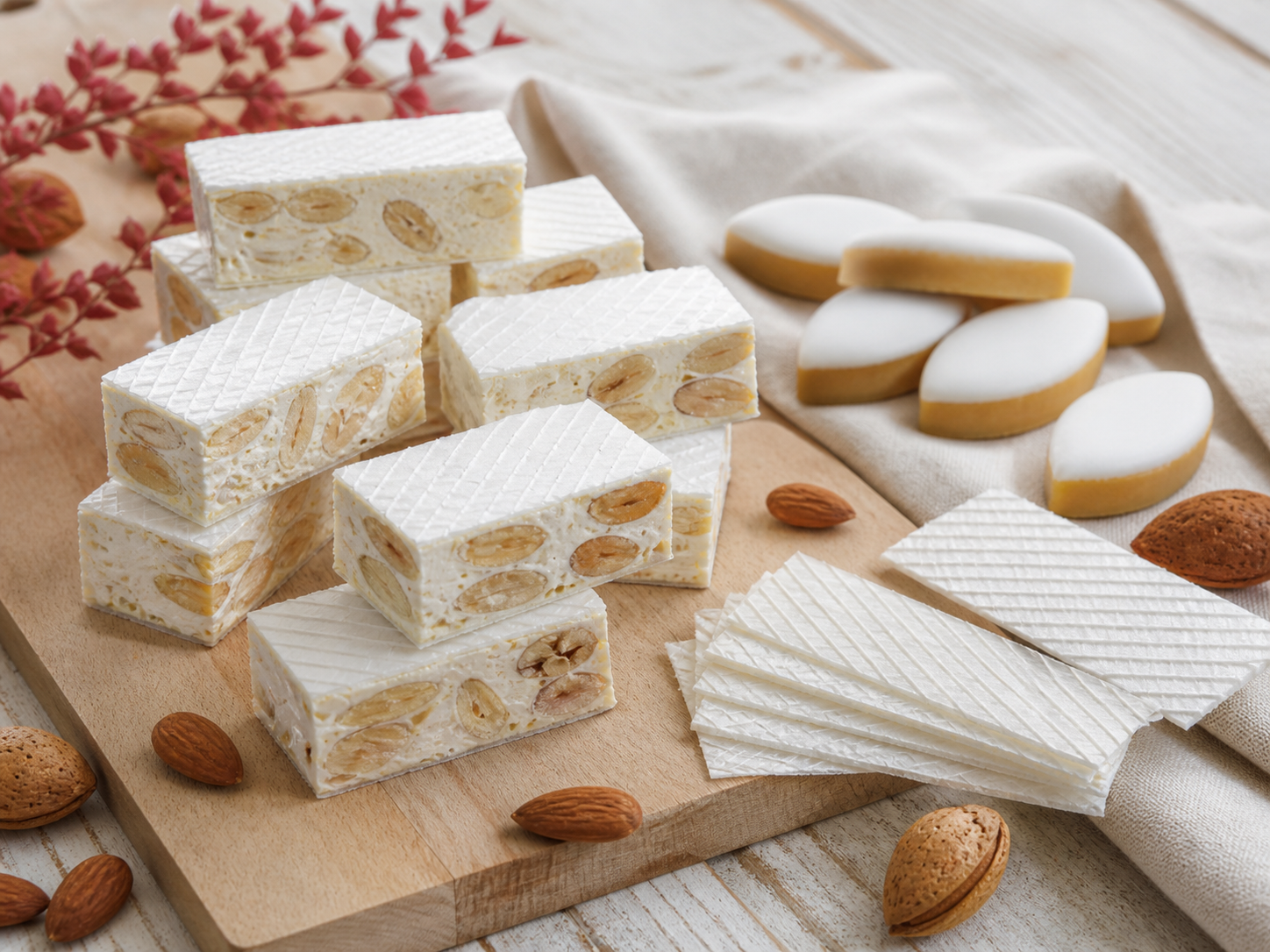
This is the most iconic use. In nougat de Montélimar — as in most artisanal nougats — the nougat is poured between two wafer sheets. These sheets serve several functions:
- Non-stick barrier: nougat is extraordinarily sticky; the wafer sheets prevent it from adhering to hands or packaging
- Clean cutting: the sheets allow the nougat to be sliced into neat bars
- Tradition: the wafer sheet is an integral part of nougat's identity
- Preservation: the sheet creates a barrier between the nougat and its wrapping
For nougat, thicker sheets (0.4–0.5 mm) are used, sturdy enough to support the weight and dense texture of the paste.
Calissons d'Aix
The calisson traditionally rests on a wafer sheet that forms its base. The candied fruit and almond paste is spread onto the wafer sheet, then cut into the characteristic diamond shapes. The sheet provides a light structure and prevents the calisson from sticking.
Macarons de Saint-Émilion
parisiens (meringue-based and filled). Macarons de Saint-Émilion are small almond cakes, soft and crackled, baked on a wafer sheet. The sheet acts here as a baking support that adheres to the base of the macaron and becomes an integral part of the pastry.
Decorative wafer shapes
In traditional pastry-making, wafer sheets cut into shapes (stars, crosses, various motifs) were used to decorate celebration cakes and pièces montées (elaborate tiered confections). This use has largely been superseded by printed sheets, but it persists in certain regional traditions.
Creative and contemporary uses
Cake decoration
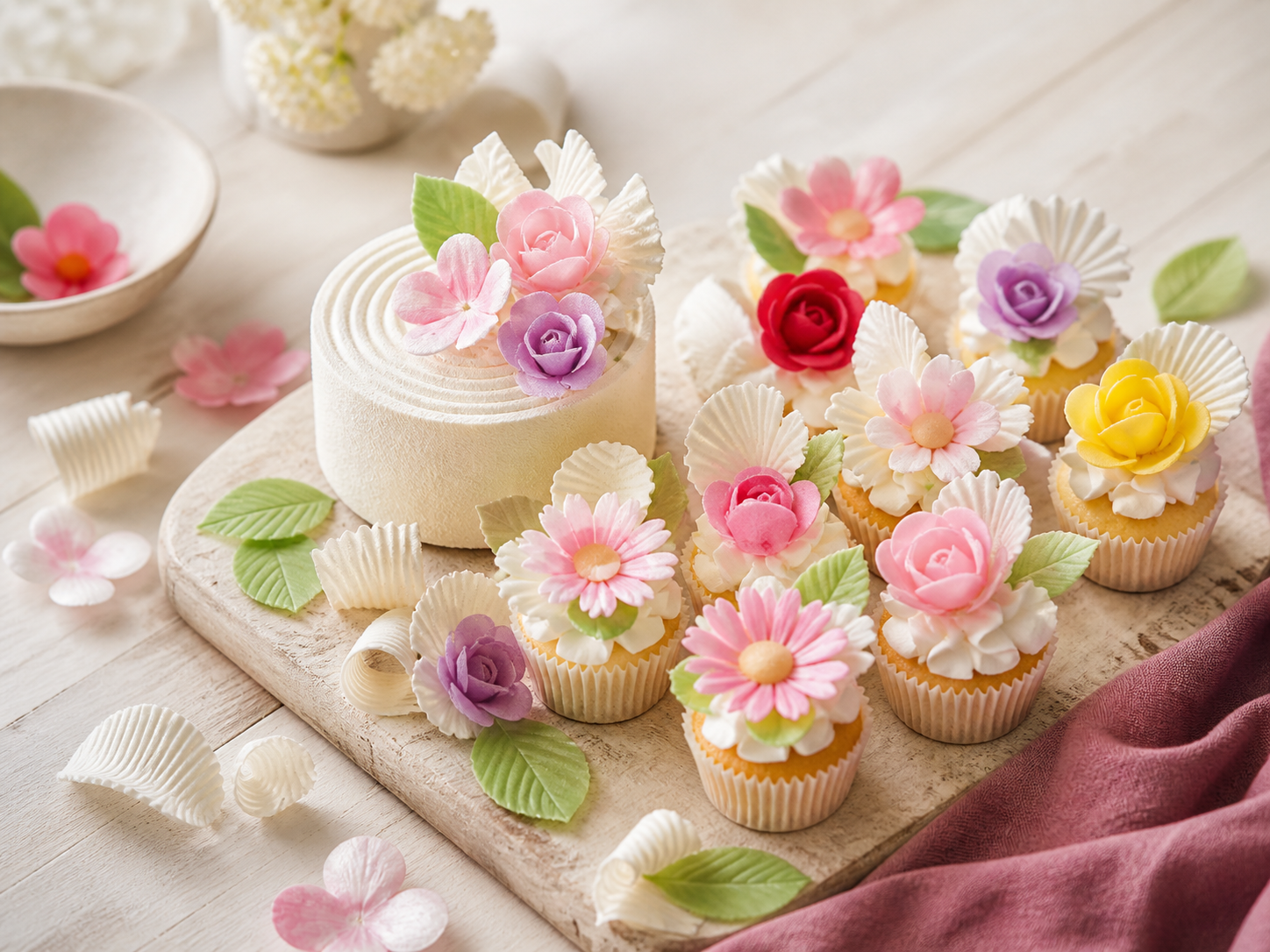
Contemporary pastry chefs use wafer sheets in inventive ways:
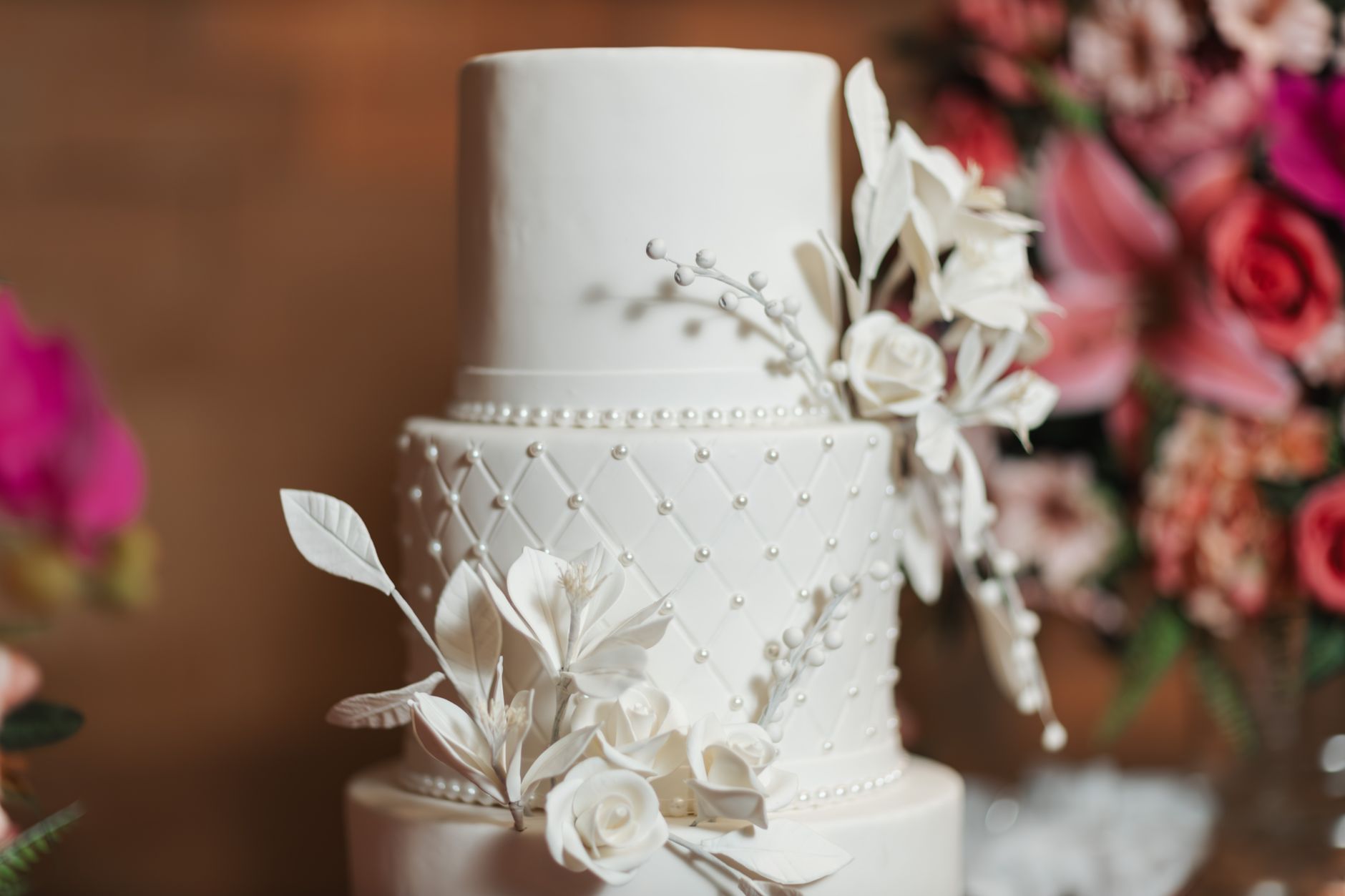
- Wafer flowers: cut and shaped while the sheet is slightly dampened, they form realistic, fully edible blooms. The technique involves lightly misting or brushing the sheet with water, cutting it to shape, then molding it before it dries in the desired form.
- Veils and shards: irregular pieces of wafer sheet — sometimes tinted — placed on top of entremets (French mousse cakes) for a light, contemporary effect.
- Lettering: letters cut from colored wafer sheets and arranged on cakes.
Tuiles and textures
By briefly heating pieces of wafer sheet in a 300 °F (150 °C) oven for just a few seconds, you obtain delicate, crispy tuiles (thin wafers) that bring an interesting textural contrast to plated desserts. Be warned: the window between "perfectly heated" and "burnt" is extremely narrow.
Lollipops and confections
Printed wafer sheets, sandwiched back-to-back around a stick with a little melted chocolate, make charming decorative lollipops — perfect for children's parties or dessert tables.
Edible wrapping
Some confectioners use wafer sheets as edible packaging for truffles, pâtes de fruits (fruit jellies), or marshmallows. The sheet prevents confections from sticking together while remaining fully edible — no unwrapping needed before eating.
Working techniques with wafer sheets
Cutting
- Dry cutting: use clean scissors or a rotary cutter for clean edges. Cookie cutters also work well for regular shapes.
- Laser cutting: professionals have access to food-grade laser cutters for intricate patterns — clearly not an option for home bakers.
- Pro tip: for rounded or complex shapes, lay the wafer sheet on a cutting mat and use a scalpel or precision craft knife.
Applying to cakes
To apply a wafer sheet (white, colored, or printed) to a cake:
- Prepare the surface: it must be slightly moist or fatty — buttercream, glaze, dampened fondant, ganache (a mixture of chocolate and cream). A surface that is too dry will prevent adhesion.
- Place carefully: set the sheet onto the surface starting from one edge, smoothing it gradually to avoid air bubbles.
- Smooth out: gently run your hand or a smoother over the surface to release any bubbles.
- Allow to set: the sheet will gradually absorb moisture from the surface and become nearly invisible within 15 to 30 minutes.
Shaping
To shape three-dimensional forms (flowers, leaves, shards):
- Lightly dampen the sheet with a brush dipped in water or a fine mist spray
- Wait 10 to 15 seconds for the sheet to become pliable
- Shape quickly before the sheet dries or dissolves
- Leave to dry in the desired form (over a mold, inside a bowl, around a rolling pin)
The challenge lies in timing: too little water and the sheet cracks; too much and it dissolves. Practice is the only way to truly master this technique.
Storing wafer sheets
The enemies of the wafer sheet
Moisture is the primary enemy. A wafer sheet exposed to humid air will curl, soften, and become unusable within a matter of hours. Excessive heat can also make it brittle and crumbly.
Optimal storage conditions
- Temperature: room temperature, between 59 and 72 °F (15 and 22 °C)
- Humidity: as low as possible — ideally below 60% relative humidity
- Packaging: store in the original packaging, tightly sealed. Once opened, transfer to an airtight bag with a silica gel desiccant packet
- Position: flat, with nothing stacked on top (the sheets are fragile and will crack under pressure)
- Shelf life: 12 to 18 months when stored correctly
What to do with slightly softened sheets?
If sheets have absorbed a little moisture but haven't yet dissolved, it's possible to revive them by placing them in a 120 °F (50 °C) oven for 5 to 10 minutes with the door slightly ajar, to allow excess moisture to evaporate. They will firm up again as they cool, though they may be slightly wavy.
Wafer sheets and allergens: what you need to know
Most wafer sheets contain wheat flour, which makes them unsuitable for a strict gluten-free diet. Some manufacturers offer sheets made from potato starch or corn starch, which are gluten-free, though these are less widely available.
For those with allergies to milk proteins, eggs, or tree nuts, the classic wafer sheet poses no issue — it contains none of these ingredients. However, always check the "may contain traces of…" labeling on the packaging, as production lines may be shared.
G. Detou's tip
The wafer sheet is no longer just the foundation of calissons and nougats: in recent years, contemporary pastry chefs have been using it for the crispy layers in entremets, as edible wrapping for bûches de Noël (French Christmas log cakes), and for translucent shortbread effects. At G. Detou, we stock A4 sheets and colored sheets that can be hard to keep on the shelves — demand has climbed sharply. If you're making homemade calissons, remember this: the wafer sheet goes down FIRST, then the warm paste on top — never the other way around.
FAQ — Wafer sheets in pastry-making
Yes — on a moist surface (cream, ganache, glaze), a wafer sheet gradually dissolves and becomes nearly invisible within 15 to 30 minutes. On lightly dampened fondant it remains visible a little longer, but eventually blends into the surface. It is precisely this property that makes it so practical for printed decorations.
No — you need a food-grade printer fitted with edible ink cartridges. Standard desktop printers use toxic inks that must never come into contact with food. Food-grade printers work on the same principle as inkjet printers, but with inks certified for food contact.
The confusion is common. Asian rice paper (used for spring rolls) is an entirely different product: thicker, made from rice flour and tapioca, and pliable once hydrated. The wafer sheet is far thinner, made from wheat flour or starch, and dissolves rather than becoming soft. They are not interchangeable.
Wafer sheets are already baked during production. That said, they can withstand oven heat provided the temperature does not exceed 320 °F (160 °C) and you watch them closely — they burn very quickly. Beneath a hot poured nougat or on a macaron baked in the oven, they hold up well, protected by the preparation covering them.
The wafer sheet is a simple ingredient that opens up a wide range of possibilities, from traditional confectionery to contemporary decoration. Whether you're making artisan nougat, decorating a birthday cake, or experimenting with modern pastry techniques, the white, colored, or printed wafer sheets available at G. Detou cover every need, from home-baker formats to professional quantities.
To go further: browse our full Baking selection.