


Moutarde de Dijon. — cooking spice | G. Detou Paris
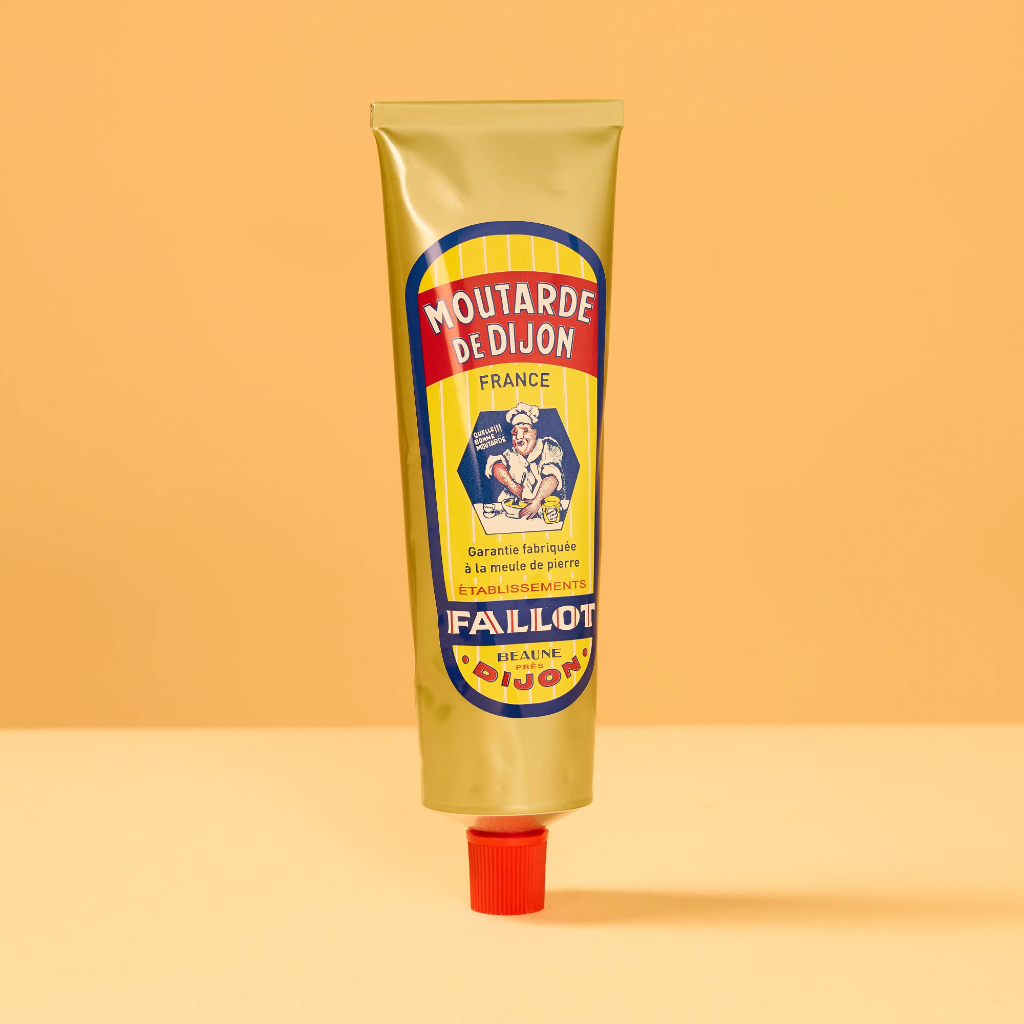
The 150 g tube of Dijon mustard is the practical format we recommend for enthusiasts who want fresh mustard on hand every day without committing to a large jar. The tube lets you dose to the gram and limits oxidation between uses — the mustard holds its nasal heat longer than an open jar would.
Mustard seeds of Burgundy origin (France) — that's the indication shown on the ingredient label. The composition stays true to traditional Dijon mustard: water, mustard seeds, spirit vinegar, salt, antioxidant potassium disulfite, acidifier citric acid, turmeric.
Dijon mustard in a nutshell
"Dijon mustard" is not an AOC — it's a recipe historically associated with Dijon but one that can be produced elsewhere using seeds from other growing regions. The return to local Burgundy seeds is a recent development following supply crises linked to drought in Canada (historically the leading exporter).
Traditional recipe: brown mustard seeds ground with an acidic liquid (vinegar, verjuice, or white wine depending on the recipe). No white seeds, no spices — that's what sets it apart from a whole-grain mustard or an Alsatian mustard.
The 2022–2023 supply crisis, triggered by drought in Canada (the primary historical source of mustard seeds), pushed the French industry to relocate its production. Traditional mustard makers such as Fallot, Edmond Fallot, and Maille now work with Burgundy growers under multi-year contracts.
Serving ideas
For a classic vinaigrette, emulsify one teaspoon of mustard with two tablespoons of vinegar, then whisk in six tablespoons of oil. The mustard acts as a natural emulsifier thanks to its mucilage content.
For a homemade mayonnaise, add the mustard to the egg yolk before the oil — it stabilizes the emulsion and provides the heat that gives the sauce its backbone. One teaspoon of mustard per yolk and 250 ml of oil.
For a pan sauce — typically after cooking duck breast or chicken breast — deglaze the pan with white wine, add cream, and finish off the heat with two tablespoons of mustard. The heat is better preserved when the mustard isn't exposed to prolonged cooking.
For a lighter, stable mayonnaise-style sauce, combine one teaspoon of Dijon mustard with Greek yogurt, one egg yolk, and a squeeze of lemon juice. Whisk in oil in a steady stream. The texture is lighter than a classic mayonnaise while still holding a stable emulsion, thanks to the mustard.
For grilled meat lovers, Dijon mustard makes an excellent marinade for lamb chops or pork chops: two tablespoons of mustard plus olive oil, garlic, and rosemary. Rub all over and marinate for 2 hours in the refrigerator. Cooking on a hot grill or skillet brings out the mustard as a lightly caramelized crust on the meat.
Burgundy's mustard-making expertise has been passed down since the 14th century, when mustard became a specialty of Dijon closely linked to the Dukes of Burgundy. Today, the move back to locally sourced Burgundy seeds is a recent initiative that champions regional traceability.
Delivery across France and storage
150 g tube, available for in-store pickup at our Paris location (58 rue Tiquetonne) or for delivery throughout France. Store in a cool, dry place before opening. After opening, refrigerate to preserve the heat — it's oxidation that gradually dulls the pungent aromas of sinigrin, mustard's active compound.
For fans of flavored mustards, we also carry honey, blackcurrant, green peppercorn, and tarragon varieties. The 150 g tube of plain Dijon remains the staple we recommend to every serious home cook.
For a mustard-and-charcuterie aperitif, the tube makes a quick dip for sliced saucisson, cured ham, or rillettes. The nasal heat contrasts beautifully with the richness of the cured meats — a classic pairing from the Southwest and the North of France, a fixture in traditional bistros.
Frequently asked questions
Why a tube instead of a jar?
The tube limits air contact with the mustard at every use. The result: the nasal heat keeps better over time. Particularly useful if you go through mustard slowly.
Are the Burgundy seeds guaranteed?
The label explicitly states "mustard seeds (origin: Burgundy — France)." That's the main ingredient traceability indicated by the producer.
Why salt and sulfites?
Salt for preservation and flavor balance. Sulfites (potassium disulfite) are an antioxidant that protects both color and pungency — a standard additive in mustard production.
Suitable for people with allergies?
Declared allergens: mustard, sulfites. Not suitable for anyone with an allergy to either of these two compounds.
How long does the tube keep after opening?
Three to four months in the refrigerator, keeping the tube tightly closed. Beyond that, the mustard remains safe to eat but gradually loses its heat.
How long will a 150 g tube last?
For regular home use (vinaigrettes, sauces), around 4 to 6 weeks. The tube preserves the heat better than an open jar, so flavor quality holds right to the end. After 2 months, the nasal pungency will gradually begin to fade.
Price per kg |
19,21 € |
Description
Characteristics
- Weight: 0.150 kg
- Ingredients: Eau, graines de moutarde (origine Bourgogne – France), vinaigre d’alcool, sel, antioxydant : disulfite de potassium (0,2 %), acidifiant : acide citrique, curcuma.
- Allergens: Moutarde, sulfites (disulfite de potassium).
-
Nutritional values:
Énergie : 681 kJ / 164 kcal
Matières grasses : 12 g
dont acides gras saturés : 0,8 g
Glucides : 3 g
dont sucres : 2,5 g
Protéines : 7,4 g
Sel : 6,4 g - Legal name: Moutarde de Dijon.
-
Storage conditions: À conserver dans un endroit frais et sec.
Après ouverture, conserver au réfrigérateur. - Best before date: Voir date indiquée sur l’emballage.
Nos derniers contenus
Découvrez les nouveautés dans notre entreprise !