


Hazelnut paste is one of the most versatile ingredients in pastry making. Long favored by professionals for its intense aroma and silky texture, it can transform a simple ganache into something truly exceptional. But between pure nut paste, praliné (a paste of caramelized nuts and sugar), and pistachio paste, confusion is common — and dosage mistakes are even more so.
This guide covers everything you need to know to master these nut pastes: composition, technical differences, practical applications, dosages, and storage. Whether you're a professional pastry chef or a dedicated home baker, here are the keys to unlocking the full potential of these exceptional ingredients.
What is pure hazelnut paste?
Pure hazelnut paste is made by finely grinding roasted hazelnuts, with no added sugar, fat, or additives. The result is a thick paste with a pronounced roasted hazelnut flavor, and a natural fat content of around 60%.
Composition and production
The process begins with roasting the hazelnuts — a critical step for developing their aroma. They are then ground in a ball mill or conche, which progressively reduces the particles until a smooth, fluid texture is achieved. The fineness of the grind — measured in microns — directly affects both mouthfeel and how well the paste integrates into other preparations.
The finest hazelnut pastes use Piedmont hazelnuts (Tonda Gentile variety), prized for their superior aromatic profile. These hazelnuts deliver a rounder, less bitter flavor than Turkish or Spanish varieties, with subtle notes of butter and caramel.
Hazelnut paste vs. praliné: a fundamental distinction
This is the most common source of confusion. Hazelnut paste and praliné are two distinct products that are not interchangeable.
Pure hazelnut paste contains 100% ground hazelnuts. It delivers intense flavor, natural color, and plant-based fat to any preparation. Its taste is direct, slightly bitter, and deeply nutty.
Praliné is a blend of nuts (hazelnuts, almonds, or both) and caramelized sugar, ground together. The classic ratio is 50/50, but it varies by manufacturer — some pralinés go up to 60% nuts for greater intensity. A almond-hazelnut praliné brings both the crunch of caramel and the roundness of roasted nuts.
In practice:
- For an intense ganache with a pure hazelnut flavor → pure hazelnut paste
- For a praliné crunch layer or a chocolate bonbon filling → praliné
- For an insert in a layered entremet (a multi-component mousse cake) → either, depending on the flavor profile you're after
Pistachio paste: the green gold of pastry
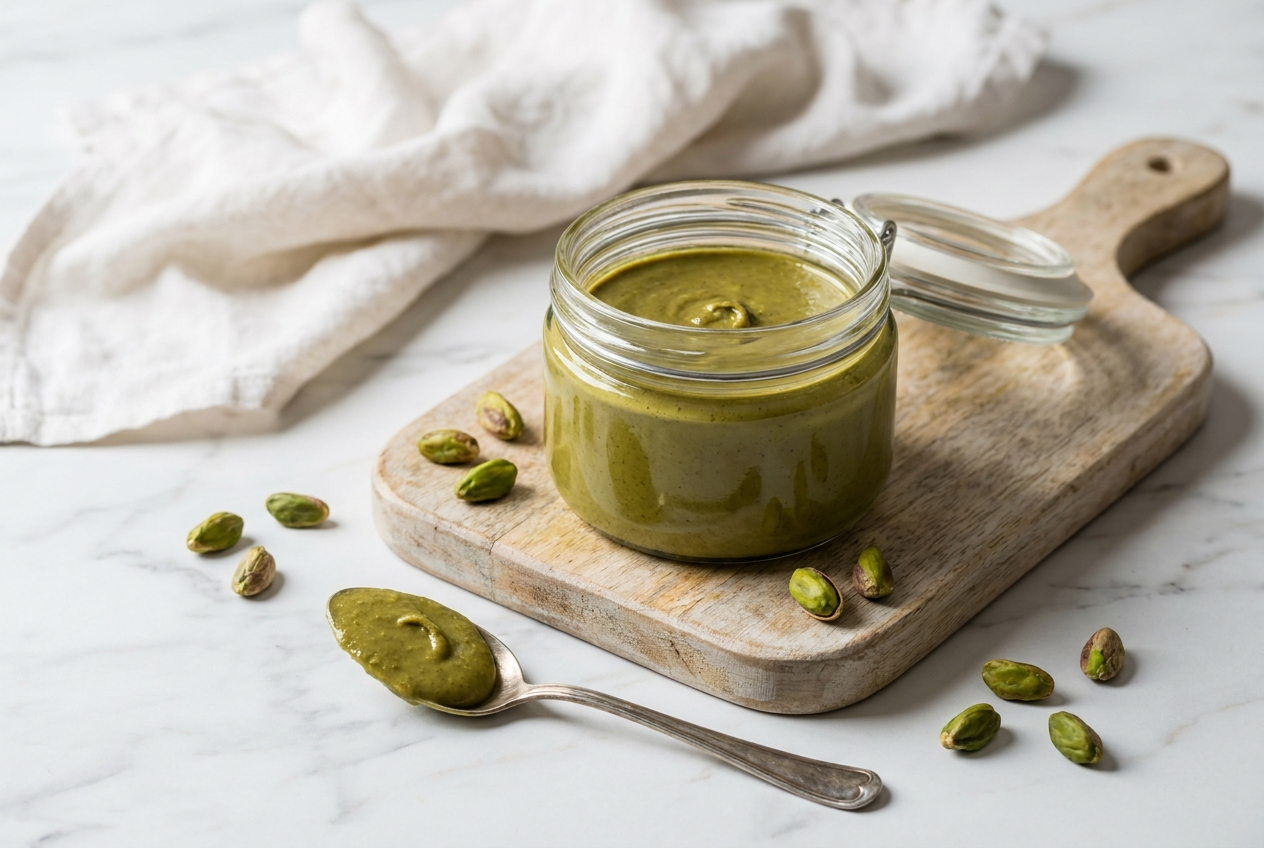
Pistachio paste occupies a category of its own in the world of nut pastes. Its high price — often three to five times that of hazelnut paste — reflects both the cost of the raw material and the complexity of its processing.
The different grades of pistachio paste
Not all pistachio pastes are created equal. The key quality criteria are:
- Origin of the pistachios: Bronte pistachios (Sicily) are widely considered the world's finest, with an intense flavor and a naturally vivid green color. Iranian pistachios offer a solid quality-to-price ratio.
- Pistachio content: a quality paste should contain at least 70% pistachios. Below that threshold, the flavor fades significantly.
- Color: authentic pistachio paste has a natural olive-green hue, not a fluorescent green. An overly bright color is a telltale sign of added coloring.
- Additives: some pastes contain sunflower oil, sugar, or almonds to reduce costs. A pistachio paste of professional quality keeps these additions to a minimum.
Uses in professional pastry
Pistachio paste is used in:
- Macarons: 15 to 20 g of paste per 100 g of whipped ganache, for a clearly identifiable flavor without overwhelming the texture
- Mousseline cream (a rich pastry cream enriched with butter): 30 to 40 g per liter of pastry cream, folded in cold
- Ice creams and sorbets: 80 to 100 g per liter of base, for a pistachio ice cream that actually tastes like pistachios
- Financiers and cakes: as a partial substitute for almond flour, at 20 to 30% of the total nut content
Recommended dosages for hazelnut paste
Dosage is what separates an ordinary result from a remarkable one. Here are the benchmarks used by professionals.
Hazelnut ganaches
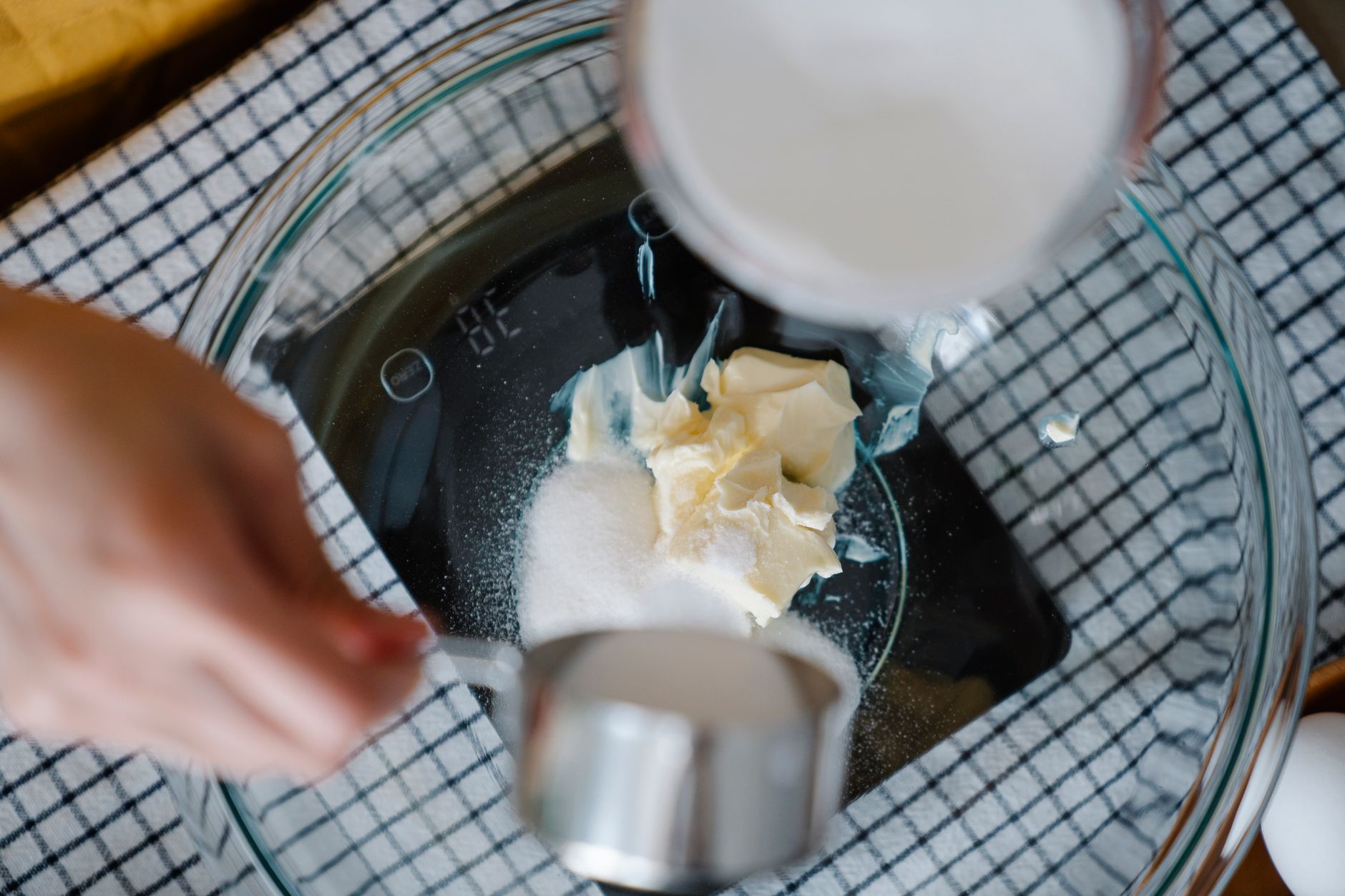
For a milk chocolate and hazelnut ganache:
- 200 g milk couverture chocolate
- 150 g heavy cream
- 40 to 60 g pure hazelnut paste
- 20 g butter
The Piedmont hazelnut paste is added to the still-warm chocolate-cream mixture (104–113°F / 40–45°C), then emulsified with an immersion blender. Adding hazelnut paste increases the fat content of the ganache, which affects the final texture: plan to slightly reduce the amount of cream if you increase the amount of paste.
Hazelnut macarons
For a hazelnut macaron filling:
- 100 g base ganache (dark or milk chocolate)
- 20 to 30 g hazelnut paste
You can also incorporate hazelnut paste directly into Italian meringue at a rate of 10 g per 100 g of meringue, for subtly flavored macaron shells.
Ice creams and frozen desserts
This is where hazelnut paste truly shines:
- 70 to 100 g per liter of mix for hazelnut as the primary flavor
- 30 to 40 g per liter for a background hazelnut note
- Incorporate the paste into the cooled mix before churning, emulsifying thoroughly
Pralinés and chocolate bonbon fillings
For a chocolate bonbon filling:
- 100 g almond-hazelnut praliné
- 30 g pure hazelnut paste (to deepen the flavor)
- 20 g cocoa butter or melted chocolate (to adjust texture)
- A pinch of fleur de sel
Storing hazelnut paste and pistachio paste
Shelf life and storage conditions
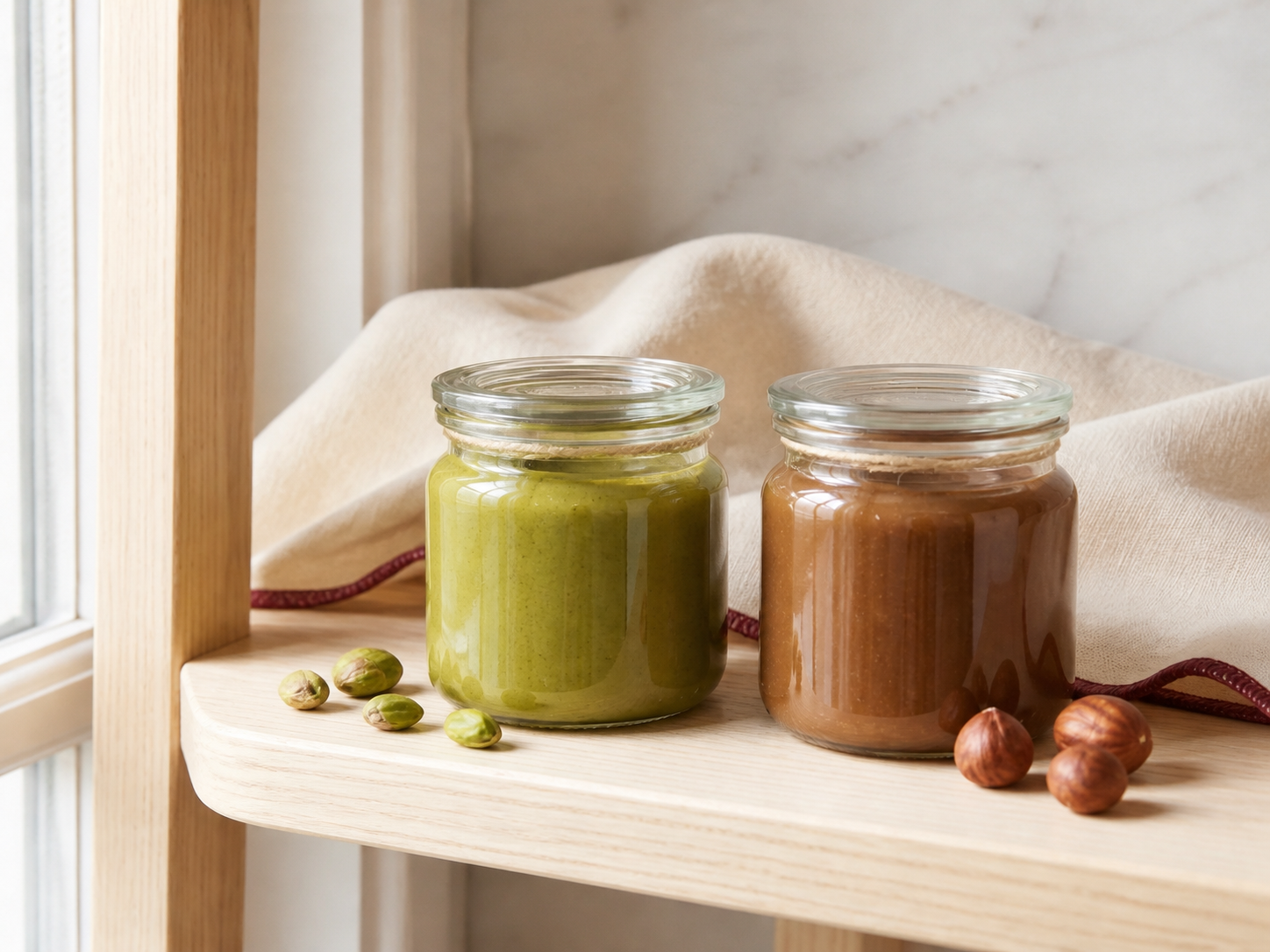
Nut pastes are rich in unsaturated fats and are sensitive to oxidation. Storage guidelines are strict:
- Sealed, unopened jar: 12 to 18 months at room temperature (64–72°F / 18–22°C), away from light
- Opened jar: 3 to 6 months maximum, sealed tightly after each use
- Refrigerator: acceptable, but the paste will harden and will need to come to room temperature (or be gently warmed over a double boiler) before use
- Freezing: not recommended for pistachio paste (it alters the color); acceptable for hazelnut paste
Oil separation
Over time, the natural oils in hazelnuts or pistachios will rise to the surface. This is completely normal and does not mean the product has gone bad. Simply stir the paste thoroughly before use, ideally with a spatula, working from the bottom of the jar upward.
To minimize separation:
- Store jars upside down (the oil migrates toward what becomes the top when you open it)
- Maintain a stable temperature — fluctuations accelerate separation
- Use an airtight container if you transfer the paste to a different vessel
Pistachio: the Dubai chocolate phenomenon and its wave through pastry
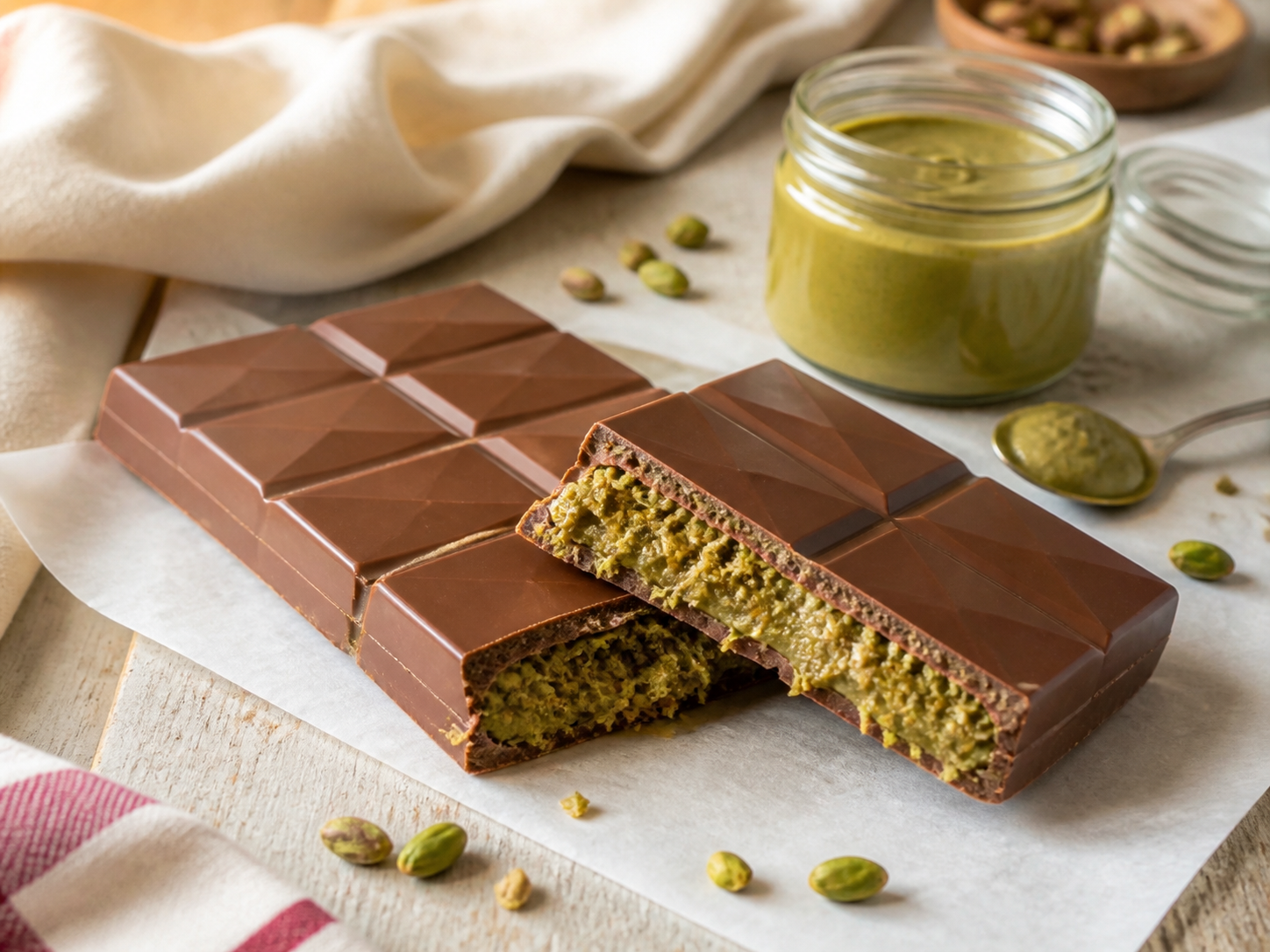
Pistachio has become one of the most trending flavors, driven by a viral worldwide phenomenon: Dubai chocolate. This chocolate filled with a pistachio cream filling, crunchy kataifi paste, and tahini has literally taken over social media, bakeries, and pastry shops across France. Searches related to pistachio have surged dramatically, and the demand for pistachio paste has exploded.
Dubai chocolate: why everyone is talking about it
The concept originated in Dubai at the chocolatier Fix Dessert Chocolatier, before going viral on TikTok and Instagram. The idea: a couverture chocolate bar filled with a mixture of pistachio cream, butter-caramelized angel hair (kataifi), and tahini. The contrast between the crunch of the kataifi, the creaminess of the pistachio cream , and the snap of the couverture chocolate once tempered creates an addictive tasting experience.
To make a quality homemade version, the key is to use a real pistachio paste with a high nut content (70% minimum). Industrial versions made from pistachio paste cut with almonds and colorings yield a bland, artificial result.
Pistachio cream: the base recipe for everything
Pistachio cream is the preparation that has benefited most from this trend. It serves as the base for Dubai chocolate filling, but also for pistachio croissants, pistachio cookies, pistachio tiramisu, and the entire wave of pistachio pastry.
The base recipe for a professional-quality pistachio cream:
- 100 g of pistachio paste pure pistachio paste (70% pistachios minimum)
- 150 g couverture white chocolate (Valrhona Ivoire or equivalent)
- 100 g heavy cream
Heat the cream, pour it over the chopped white chocolate, emulsify, then fold in the pistachio paste. This cream works as a filling for Dubai-style chocolate bars, a stuffing for croissants, or a base for whipped pistachio ganache.
Pistachio: a premium ingredient under pressure
The flip side of this trend: pistachio prices have risen sharply due to global demand. Bronte pistachios (Sicily), the most coveted variety, are experiencing supply constraints. Iranian pistachios offer a quality alternative at a more accessible price point.
For pastry professionals, this makes precise dosing more important than ever — there's no room to waste an ingredient that has become this expensive. The professional dosages outlined in this guide take on particular importance in this context.
Beyond Dubai chocolate: pistachio across the pastry landscape
The pistachio trend extends well beyond Dubai chocolate. You'll find it in:
- Pistachio cream-filled croissants — the must-have item at artisan bakeries
- Pistachio-white chocolate cookies — virtually guaranteed to go viral
- Pistachio tiramisu — a fresh take on the Italian classic
- Artisan pistachio ice cream — where paste quality makes all the difference
- Pistachio-raspberry or pistachio-citrus entremets — flavor pairings that consistently deliver
Across all of these preparations, one thing holds constant: the quality of the pistachio paste determines the final result. A paste with 70% pistachios or more, without excess sugar or coloring, is non-negotiable for achieving that authentic flavor and the natural olive-green color that discerning consumers expect.
Comparing nut pastes: hazelnut, pistachio, almond
| Criterion | Hazelnut Paste | Pistachio Paste | Almond Paste |
|---|---|---|---|
| Fat content | ~60% | ~55% | ~55% |
| Flavor | Intense, roasted | Delicate, vegetal | Mild, subtle |
| Color | Golden brown | Olive green | Light beige |
| Approximate price/kg | €25–40 | €80–150 | €20–30 |
| Primary use | Ganaches, ice creams | Macarons, creams | Marzipan, financiers |
Professional tips for working with nut pastes
Bring to temperature before using
Remove the paste from the refrigerator at least 2 hours before use. A paste that is too cold will not incorporate properly and will cause lumps in ganaches and creams.
Toast to intensify flavor
Even though the paste is already made from roasted hazelnuts, you can push the flavors further by spreading a thin layer of paste on a baking sheet and placing it in the oven at 300°F (150°C) for 8 to 10 minutes. This technique, used by some professionals, develops deeper notes of caramel and coffee.
Blend your pastes
Professionals often combine hazelnut paste and praliné to achieve a more complex aromatic profile. A classic ratio: two-thirds praliné to one-third pure paste. The praliné contributes sweetness and caramel depth; the pure paste delivers intensity and character.
Emulsify properly
When making a ganache, hazelnut paste must be emulsified — not simply stirred in. Use an immersion blender and work from the center of the bowl, gradually widening the motion. A failed emulsion results in a grainy ganache that breaks apart when sliced.
G. Detou's take
A good 100% pure pistachio paste from Iran or Sicily costs between €80 and €120 per kilo — and rightfully so: it takes 2.5 kg of shelled pistachios to yield just 1 kg of paste. If you come across "pistachio paste" priced at €25 per kilo, check the label: you'll typically find 30% pistachio, with the rest being almond, coloring, and flavoring. On rue Tiquetonne, we work with two suppliers we've trusted for 20 years — the color leans toward a natural khaki, never neon green.
FAQ — Hazelnut paste and pistachio paste
Not directly. Praliné contains caramelized sugar, which changes both the flavor (sweeter, more caramel-forward) and the texture (thicker). If you're substituting pure paste with praliné, reduce the sugar in the recipe by approximately 20 to 30% to compensate. The result will be different, but can be equally successful.
Plan on a minimum of 15% of the total weight of your preparation for the pistachio flavor to be clearly identifiable. Below that, it gets lost — especially in the presence of white chocolate or vanilla, which tend to overpower it. For macarons, use 20 g of paste per 100 g of filling.
Give it a sniff: rancid hazelnut paste has a sharp, acrid odor — reminiscent of paint or wet cardboard. On the palate, it leaves an unpleasant, lingering aftertaste. If the oil that has risen to the surface appears darkened or smells off, discard the product. A fresh paste should smell cleanly of roasted hazelnuts and taste pleasant even on its own.
Not necessarily, as long as you use it within 3 months of opening and your kitchen stays cool (below 72°F / 22°C). Beyond that timeframe, refrigeration extends shelf life but firms up the paste considerably. Remember to take it out 2 hours before using and stir it well to restore a smooth, homogeneous consistency.
Nut pastes are premium ingredients that require a basic understanding of technique to be used to their full potential. The quality of the raw material remains the determining factor: a Piedmont hazelnut paste or a high-fruit-content pistachio paste will not forgive imprecise quantities, but will always reward careful, attentive work. At G. Detou, these professional-grade products are available in 1 kg formats — the same size used by artisan makers.
To go further: browse our full Nut Purees & Pastes selection.