


You've just invested in a stand mixer, stacked recipe books on your counter, and you're ready to dive in. But as you look over the ingredient list for your first recipe, one thing becomes clear: you're missing half the items, and your supermarket sells neither couverture chocolate nor sheet gelatin, let alone praliné.
That's perfectly normal. Quality pastry-making relies on specific ingredients that mainstream supermarkets simply don't stock — or carry only in inferior versions. This guide walks you through the 10 essential ingredients to build your beginner baker's kit, covering the role of each one, how to choose it, and how to use it.
Why ingredients make all the difference in pastry
Before we get to the list, there's one fundamental principle worth understanding: in pastry, the quality of your ingredients directly determines your results. Even more so than in savory cooking, where seasoning and technique can compensate for mediocre produce.
A chocolate fondant made with Valrhona Guanaja 70% and the same one made with supermarket baking chocolate are not the same dessert. A vanilla pastry cream made with Madagascar vanilla beans and the same one made with artificial flavoring are not the same taste. Pastry does not lie: every ingredient expresses itself directly on the plate.
That's why investing in a solid pantry of quality basics — even a modest one — is the single best decision a beginning baker can make.
1. Vanilla — the aromatic cornerstone
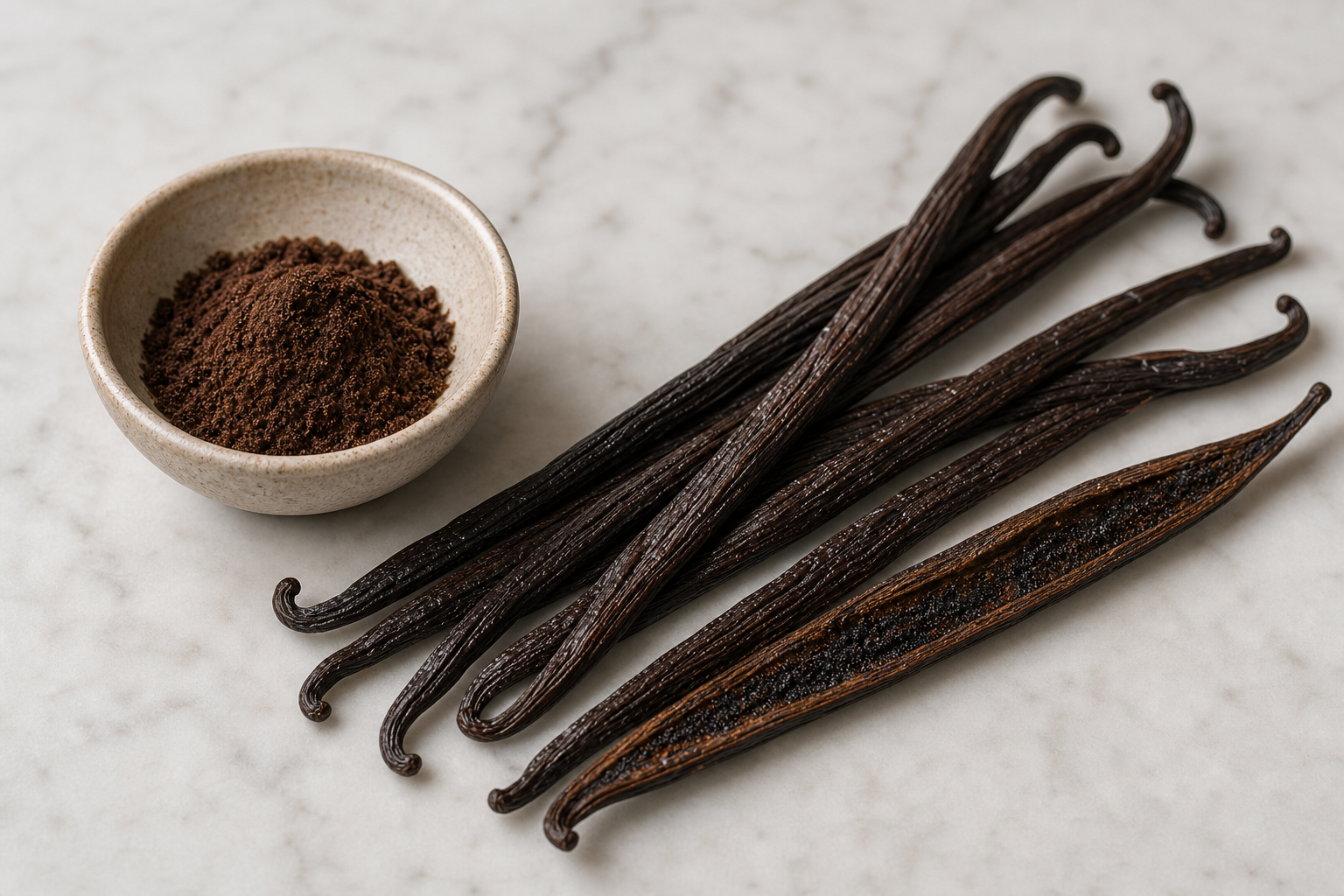
Why it's essential
Vanilla appears in a remarkable proportion of pastry recipes: pastry cream, crème anglaise, ganaches, pâte sablée (French shortcrust pastry), flans, ice creams, whipped cream… Without it, an enormous range of preparations is simply off the table.
Which vanilla to choose?
Forget artificial flavorings and vanilla sugar sachets. Invest in real vanilla beans. Three origins dominate the market:
- Madagascar vanilla (Bourbon): the most versatile, with warm and rounded notes — the ideal starting point, and the "standard" vanilla of French pastry.
- Tahitian vanilla: more floral and anise-like, stunning in raw or barely cooked preparations (panna cotta, whipped cream).
- Mexican vanilla: woodier and spicier, interesting in chocolate-based recipes.
To start out, go with Madagascar vanilla. Three to five beans is a good starting quantity — they keep for several months in an airtight tube, away from light.
Pro tip: never throw away your spent vanilla pods after scraping. Drop them into a jar of sugar to make a homemade vanilla sugar that's infinitely better than anything from a packet.
The alternative: vanilla extract
If whole beans feel like too much of an expense for everyday use, a good-quality natural vanilla extract is an acceptable compromise. Just make sure the label says "pure vanilla extract" and not "vanilla flavoring."
2. Couverture chocolate — the foundation of chocolate pastry
Why it's essential
Serious pastry-making is impossible without quality chocolate. Mousses, fondants, ganaches, truffles, glazes, entremets (French multi-layered mousse cakes) — chocolate is everywhere.
Which chocolate to choose?
A couverture chocolate couverture chocolate contains a minimum of 31% cocoa butter, which gives it its fluidity and shine after tempering. That's what sets it apart from supermarket "baking chocolate."
For a beginner's kit, three references are enough:
- A dark 70% (such as Valrhona Guanaja or Barry Excellence) for bold, intense recipes
- A milk at 40% (such as Valrhona Jivara) for smooth ganaches and milk chocolate mousses
- A white at 35% (such as Valrhona Ivoire) for glazes, white mousses, and decorations
Buy it in fèves (pistoles) — small wafer-shaped discs rather than in blocks: they're easier to measure and melt more evenly.
3. Flour — the structural backbone
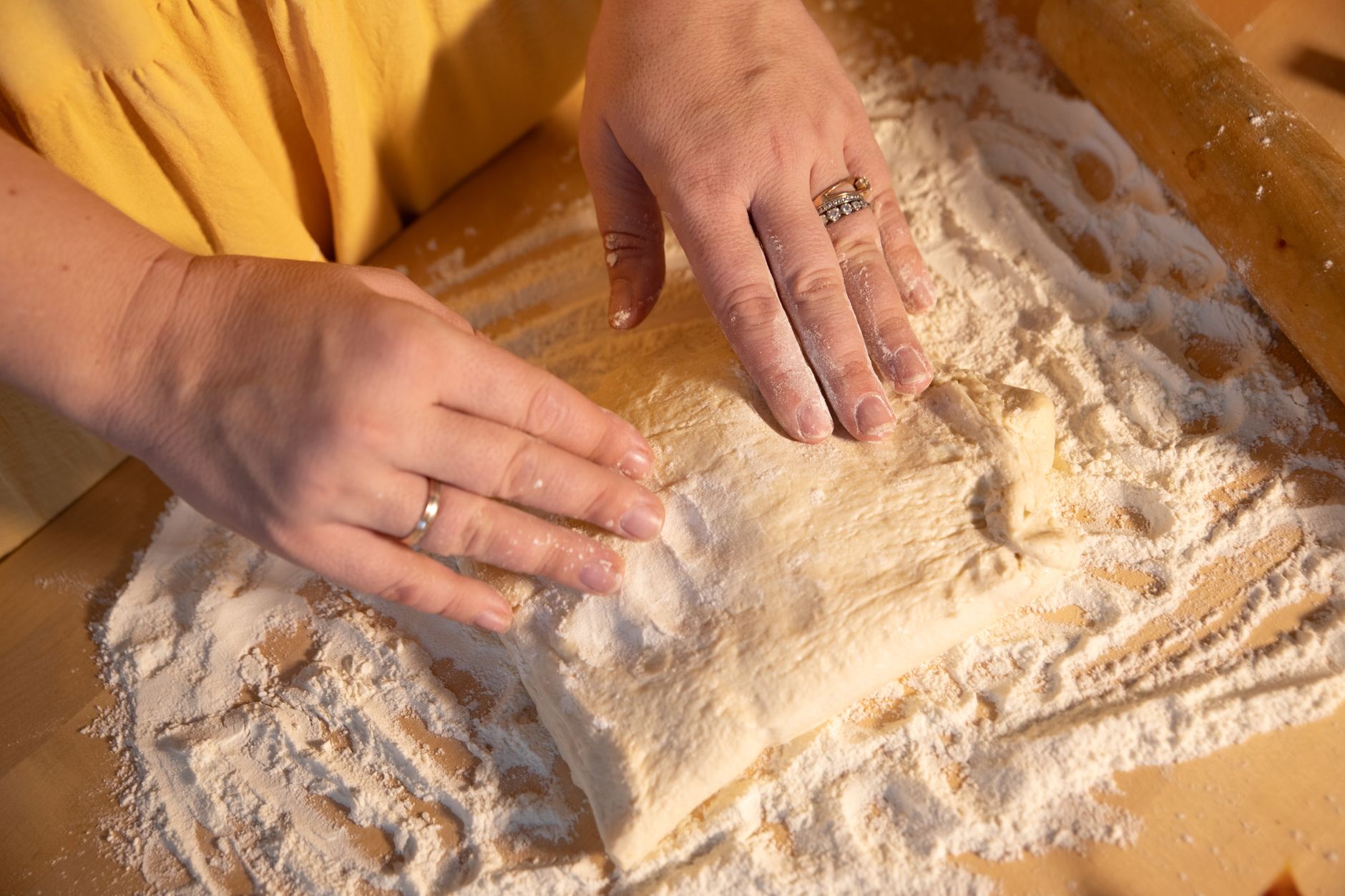
Why it's essential
Shortcrust pastry, pâte sablée, puff pastry, génoise sponges, cookies, cakes… Flour is the structural ingredient of virtually all pastry.
Which flour to choose?
For a beginner, T55 wheat flour (a medium all-purpose flour) covers the vast majority of needs. It's the standard flour of French pastry: fine enough for smooth doughs, with a gluten level that's comfortable to work with.
If you want to go further: - T45 (fine pastry flour, similar to cake flour): higher in gluten, ideal for enriched yeast doughs like brioches and croissants - Cornstarch (Maïzena): essential for lightening certain sponges and thickening creams
4. Butter — flavor and texture
Why it's essential
Butter delivers flavor, richness, and texture to every dough, cream, and filling. In pastry, butter quality is non-negotiable.
Which butter to choose?
Use an unsalted butter with at least 82% fat content. AOP-certified butters (Charentes-Poitou, Isigny) are excellent choices. For laminated doughs like puff pastry, a beurre de tourage (dry butter, 84% fat) is preferable — it's more pliable and melts more slowly.
Key point: butter freezes perfectly. Stock up when you find a great one.
5. Sheet gelatin — the universal texturing agent
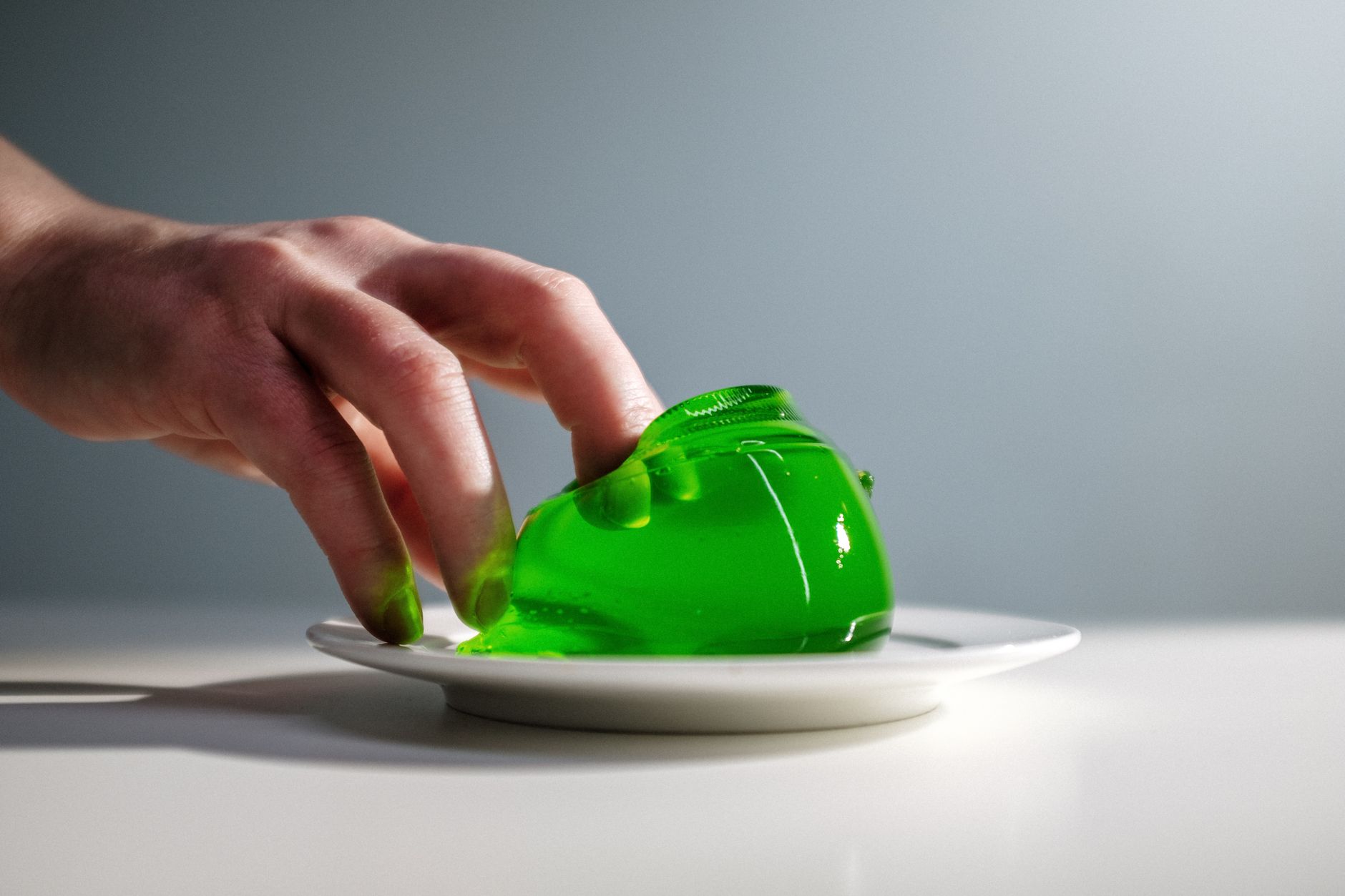
Why it's essential
Gelatin sets mousses, bavarois (Bavarian creams), panna cottas, entremets, mirror glazes… It is the most widely used texturing agent in French pastry.
Which gelatin to choose?
Buy professional-grade sheet gelatin , preferably "gold" grade (200 bloom). That's the standard used in French recipe books. The sheets should be transparent, odorless, and soften quickly in cold water.
Standard ratio: one gelatin sheet (2 g) per 100 ml of liquid gives a soft, panna cotta-like texture. Two sheets per 100 ml produces a firmer set, as in a bavarois.
How to use it: always soak sheets in cold water for 10 minutes, squeeze out the excess water, then dissolve them in a hot (but never boiling) liquid — boiling destroys their setting power.
6. Confectioners' sugar — finishing and structure
Why it's essential
Confectioners' sugar (powdered sugar) appears in glazes, certain meringues, pâte sablée, decorations, and buttercreams. Its ultra-fine grind dissolves instantly — something granulated sugar simply cannot achieve.
Which confectioners' sugar to choose?
Le sucre glace Standard confectioners' sugar works for most uses. Check that it contains an anti-caking agent (typically 3% starch) — this is normal and doesn't affect recipes.
For macarons specifically, some pastry chefs prefer starch-free confectioners' sugar (harder to find), since starch can slightly affect the shell's texture — our almond flour guide covers the other half of the macaron equation.
Pro tip: beyond confectioners' sugar, always keep granulated white sugar and sugar cubes on hand (the latter for caramels and cooked sugar work).
7. Unsweetened cocoa powder — intensity without the fat
Why it's essential
Cocoa powder is irreplaceable in certain preparations: chocolate sablée doughs, chocolate sponges, dusting decorations, tiramisu, rolled truffles… It delivers a depth of pure cocoa flavor that couverture chocolate, with all its cocoa butter, simply cannot replicate in the same way.
Which cocoa powder to choose?
Choose a cocoa powder unsweetened, with a minimum of 20–22% fat content. Avoid hot chocolate mixes (like Nesquik), which contain more sugar than cocoa.
Two types exist: - Natural cocoa: intense flavor, slightly acidic, reddish-brown color. The standard in French pastry. - Alkalized cocoa (Dutch process): milder flavor, deeper color, neutral pH. Favored by many professionals for its rich, dark hue.
For a beginner, a professional-quality cocoa (Barry, Van Houten) is a lasting investment: a 1 kg bag will last you several months.
8. Praliné — the flavor of toasted nuts
Why it's essential
Praliné is a blend of nuts (typically hazelnuts and/or almonds) that are roasted, caramelized, and ground into a paste. It's the secret ingredient in many classic French pastries: Paris-Brest, praliné entremets, chocolate bonbons, crunchy inserts…
Which praliné to choose?
A good praliné should contain at least 50% nuts. Below that, it's essentially sugar. Professional pralinés often list 60% or even 66% nut content.
For beginners, a 50/50 almond-hazelnut praliné is the most versatile. It works equally well in a Paris-Brest praliné cream or a crunchy insert (praliné + crushed feuilletine wafers + milk chocolate). And if you'd like to make your own, our homemade praliné recipe gives professional-grade proportions.
Storage: praliné keeps for several months in an airtight jar at room temperature. The oil will naturally rise to the surface — that's perfectly normal. Just stir before using.
9. Food coloring — the visual touch
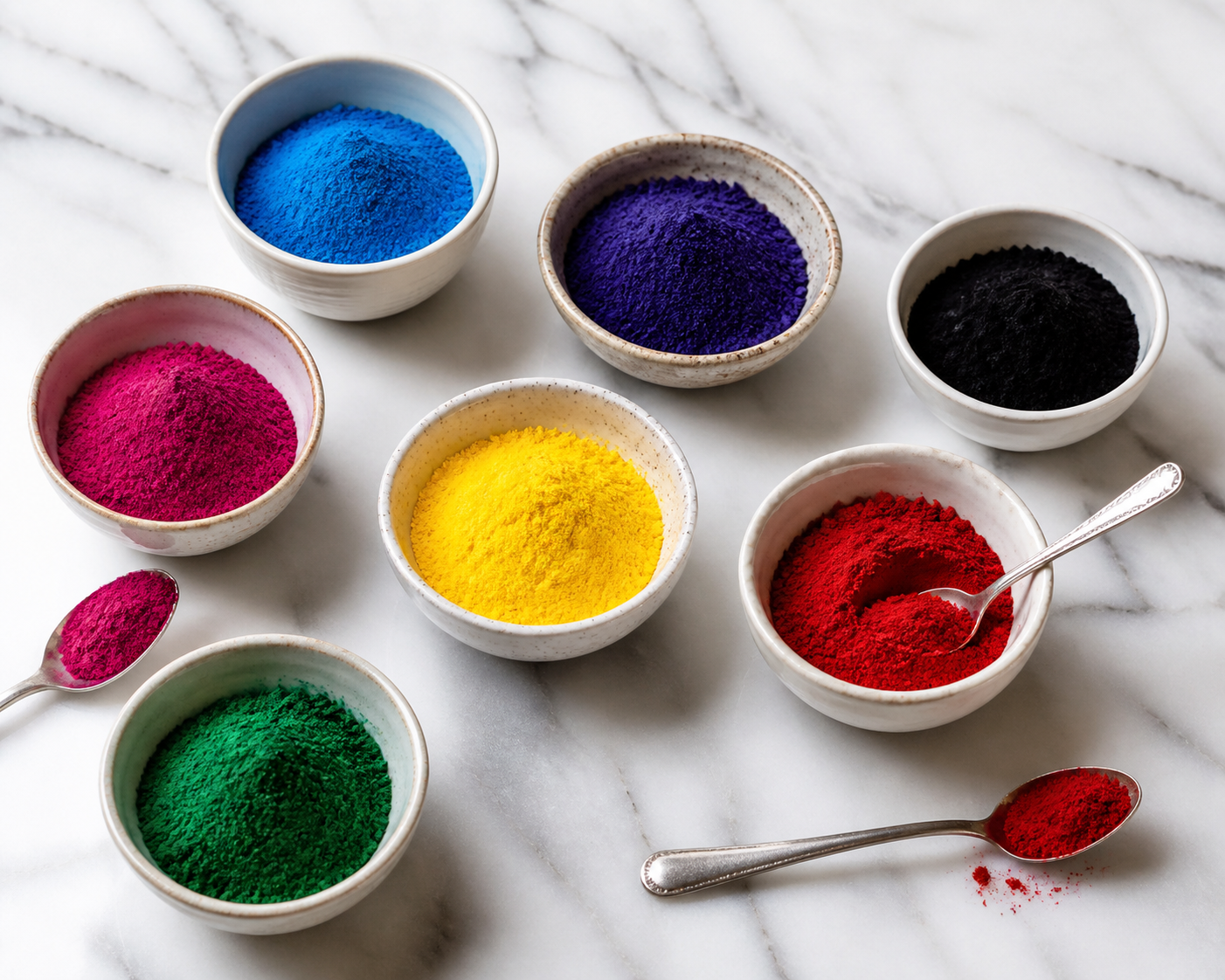
Why it's essential
Macarons, glazes, marzipan decorations, colored meringues, entremets… Food coloring brings your creations to life visually. And in pastry, we eat with our eyes first.
Which colorings to choose?
Forget supermarket liquid colorings — too diluted and too weak. Invest in professional food colorings :
- Powder colorings: the most concentrated, ideal for macarons and chocolate work. A knife tip is all you need.
- Gel colorings: a good balance of strength and ease of use. Perfect for creams, glazes, and doughs.
- Oil-soluble (liposoluble) colorings: specifically designed for coloring cocoa butter and chocolate — water-based colorings simply don't work with fat-based preparations.
For a starter kit, buy the primary colors (red, blue, yellow) plus a green and a black. Mixed together, they give you virtually any shade you need.
10. Hazelnut paste — pure nut flavor in concentrated form
Why it's essential
Pure hazelnut paste (100% roasted hazelnuts, ground smooth) is a flavor concentrate that transforms any preparation. Unlike praliné, it contains no sugar — it's pure roasted nut.
Which hazelnut paste to choose?
The benchmark is Piedmont hazelnut paste, prized for the delicacy and aromatic intensity of Italian hazelnuts. That said, a good roasted hazelnut paste from France or Turkey works perfectly well for a beginner.
Uses: - Stirred into a milk chocolate ganache for a hazelnut entremets - Folded into a diplomat cream to fill a choux puff - Blended with butter and confectioners' sugar for a spreadable hazelnut butter - Used as a base for dacquoise or financier sponges
You'll also find pistachio paste (pricier but spectacular in flavor and color) and almond paste, which round out the pantry.
G. Detou's advice
The true minimum kit for a baker just starting out fits comfortably in a single shopping basket — 10 products in small formats: 1 Madagascar vanilla bean, 250 g of Caraïbe 66%, 100 g of blanched almonds, 100 g of Piedmont hazelnuts, 50 g of Iranian pistachios, 1 sachet of Mycryo, 1 sachet of agar-agar, 1 jar of glucose syrup, 1 natural red food coloring, 250 g of fine confectioners' sugar, 1 bag of almond flour, 250 g of T45 flour, 100 g of praliné, 1 pack of sheet gelatin, 1 pinch of fleur de sel. Total: around €60 at 58 rue Tiquetonne (Paris 2nd arrondissement) in small formats — enough to fuel six months of varied baking before stepping up to full-size formats (€80 to €120).
How to organize your beginner baker's pantry
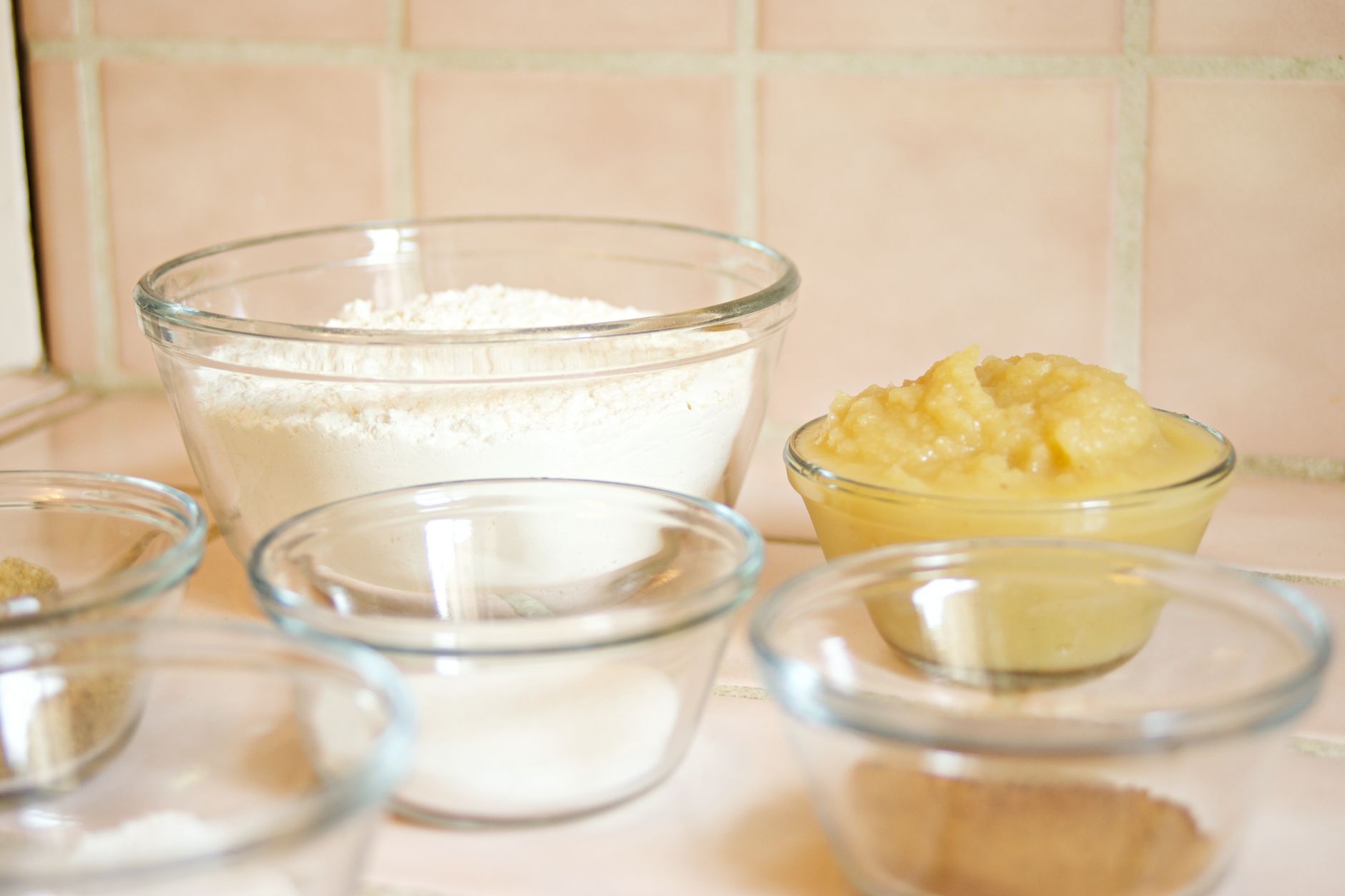
Storage
Each of these ingredients requires proper storage conditions:
| Ingredient | Storage | Shelf life |
|---|---|---|
| Vanilla (beans) | Airtight tube, away from light | 6 to 12 months |
| Couverture chocolate | Airtight box, 61–64°F (16–18°C) | 12 to 18 months |
| Flour | Airtight jar, dry location | 6 months |
| Butter | Refrigerator or freezer | 1 month (fridge), 6 months (freezer) |
| Gelatin | Dry, room temperature | 2 years |
| Confectioners' sugar | Airtight jar (moisture-sensitive) | Indefinite |
| Cocoa powder | Airtight jar, dry location | 12 months |
| Praliné | Airtight jar, room temperature | 6 months |
| Food colorings | Away from light | 12 to 24 months |
| Hazelnut paste | Airtight jar, room temperature | 6 months |
Budget
A complete kit of professional-quality ingredients runs between $85 and $130 (€80–€120). It may feel like a significant upfront investment, but these products last for months and enable dozens of recipes. When you break it down by cost per cake, it's far less expensive than buying your pastries from a bakery — and the satisfaction is priceless.
Bonus ingredients to add over time
Once your starter kit is in place, you can build it out with:
- Pectin NH: for mirror glazes and quick-set jams
- Glucose syrup: for caramels, marshmallows, and ice creams (prevents crystallization)
- Agar-agar: a plant-based gelling agent, a vegetarian alternative to gelatin, and essential in certain recipes
- Almond paste (marzipan): for decorations and fillings
- Fleur de sel: for salted butter caramels and cookies
- Gold leaf: for luxurious finishing touches (not strictly essential, but deeply satisfying)
FAQ — Beginner baker's kit
A starter kit covering the 10 essential ingredients (vanilla, couverture chocolate, flour, butter, gelatin, confectioners' sugar, cocoa powder, praliné, food colorings, hazelnut paste) runs between €80 and €120 at professional quality. With regular use, these products last for several months, bringing the cost per recipe down to just a few euros. Purchased in small formats, a starter basket can come in at around €60.
Technically, yes — but the results will be noticeably inferior. Supermarket baking chocolate contains less cocoa butter and often includes substitute vegetable fats. It melts unevenly, tempers poorly, and lacks aromatic complexity. For a modest price difference, professional couverture chocolate genuinely transforms your results.
With these 10 ingredients, you can make: a chocolate fondant (chocolate + butter + sugar + flour), vanilla panna cotta (vanilla + gelatin), chocolate truffles (chocolate + cream + cocoa), a Paris-Brest (praliné + cream + choux pastry), and macarons (confectioners' sugar + food coloring + chocolate ganache). Start with the chocolate fondant — it's the most immediately rewarding recipe for a beginner.
Specialist fine food stores are your best option. G. Detou carries all of these ingredients at professional quality, both in-store in Paris (58 rue Tiquetonne, Paris 2nd arrondissement) and online with delivery throughout France. You'll find the same products used by professional pastry chefs, available in formats suited to home bakers.
Build your baker's kit with professional ingredients: find the vanilla, the couverture chocolate, the praliné and all the essentials at G. Detou, in-store and online.
To go further: browse our full Chocolate & Confectionery selection.